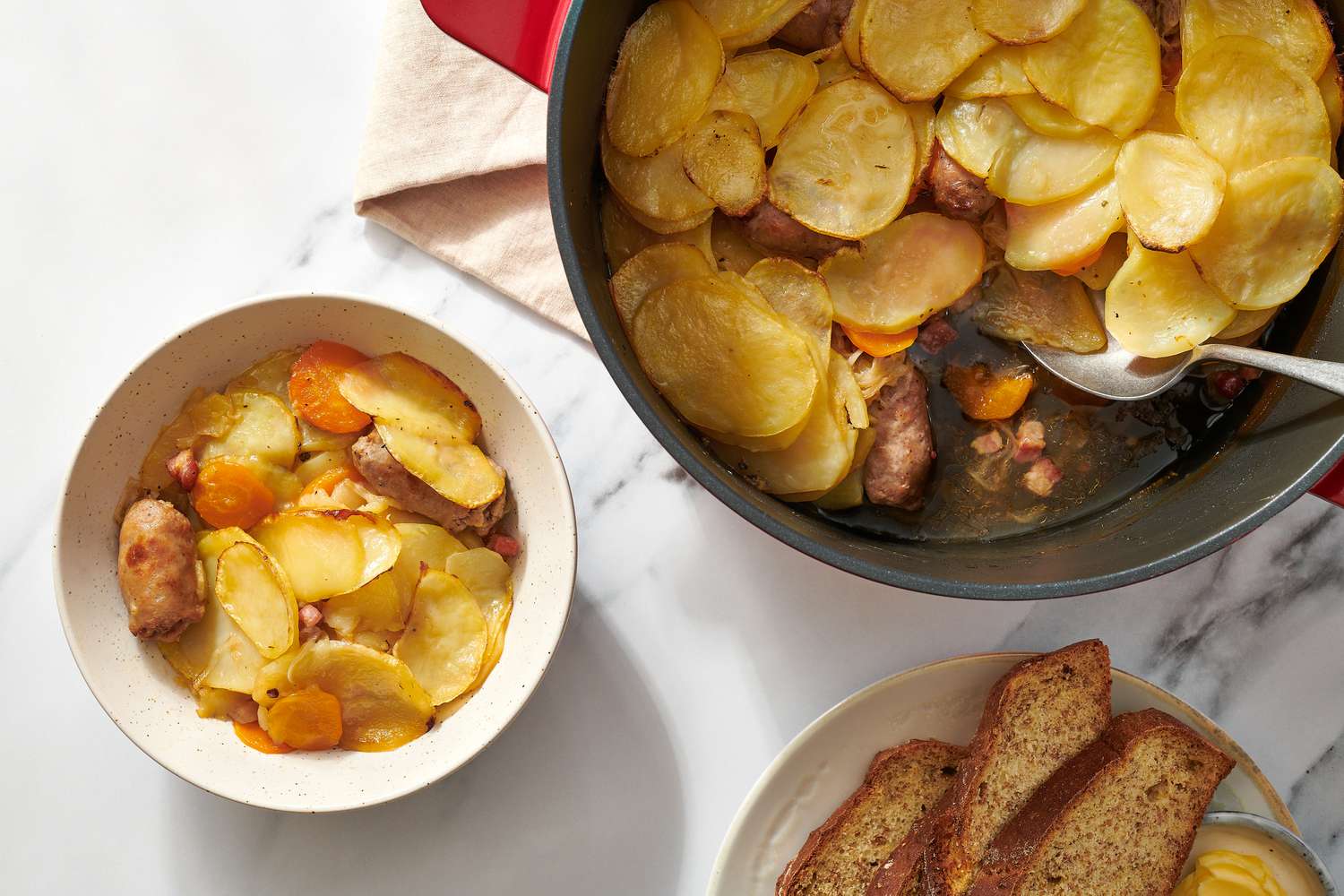
Some recipes enter the kitchen wearing a tuxedo. Traditional Dublin coddle shows up in a wool sweater, kicks off its boots, and says, “What’s in the pantry?” This humble Irish comfort food is built from everyday ingredients: sausages, bacon, potatoes, onions, and a light broth that slowly turns into something far more charming than its grocery list suggests.
A traditional Dublin coddle recipe is not flashy. It does not require tweezers, foam, edible flowers, or a chef staring dramatically into the middle distance. Instead, it rewards patience. The sausages soften, the bacon gives the broth smoky depth, the potatoes absorb all that savory goodness, and the onions melt into the background like the quiet genius of the whole operation.
Born in Dublin kitchens, this dish is closely associated with thrift, warmth, and practicality. It was the kind of meal that could simmer gently while life happened around it. In that sense, coddle is less of a strict formula and more of a delicious agreement between meat, potatoes, and common sense.
What Is Dublin Coddle?
Dublin coddle is a traditional Irish one-pot dish made with layers of pork sausages, bacon or rashers, sliced onions, potatoes, and broth or water. The word “coddle” refers to gentle cooking, which is exactly what makes this recipe work. The ingredients are not boiled aggressively; they are slowly simmered until tender, cozy, and deeply flavored.
The dish is often described as a stew, though it behaves more like a rustic hotpot. It is brothier than a casserole, heartier than a soup, and more relaxed than a formal Irish stew. Think of it as the friendly cousin who brings extra bread and never judges your second helping.
Traditional versions are simple: sausages, bacon, potatoes, onions, salt, pepper, parsley, and liquid. Modern home cooks sometimes add carrots, leeks, cabbage, garlic, thyme, or a splash of stout for extra richness. Those additions can be delicious, but the soul of Dublin coddle remains the same: affordable ingredients cooked low and slow until they taste like home.
Why This Traditional Dublin Coddle Recipe Works
The secret is layering. Bacon goes in first to release fat and flavor. Sausages are lightly browned to give them a better texture and color. Onions soften in the same pot, picking up the porky drippings. Potatoes are layered in thick slices or chunks so they steam, simmer, and soak up the broth without disappearing completely.
Many old-style coddles were pale because the meats were often simmered rather than browned. For the modern American kitchen, lightly browning the bacon and sausages gives the finished dish more color and flavor without turning it into something unrecognizable. We are respecting tradition, not putting it in a museum and whispering around it.
Ingredients for Traditional Dublin Coddle
Main Ingredients
- 1 pound pork sausages, preferably Irish-style bangers, or mild pork sausage
- 8 ounces thick-cut bacon, chopped into large pieces
- 2 large yellow onions, sliced
- 2 pounds Yukon Gold potatoes, peeled and sliced into thick rounds or large chunks
- 3 cups chicken stock, ham stock, or light broth
- 1 tablespoon unsalted butter or neutral oil, if needed
- 2 tablespoons chopped fresh parsley, plus more for serving
- 1 teaspoon dried thyme, optional but recommended
- 2 bay leaves
- Freshly ground black pepper, to taste
- Salt, carefully added at the end
Optional Add-Ins
- 1 carrot, sliced thickly, for a sweeter broth
- 1 leek, cleaned and sliced, for a softer onion flavor
- 1 cup chopped cabbage, added near the end
- 1/2 cup stout, replacing part of the broth for deeper flavor
- 1 clove garlic, minced, for a modern twist
For the most traditional flavor, keep it simple. If you cannot find Irish bangers, choose mild pork sausages rather than spicy Italian sausage. Dublin coddle should taste savory, mellow, and comfortingnot like it accidentally wandered into a chili cook-off.
How to Make Traditional Dublin Coddle
Step 1: Brown the Bacon
Place a large Dutch oven or heavy-bottomed pot over medium heat. Add the chopped bacon and cook until it begins to render its fat and lightly brown. Do not crisp it completely. You want flavor and softness, not bacon confetti.
Remove the bacon with a slotted spoon and set it aside. Leave about two tablespoons of bacon fat in the pot. If your bacon is very lean, add a small knob of butter or a little oil.
Step 2: Lightly Brown the Sausages
Add the sausages to the pot and brown them lightly on all sides. They do not need to cook through at this stage. The goal is to build flavor and give the sausages a pleasant color before they simmer.
Transfer the sausages to a plate. Once cool enough to handle, you may leave them whole or cut them into large pieces. Whole sausages look more traditional and rustic, while sliced sausages are easier to serve.
Step 3: Soften the Onions
Add the sliced onions to the same pot. Cook over medium-low heat for 6 to 8 minutes, stirring often, until the onions soften and become fragrant. Avoid deep browning. Dublin coddle is traditionally a gentle, pale stew, not French onion soup wearing an Irish hat.
Stir in the thyme, bay leaves, and a generous amount of black pepper. If using garlic, add it now and cook for 30 seconds.
Step 4: Layer the Potatoes, Bacon, and Sausages
Arrange half the potatoes over the onions. Add half the bacon and sausages. Repeat with the remaining potatoes, bacon, and sausages. This layering helps the potatoes absorb flavor while keeping the dish structured.
Pour in the stock until it comes about halfway to two-thirds up the ingredients. You do not need to drown the pot. Coddle should be moist and brothy, but the potatoes should not be swimming laps.
Step 5: Simmer Gently
Bring the liquid just to a simmer. Cover the pot, reduce the heat to low, and cook gently for 60 to 90 minutes, or until the potatoes are tender and the sausages are fully cooked. Check once or twice to make sure the liquid has not evaporated too much. Add a splash of broth or water if needed.
If you prefer using the oven, cover the Dutch oven and bake at 325°F for about 90 minutes. Oven cooking gives steady heat and is especially useful if your stovetop runs hot.
Step 6: Finish and Serve
Remove the bay leaves. Taste the broth before adding salt because bacon and sausages can be salty. Stir in chopped parsley and add more black pepper if desired.
Serve hot in wide bowls with crusty bread, Irish soda bread, or a simple side of cabbage. The bread is not optional in spirit. You need something to chase down that broth, and a spoon can only do so much hero work.
Traditional Dublin Coddle Recipe Card
Recipe Details
- Prep time: 20 minutes
- Cook time: 1 hour 30 minutes
- Total time: 1 hour 50 minutes
- Servings: 6
- Course: Main dish
- Cuisine: Irish
- Best for: Cold nights, St. Patrick’s Day, family dinners, make-ahead meals
Quick Method
- Cook chopped bacon in a Dutch oven until lightly browned, then remove.
- Brown sausages in the bacon fat and set aside.
- Soften sliced onions in the same pot.
- Layer potatoes, bacon, and sausages over the onions.
- Add stock, bay leaves, thyme, and black pepper.
- Cover and simmer gently for 60 to 90 minutes.
- Finish with parsley and serve with bread.
Best Potatoes for Dublin Coddle
Yukon Gold potatoes are excellent for Dublin coddle because they hold their shape while becoming creamy and tender. Waxy potatoes also work well. Russet potatoes can be used, but they break down faster and may thicken the broth more than expected.
Cut the potatoes into thick slices or large chunks. Thin slices may collapse into the broth, which is not a disaster, but it changes the texture. The ideal bite includes soft potato, savory broth, and a bit of sausage or bacon. That is the holy trinity of this pot.
What Kind of Sausage Should You Use?
Irish pork bangers are the classic choice. They are mild, juicy, and lightly seasoned. In the United States, they can sometimes be found at specialty butchers, Irish shops, or grocery stores around St. Patrick’s Day.
If you cannot find bangers, use a mild pork sausage. Bratwurst can work in a pinch, especially if it is not heavily spiced. Avoid smoked sausage if you want a more traditional result, although it can make a tasty modern version. Avoid very spicy sausage because it can overpower the gentle broth.
Bacon, Rashers, and American Substitutions
In Ireland, rashers are often closer to back bacon than the streaky bacon commonly sold in American supermarkets. American thick-cut bacon still works beautifully, especially when used with a light hand. The key is to render some fat and flavor without making the entire dish taste like breakfast moved into the stew pot permanently.
If you want a closer substitute for Irish bacon, try Canadian bacon or a mix of Canadian bacon and thick-cut bacon. The Canadian bacon gives a leaner pork flavor, while streaky bacon contributes fat and smokiness.
Can You Make Dublin Coddle Ahead?
Yes, and honestly, it may taste even better the next day. As the coddle rests, the potatoes absorb more broth, and the flavors settle into each other. Refrigerate leftovers in an airtight container for up to 3 days.
Reheat gently on the stovetop over low heat. Add a splash of broth or water if the potatoes have absorbed too much liquid. Avoid boiling hard during reheating because the potatoes may fall apart and the sausages can become tough.
Slow Cooker Dublin Coddle
To make this recipe in a slow cooker, brown the bacon and sausages first for the best flavor. Soften the onions in the same pan, then transfer everything to the slow cooker. Layer the potatoes, bacon, sausages, onions, herbs, and broth. Cook on low for 6 to 7 hours or on high for 3 to 4 hours.
The slow cooker version is especially useful for busy days. You can start it in the morning and come home to a meal that smells like you made excellent life choices.
What to Serve With Dublin Coddle
Dublin coddle is filling on its own, but it loves a good sidekick. Serve it with Irish soda bread, brown bread, crusty sourdough, or buttered dinner rolls. For vegetables, try steamed cabbage, roasted carrots, peas, or a crisp green salad to balance the richness.
A spoonful of brown sauce or a dash of Worcestershire sauce at the table can add tangy depth. Keep the sides simple. This is a rustic dish, not a royal banquetthough nobody will complain if you bring extra butter.
Common Mistakes to Avoid
Boiling Instead of Simmering
A hard boil can split the sausages and break down the potatoes too quickly. Keep the heat low and steady. The dish should bubble lazily, as if it has no urgent emails to answer.
Adding Too Much Salt Early
Bacon and sausages vary widely in saltiness. Season lightly at the beginning and adjust at the end. This one habit can save the whole pot.
Using Too Much Liquid
Coddle is not meant to be a thin soup. Add enough broth to cook the ingredients and create a savory base, but do not cover everything completely unless you want a much brothier dish.
Choosing Overly Strong Sausage
Highly spiced sausages can dominate the recipe. Traditional Dublin coddle tastes mellow, porky, oniony, and comforting. Let the simplicity do the heavy lifting.
Flavor Variations
For a richer broth, replace half a cup of stock with stout. For a greener version, add cabbage during the last 20 minutes of cooking. For a sweeter, more vegetable-forward pot, add sliced carrots or leeks with the onions.
Some cooks add barley for body, while others add garlic or thyme for extra aroma. These changes are not strictly traditional, but Dublin coddle has always been a practical dish. If your fridge offers a helpful ingredient, the pot will probably listen politely.
Why Dublin Coddle Still Belongs on the Modern Dinner Table
Traditional Dublin coddle recipe searches usually spike around St. Patrick’s Day, but this dish deserves more than one holiday appearance. It is affordable, flexible, filling, and easy to scale for a family. It also turns inexpensive ingredients into something memorable, which is the quiet magic of traditional home cooking.
In a world of complicated dinner trends, coddle is refreshingly honest. It does not ask you to spiral-cut vegetables or own a gadget shaped like a spaceship. It asks for a pot, a few humble ingredients, and enough patience to let them become dinner.
Conclusion: A Bowl of Dublin Comfort
A traditional Dublin coddle recipe proves that comfort food does not need to be complicated. With sausages, bacon, potatoes, onions, and broth, you can build a dish that is warm, hearty, and deeply satisfying. The method is simple, but the result feels generous.
Serve it on a cold evening, make it ahead for a busy weeknight, or bring it to the table when you want Irish comfort without fuss. Dublin coddle is not trying to impress anyone with fancy tricks. It wins people over the old-fashioned way: by tasting good, filling the kitchen with a savory aroma, and making everyone ask for bread to mop the bowl.
Kitchen Experience: What Making Traditional Dublin Coddle Teaches You
The first thing you notice when making Dublin coddle is that it does not behave like a dramatic recipe. There is no single “big reveal” moment. No flambé. No sauce that threatens to break if you blink wrong. Instead, it builds slowly, and that is part of the charm. The bacon starts the conversation, the onions soften and sweeten, and the potatoes quietly absorb everything like tiny edible sponges with excellent career goals.
One useful experience is learning how much browning you personally prefer. A very traditional coddle can be pale and gently simmered, but many American home cooks enjoy the deeper flavor that comes from lightly browning the sausages. After making it a few times, you may find your sweet spot: enough browning for flavor, not so much that the dish loses its soft, old-fashioned personality.
Another lesson is restraint with liquid. The first time, it is tempting to pour in enough broth to cover everything completely. That feels safe, but it can turn the coddle into sausage-and-potato soup. A better approach is to add liquid until it rises halfway or a little higher around the layered ingredients. The potatoes on top steam while the lower layers simmer, creating a better texture.
Seasoning also becomes an exercise in patience. Bacon may be salty. Sausages may be salty. Stock may be salty. If you salt confidently at the beginning, the finished dish may taste like it spent the afternoon swimming in the ocean. Wait until the end, taste the broth, and then adjust. Your future self will applaud quietly from the stove.
The best coddle experiences often happen the next day. Leftovers thicken slightly, the potatoes become even more flavorful, and the broth tastes rounder. Reheated gently, Dublin coddle makes a lunch that feels like a small personal victory. Add bread, and suddenly leftovers are not leftovers. They are “planned culinary continuity,” which sounds much fancier and may help you defend the last bowl.
Serving coddle also teaches you that simple food can be social food. Put the pot in the center of the table, set out bowls, bread, parsley, and maybe a tangy sauce, and let everyone serve themselves. It is casual, generous, and unfussy. The dish invites conversation because it does not demand performance.
Finally, making traditional Dublin coddle reminds you that recipes with history are rarely frozen in time. Every family, cook, and kitchen adapts them. Some add stout. Some add cabbage. Some refuse carrots with the seriousness of a courtroom objection. The best approach is to understand the foundation first: pork, potatoes, onions, broth, and gentle cooking. Once you respect that, small variations become part of the fun.
That is the real experience of Dublin coddle. It is not just a recipe; it is a method of turning ordinary ingredients into comfort. It is forgiving, practical, and wonderfully human. And if the pot looks a little rustic when it lands on the table, good. That means it is doing its job.