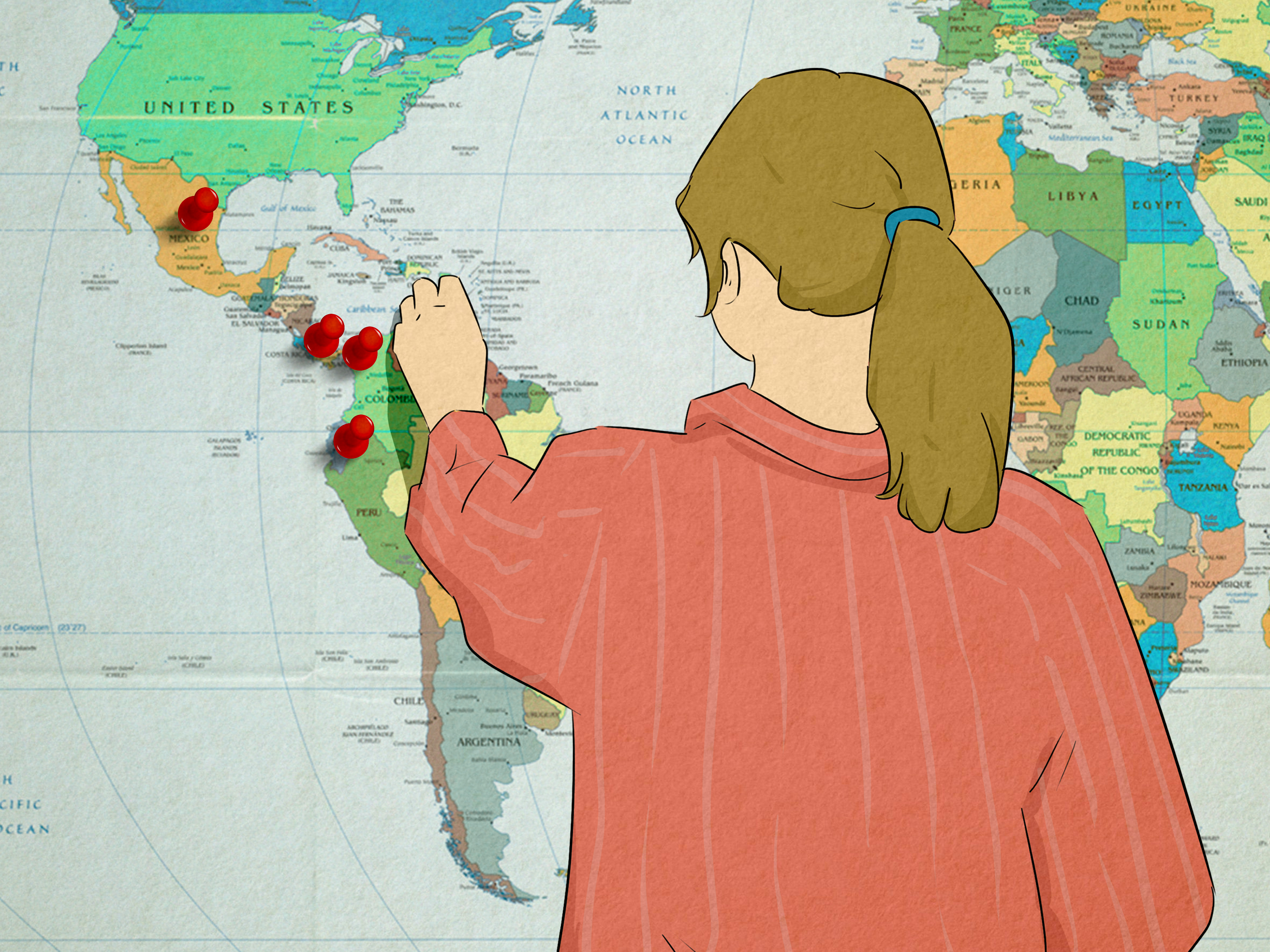
Some people make major life decisions with spreadsheets. Others consult a travel blog, a map, and maybe a suspiciously enthusiastic friend who says, “You have to go.” And then there is the wonderfully chaotic option: spin the globe, get a random country, and let curiosity do the driving.
That simple idea has become surprisingly popular online. A random country generator, spinning globe game, or digital world wheel can turn geography into entertainment, travel planning into an adventure, and a boring Tuesday into “Apparently I’m learning about Montenegro now.” Not bad for a click.
But this trend is more than a novelty. A random country tool can help travelers discover places they would never have searched for, give students a fun way to build map skills, and push writers, teachers, and content creators out of the usual comfort zone of Paris, Tokyo, and “somewhere in Italy with pasta and excellent lighting.” When used well, spinning the globe becomes a doorway to deeper learning about geography, culture, history, food, language, and global connections.
In other words, this is not just a game. It is a playful shortcut to broader thinking. And frankly, the world could use more of that.
What “spin the globe” really means
At its core, spin the globe means choosing a country at random rather than starting with a destination you already know. The old-school version is an actual globe and a dramatically pointed finger. The modern version is a random country generator, interactive map, quiz site, or digital wheel that drops you somewhere new in seconds.
The beauty of the idea is that randomness removes bias. You do not automatically land on places with the biggest tourism budgets or the loudest social media presence. Instead, you might end up exploring Botswana, Uruguay, Laos, Slovenia, or Costa Rica and realize the world is much more interesting than your algorithm has been suggesting.
This also changes how people learn geography. Instead of memorizing lists, they begin with a place and build questions around it: Where is it? What languages are spoken there? What borders it? What is the climate like? What foods are common? Why does its history matter? That approach feels less like homework and more like detective work with a passport vibe.
Why random countries are so weirdly addictive
1. They wake up your curiosity
A random pick creates instant intrigue. When the globe lands on a country you know little about, your brain wants to fill the gap. That gap is powerful. It nudges you to open a map, check a flag, read a quick profile, compare regions, and connect the place to people, culture, and current reality.
2. They make geography feel alive
Geography is not just borders on a screen. It is climate, landforms, migration, trade, language, cities, resources, identity, and how people interact with place. That is why spinning to one random country can lead to a rich chain of discovery. One click can take you from mountain ranges to cuisine, from coastlines to colonial history, from population density to why everyone suddenly wants to cook the national dish.
3. They are useful for travelers
If you are stuck in a loop of researching the same five destinations, a random country generator breaks the pattern. It pushes you beyond predictable bucket-list choices and can reveal places with incredible landscapes, strong food culture, fascinating cities, or better value for your budget.
4. They work for classrooms and self-study
Teachers love activities that blend engagement with real learning. A random country challenge can lead to mini research reports, map labeling, cultural comparisons, food studies, and current-events discussions. For self-learners, it is one of the easiest ways to build global awareness without making it feel painfully academic.
5. They are catnip for creators
Writers, YouTubers, bloggers, and social media creators can use random countries for content prompts, “learn with me” series, themed dinners, travel wish lists, language practice, or geography challenges. It is basically a creativity machine disguised as a spinning toy.
How to use a random country tool without learning absolutely nothing
Let us be honest. It is possible to spin the globe, see a country name, say “Cool,” and move on with your life. That is fun, but it is not exactly transformative. To make the experience meaningful, use a simple framework every time a country appears.
Start with the map
Locate the country on a world map. Identify its continent, region, neighbors, nearby bodies of water, and whether it is landlocked or coastal. This instantly gives you spatial context, which matters more than people realize. A country’s location shapes trade, climate, food systems, migration patterns, and even political relationships.
Ask five fast questions
- Where is it?
- What is it known for?
- What languages are commonly spoken?
- What kind of landscape does it have?
- What would surprise me about life there?
Those questions turn a random result into a learning path. You do not need a dissertation. You just need a starting point.
Look beyond stereotypes
Every country deserves more than one cliché. If the globe lands on Brazil, do not stop at beaches and carnival. If it lands on Japan, do not stop at sushi and bullet trains. If it lands on Morocco, do not stop at markets and desert photos. Countries are layered, regional, and complex. A smarter approach is to look at geography, culture, infrastructure, daily life, and historical context together.
Compare size and scale carefully
Maps can be sneaky little liars. Some map projections distort the true size of countries, especially near the poles. That means a country that looks huge on one map may not be as large as you think, and a continent you have been visually underestimating might actually be enormous. If you use a spin-the-globe tool for learning, compare country size with a projection or map resource that handles scale more thoughtfully.
Best ways to turn “random country” into a real activity
The 15-minute geography sprint
Spin once. Set a timer for 15 minutes. Find the country on a map, read a short country profile, learn one historical fact, one food, one major city, and one natural feature. That is it. Done regularly, this tiny routine adds up fast and builds a surprisingly strong mental map of the world.
The dream-trip challenge
Use the random country as the base for a fictional or future trip. Research when to go, what to see, what foods you would try, and what safety or entry requirements you would need to check before traveling. This is where the idea gets practical. A random spin can become a rough itinerary, a savings goal, or at the very least a very ambitious notes app entry.
The dinner-and-documentary night
Pick a country, cook a dish inspired by its cuisine, and watch a documentary, travel show, or cultural film connected to the place. Suddenly geography becomes dinner with better storytelling.
The writing prompt method
Writers can use a random country as the seed for fiction, essays, newsletters, or blog posts. A single country can inspire a character background, a travel column, a food feature, a history rabbit hole, or an article like this one, which began with a globe and the dangerous idea that randomness is productive.
The classroom country lab
For teachers, random countries work beautifully as mini research assignments. Students can build a one-page report with location, map features, language, economy, cultural traditions, environmental challenges, and one misconception they corrected during research. That last part is especially valuable because it teaches students to question shallow assumptions.
What to do after the wheel lands on a country
If you are using it for travel inspiration
Do not go from “The wheel picked Vietnam” to “I am emotionally boarding a plane” in thirty seconds. Research the basics first. Check the destination’s travel advisory, passport validity requirements, local laws, entry rules, and seasonal conditions. Random inspiration is fun. Random travel planning is how luggage and logic both get lost.
A better sequence is this: get the country, explore its regions, look at weather patterns, review budget realities, and then decide whether it belongs on your real travel list. Sometimes the spin leads to an actual trip. Sometimes it leads to a future dream. Both are useful.
If you are using it for learning
Create a repeatable note template. Include location, capital, population snapshot, terrain, languages, major industries, cultural traditions, environmental issues, and one thing that challenged your assumptions. This makes the exercise structured without draining the fun out of it like a school form in desperate need of a redesign.
If you are using it for family fun
Turn it into a game. Everyone spins once and has to share three things they learned. Add bonus points for finding the country on a physical map, naming a neighboring country, or teaching the group one greeting in a local language. Suddenly game night is educational, and nobody even had to fake enthusiasm about flash cards.
Common mistakes people make with random country tools
Treating countries like trivia cards
A country is not just a flag, a capital, and a famous dish. Those are entry points, not the whole story.
Ignoring regional diversity
Large countries often contain dramatic differences in climate, food, language, and daily life from one region to another. “What is this country like?” is usually too broad a question. “What is life like in this region, city, or landscape?” is much better.
Forgetting that maps have limitations
Projection, scale, and perspective matter. The country you think is tiny may not be tiny at all. The one that looks central may not be culturally central to the topic you are exploring.
Skipping the human side
Geography is not complete without people. Culture, language, history, migration, and lived experience are as important as coastlines and mountain ranges.
Using travel fantasy without travel facts
If a random country becomes a real travel idea, practical information matters. Safety guidance, local regulations, and entry requirements are part of responsible planning, not optional buzzkill material.
Why “Spin the Globe: Get Random Countries” works so well online
It combines three things the internet loves: surprise, low effort, and instant shareability. You click once, get a country, and immediately have something to react to. It is visual, interactive, and easy to turn into a challenge. More important, it taps into a genuine desire people have right now: to feel connected to a larger world without needing a semester-long course or a plane ticket.
That is why the format works for blogs, classrooms, social media, and personal learning. It takes a giant subject, the entire world, and breaks it into approachable moments. One country at a time feels manageable. One spin at a time feels exciting. And one unexpected result can lead to hours of worthwhile curiosity.
Experience section: what happens when you actually live with the spin
Here is where the idea gets personal. The first time I tried a random country spin as a serious exercise, I expected five minutes of harmless distraction and maybe a new fun fact to annoy my friends with later. Instead, I got a country I knew embarrassingly little about, and that was the whole point. I opened a map, checked where it sat in relation to nearby borders and bodies of water, and realized I had spent years consuming “global” content that was not very global at all. My so-called world knowledge had a very obvious comfort-zone problem.
After a few more spins, the experience changed from novelty to habit. One country led to a deep dive into food traditions. Another sent me into a geography spiral about rivers, mountains, and why cities develop where they do. Another introduced me to a language family I had never thought about before. The best part was that the randomness kept me honest. I could not pretend I was exploring the world while only clicking the places already popular in my social feed. The globe was choosing, not my biases.
It also became unexpectedly useful for creative work. On days when writing ideas felt flat, a random country gave me a new angle. Sometimes it sparked a travel piece. Sometimes it turned into a food idea, a culture-based article, or a research note that later grew into something larger. The randomness created pressure in a good way. I had to ask better questions, pay closer attention, and stop relying on the same old examples. Nothing humbles a writer quite like realizing the world is bigger than the handful of destinations that show up in every listicle.
The experience is even better with other people. Families can use it as a screen-time activity that does not feel empty. Teachers can turn it into a warm-up that gets students talking. Friends can spin and compete over who creates the best imaginary itinerary. I have seen people use it for dinner themes, book-club picks, language practice, and even date nights. “Tonight we are learning about a random country” sounds nerdy at first, but give it twenty minutes and suddenly everyone is debating snacks, landscapes, and whether they would survive the climate.
What surprised me most was how quickly the exercise built empathy. The more countries I explored, the less likely I was to reduce any place to a stereotype or a headline. A random spin might begin with a map, but it often ends with a more human understanding of how people live, adapt, celebrate, migrate, cook, work, and tell stories. That shift matters. It makes the world feel less abstract and more inhabited.
So yes, spinning the globe is fun. It is also sneakily meaningful. It turns curiosity into a practice, not just a mood. And in a time when algorithms keep trying to feed us more of what we already know, there is something refreshing about handing the next question over to chance and saying, “All right, world, surprise me.”
Conclusion
Spin the Globe: Get Random Countries is such a simple idea that it is easy to underestimate. But that random click can become a geography lesson, a travel plan, a classroom activity, a writing prompt, or a reminder that the world is wider than our usual digital habits. The magic is not in the spin itself. It is in what you do next.
Use the result to ask better questions. Study the map. Learn the human story. Check the practical details if travel is on the table. Be curious without being careless. And remember that every country is more than a headline, a stereotype, or a pretty photo with dramatic background music.
If you want a smarter, more playful way to explore the planet, let randomness do the introduction. Then do the respectful, fascinating work of actually getting to know the place that shows up.