Every so often, human evolution hands scientists a fossil so small it looks almost rude. This time, it is a tiny upper arm bone from Indonesia. On paper, that may not sound like headline material. In reality, it is the kind of discovery that makes paleoanthropologists sit up straighter, refill their coffee, and start redrawing the family tree.
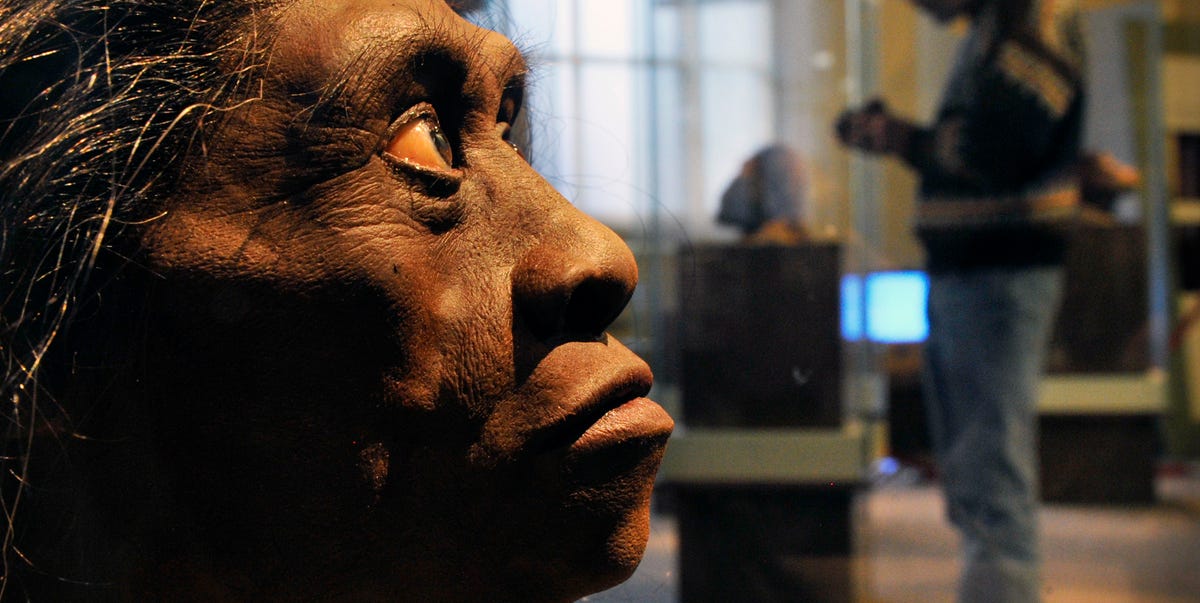
The fossil comes from Flores, the Indonesian island already famous for Homo floresiensis, the extinct human relative nicknamed the “hobbit.” These small-bodied hominins have fascinated scientists since the early 2000s because they seemed to break the usual rules. They were short, odd-looking, and living surprisingly late in the evolutionary game. Now, a newly studied arm bone from the Mata Menge site suggests that the ancestors of these “hobbits” were already tiny around 700,000 years ago. That matters because it sharpens one of the biggest debates in paleoanthropology: where exactly did these little humans come from, and how weird did evolution get on Flores?
In other words, this is not just about one bone. It is about body size, survival, migration, island adaptation, and the stubborn fact that human evolution was never a clean, tidy ladder. It was a messy, branching, often surprising experiment. And Flores might be one of its strangest laboratories.
The Tiny Bone That Changed a Big Debate
The new fossil evidence comes from Mata Menge, an open-air site on Flores that has already yielded ancient hominin remains. Researchers analyzed a partial adult humerus, along with additional teeth, and concluded that the individual belonged to an early member of the Homo floresiensis lineage. The estimated age: roughly 700,000 years old.
That number is a showstopper. The best-known “hobbit” fossils from Liang Bua cave are far younger, dating to around 100,000 to 60,000 years ago, with stone tools lingering until about 50,000 years ago. The new Mata Menge bone pushes clear evidence of these tiny humans much deeper into the past.
Even more striking is the bone’s size. Scientists estimate the individual stood around 3 feet 3 inches tall, slightly shorter than the famous Liang Bua specimen, LB1, which stood about 3 feet 6 inches. That difference may sound modest, but in a lineage this small, it is huge. The new humerus is so petite that researchers describe it as the smallest known adult upper arm bone in the hominin fossil record.
Translation: the “hobbits” were not just small. Their ancestors may have been just as small, or even smaller, far earlier than many scientists expected. That sharply reduces the appeal of any theory that imagined the Flores lineage started out much taller and only became miniaturized later in its history.
Why the arm bone matters more than another tooth
Teeth are useful in paleoanthropology. They preserve well, they carry evolutionary clues, and they are often all scientists get. But postcranial bonesbones from the skeleton below the skulltell a different kind of story. They give researchers a better sense of overall body size, locomotion, proportions, and growth patterns.
That is why this tiny arm bone packs such an outsized punch. Earlier Mata Menge finds had already hinted that the Flores hominins were unusually small. This humerus helps confirm that body size was not a one-off quirk or a bad estimate. It was a real population trait. In short, the new fossil does not merely add detail. It adds weight to the argument, which is amusing because the individual in question probably did not have much of that.
Meet the Real-Life “Hobbits” of Flores
Homo floresiensis has been one of the most talked-about fossil discoveries of the 21st century. First announced in 2004 after the discovery of remains in Liang Bua cave, the species immediately caused a scientific uproar. The skeleton known as LB1 had a tiny body and a very small brain, yet it also showed evidence of tool use and survival in a complex island environment.
That combination was hard for researchers to process. The human story had long been told as a tale of bigger brains, taller bodies, and a mostly forward march toward modernity. Then Flores came along and basically said, “Cute theory.”
The Liang Bua fossils showed a mix of features that looked both familiar and ancient. Some traits resembled Homo erectus, the early human species that spread widely through Asia. Others looked more primitive, even recalling much older hominins. This odd mosaic triggered years of debate over whether Homo floresiensis was a distinct species, a pathological modern human, or a relic of a very ancient branch of the human family.
Most scientists now accept it as a valid species. The more interesting question is not whether the hobbit was real. It absolutely was. The real question is how such a tiny, unusual human relative ended up on an isolated island in Southeast Asia.
Did the “Hobbits” Descend From Homo erectus?
The new Flores fossils strengthen the leading idea that Homo floresiensis descended from a population related to Homo erectus. That matters because Homo erectus was not tiny. It had body proportions more like ours and had already spread into Asia long before modern humans appeared.
If that interpretation is correct, then a population of larger-bodied archaic humans somehow reached Flores, became isolated, and then underwent dramatic size reduction over time. That process is known as island dwarfism. It is not science fiction. It is a well-known evolutionary pattern in which animals on islands often become smaller when resources are limited and ecological pressures are unusual.
Flores itself seems almost designed to encourage evolutionary oddballs. The island’s fossil record includes dwarf elephants, giant rats, Komodo dragons, and other creatures that make the place feel less like a normal landscape and more like nature was experimenting after hours.
The new teeth from Mata Menge help this argument along. Researchers say their shape links the Flores hominins more closely to early Javanese Homo erectus than to more primitive African hominins such as Homo habilis or australopiths. That does not slam the courtroom door shut, but it does make the Homo erectus-related scenario look stronger.
Why this idea matters so much
If a Homo erectus-like population really did shrink dramatically after becoming stranded on Flores, then the discovery becomes a major example of how flexible human evolution could be. It suggests that body size in the genus Homo was not some one-way upgrade package. Under the right ecological conditions, our relatives could evolve in startling directions.
That is part of what makes this little bone feel so important. It pushes back against the old-school image of evolution as a neat staircase. Human evolution looks much more like a braided rivermany channels, many dead ends, many detours, and the occasional tiny island surprise.
Why Flores Keeps Rewriting the Rules
Flores is separated from nearby landmasses by water, and even during periods of lower sea level, it remained difficult to reach. That means the ancestors of Homo floresiensis had to cross open water somehow. Scientists still do not know exactly how. They may have drifted accidentally. They may have used rudimentary watercraft. Either way, getting there was no small feat.
Once on Flores, they entered an ecological world with its own rules. Islands tend to simplify food webs, compress habitats, and reward efficiency. Big animals may shrink. Small ones may grow. Predators and prey start behaving like they are stuck in a very weird group project.
For hominins, smaller bodies would have had advantages. They would require fewer calories, place less stress on limited food supplies, and possibly improve survival when resources fluctuated. Over many generations, natural selection could favor reduced body size. If that is what happened here, Flores offers one of the clearest examples of extreme evolutionary downsizing in the human lineage.
There is also a broader lesson. The evolutionary history of humans in island Southeast Asia may be far more complicated than once assumed. Fossil discoveries from places such as Flores and the Philippines suggest that archaic humans were more capable dispersers than older models allowed. They were not just wandering savanna walkers following predictable routes. They were adaptable, mobile, and sometimes astonishingly resilient.
So, Does This Really Rewrite Human Evolution?
Yes and no. It does not erase everything scientists already know. It does not suddenly turn the human family tree upside down and shake out every branch. But it does force a meaningful rewrite of an important chapter.
For one thing, it strengthens the case that tiny body size evolved early in the Flores lineage. For another, it makes the “hobbit” story less of a late-stage curiosity and more of a long-running evolutionary experiment. That is a big difference. A strange little human living briefly on an island is interesting. A strange little human lineage surviving there for hundreds of thousands of years is something else entirely.
The discovery also matters because it highlights how much of the human story may still be missing. Fossils are rare. Small fossils are even rarer. And island environments are notoriously tricky archives. If one tiny arm bone can change the conversation this much, imagine what a more complete skeleton could do. Paleoanthropologists are basically one lucky dig away from having to rewrite several conference slide decks.
More importantly, the find reminds us that evolution does not care about our expectations. Bigger is not always better. Newer is not always more “advanced.” Human relatives did not all march in the same direction. Some grew tall. Some grew brainier. Some, apparently, went small and stayed that way for a very long time.
What Scientists Still Don’t Know
Even with this exciting discovery, major questions remain. Researchers still do not know exactly when the ancestors of the Flores hominins first arrived on the island. Stone tools on Flores indicate that early humans were present there at least around a million years ago, perhaps more. But who made the earliest tools, and how quickly they changed after becoming isolated, are still open questions.
Scientists also do not know the full range of variation within Homo floresiensis. Were the Mata Menge individuals slightly smaller because of time, habitat, sex differences, or ordinary population variation? More fossils are needed before anyone can answer that confidently.
Then there is the extinction question. Homo floresiensis seems to have disappeared not long after modern humans entered the broader region. That timing has led some researchers to suspect that the arrival of Homo sapiens played a role, directly or indirectly. Others point to environmental shifts. As usual in paleoanthropology, the most honest answer is: the evidence is suggestive, but the case is not closed.
The Human Experience Behind a Tiny Fossil Discovery
There is something uniquely humbling about the story of the Flores hobbits. Not just scientifically, but emotionally. A fossil this small changes the scale at which we think about greatness. We are used to dramatic discoveries being enormoustowering dinosaur skeletons, giant tusks, huge skulls, movie-poster bones. But this one is different. It is tiny. Almost delicate. The kind of find you could imagine overlooking if you were distracted, tired, or thinking about lunch.
That is part of what makes the discovery so affecting. It reminds us that the biggest ideas in science do not always arrive with a boom. Sometimes they arrive as a fragment. A hint. A sliver of bone that seems too small to matter until it suddenly matters a lot. For students of human evolution, that feeling can be electric. You start with a simple questionwhat is this?and before long you are staring into questions about migration, adaptation, extinction, and what it even means to be human.
There is also a more imaginative experience tied to the Flores story. Picture the island hundreds of thousands of years ago: tropical forests, rough terrain, giant rats skittering around, Komodo dragons patrolling like they own the place because, frankly, they do, and small human relatives moving through that environment with tools, skill, and enough resilience to survive for ages. It does not feel like a footnote. It feels like a lost world. The kind of place where evolution was improvising with unusual confidence.
For museum visitors, readers, and anyone with even a passing interest in origins, Homo floresiensis creates a strange emotional mix of wonder and discomfort. Wonder, because the species is undeniably fascinating. Discomfort, because it wrecks the cozy idea that human evolution was a straight path ending neatly with us. The hobbits of Flores were not our stepping stones. They were our relativesdifferent, successful in their own way, and very much part of the same broader experiment.
That realization can change how people experience the entire subject of ancient humanity. Suddenly, evolution stops feeling like a textbook diagram and starts feeling like a cast of real populations, living real lives under difficult conditions. These were not abstract specimens waiting politely in sediment for journal publication. They were beings solving daily problems on a remote island long before our species took over the planet.
The Flores story also carries a quiet lesson in scientific patience. The discovery did not emerge fully formed in one perfect moment. It took excavation, comparison, microscopic analysis, argument, and the willingness to revisit older assumptions. That is the lived experience of science at its best. Not a cinematic lightning strike, but a gradual sharpening of focus. A team of researchers keeps looking, keeps checking, keeps asking whether this little piece fits the bigger puzzle. Eventually, it does.
And for the rest of us, there is something deeply satisfying in that. A tiny arm bone from Indonesia can still surprise a species that now sends spacecraft into deep space and trains algorithms to write grocery lists. We are advanced enough to model genomes and date ancient sediments with astonishing precision, yet still dependent on one humble fact: the Earth has more stories than we have found. The Flores hobbit bone is one of those stories. Small in the hand, huge in the mind, and impossible to forget once you realize what it implies.
Conclusion
The newly studied Flores arm bone does not just make the “hobbit” story stranger. It makes it richer. The fossil suggests that the ancestors of Homo floresiensis were already extraordinarily small around 700,000 years ago, adding force to the idea that this lineage evolved under intense island pressures after becoming isolated on Flores. It also underlines a bigger truth about human origins: our family history was not tidy, predictable, or centered on a single model of success.
If anything, the tiny bone from Indonesia proves that evolution has a wicked sense of irony. One of the smallest fossils in the record may end up carrying one of the biggest lessons: humanity’s past was never one straight road. It was a maze, and Flores is one of the turns that makes the whole map more interesting.