Note: Body-only HTML, copy-ready for web publishing, with no source links or citation artifacts.
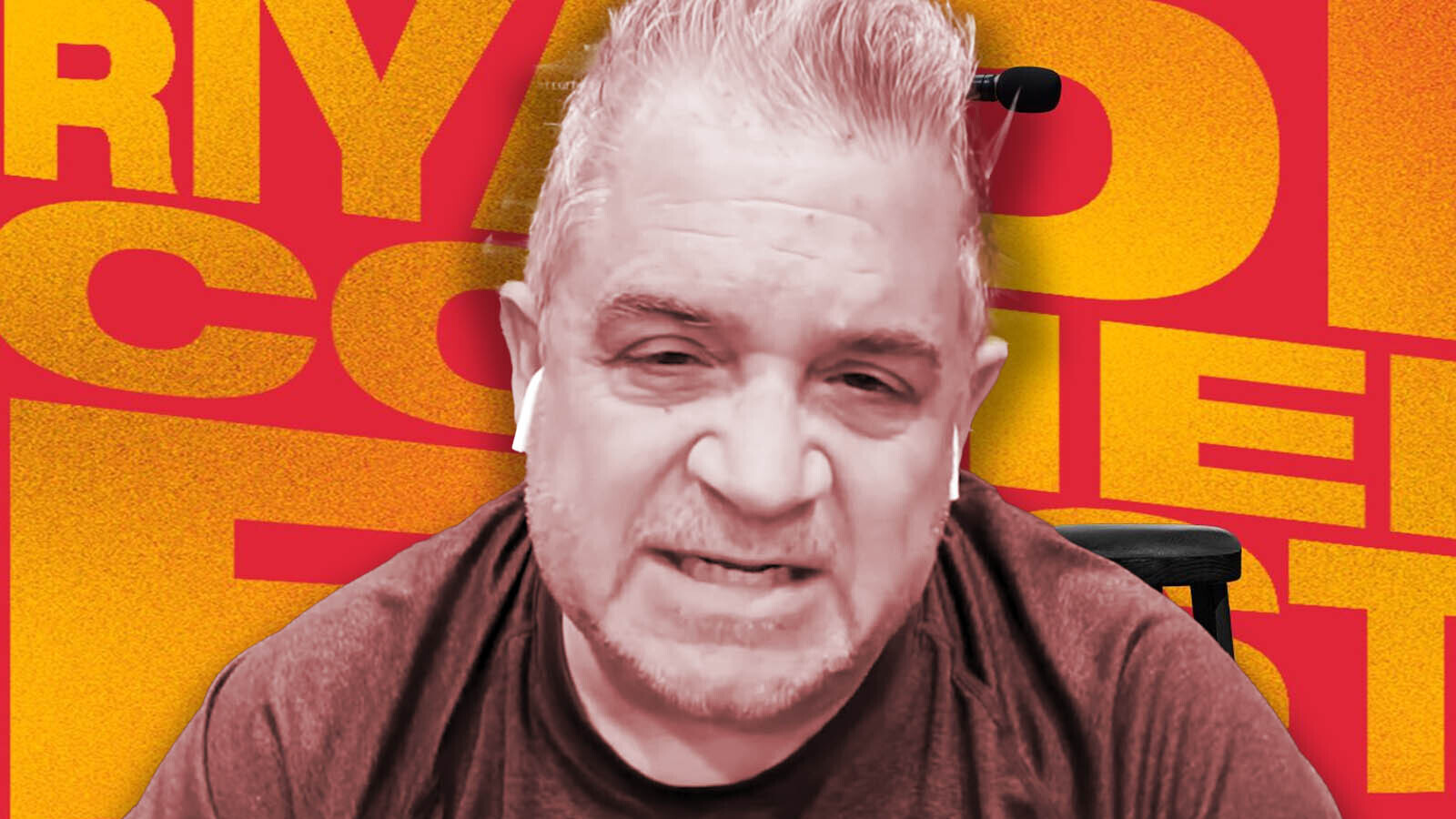
Comedy has always had a messy relationship with money. Stand-up loves to act like the scrappy truth-teller in the room, the last noble art form still willing to say the uncomfortable thing out loud. Then a giant paycheck shows up, everybody suddenly discovers “nuance,” and the microphone starts sounding a lot like a corporate press release. That is exactly why Patton Oswalt’s blunt reaction to comedians taking big Saudi money landed like a brick through a glass trophy case.
The controversy centered on the Riyadh Comedy Festival, a splashy event in Saudi Arabia that pulled in major Western comics and major criticism at the same time. Some performers and defenders framed the festival as cultural exchange, a chance to reach new audiences, maybe even a tiny act of bridge-building. Critics heard something else entirely: a polished entertainment product helping a repressive government look cool, modern, and funny. Into that noisy argument walked Oswalt with the opposite of a diplomatic memo. His point, stripped to the studs, was simple: if a comedian takes the money, then own it. Don’t come back pretending you were on a humanitarian mission in sneakers.
And honestly? That’s why his take hit harder than a dozen panel discussions about ethics in comedy. It wasn’t dressed up in think-tank language. It wasn’t trying to win a Nobel Prize for tasteful phrasing. It was stand-up logic applied to a geopolitical PR problem: if you did it for the check, say you did it for the check.
Why This Story Blew Up So Fast
The headline itself sounds like a celebrity squabble, but the real story is bigger than one comic roasting another comic’s booking decisions. The Riyadh Comedy Festival became a flashpoint because it sat at the intersection of celebrity culture, state image management, and the stand-up industry’s favorite hobby: calling everybody else a sellout five minutes before checking the routing on their own next gig.
Saudi Arabia has spent years investing heavily in sports, entertainment, tourism, and high-profile global events as part of its Vision 2030 strategy. On paper, that sounds like economic diversification. In practice, it also functions as a reputation makeover. Big concerts, big fights, big festivals, big stars, big headlines. The message is obvious: forget the old image, here comes the new Saudi Arabia with lasers, luxury boxes, and a backstage pass.
The comedy festival fit neatly into that playbook. It was promoted as a massive international event with a roster full of recognizable names. That alone guaranteed attention. But attention is not the same thing as approval, and comedians are uniquely bad at walking into ethical minefields quietly. This was never going to be a calm, tasteful affair. This was stand-up. Somebody was going to turn the whole thing into a bit, somebody else was going to call that bit morally vacant, and then another comic was going to insist the real problem was “people online.” Comedy’s circle of life.
Patton Oswalt’s Message Was Short, But It Carried a Lot
Oswalt’s reaction stood out because he did not posture as some untouched saint floating above temptation. He openly acknowledged that it is easier to judge when you were not the one offered the giant bag of cash. That admission matters. It removes the fake halo from the conversation. He did not say he was uniquely pure. He said the opposite: he understood the temptation, and that is exactly why the rationalizations annoyed him so much.
What made his argument sting was the way he separated the money from the excuses. In his view, the most irritating part was not that comics wanted the payday. It was that some of them seemed eager to dress up that payday in noble language afterward. Once that happens, the conversation changes. It is no longer about a lucrative booking. It becomes a credibility test. If a comic spends years branding themselves as fearless, uncensored, anti-hypocrisy, and suspicious of power, then performing at a tightly managed event in an authoritarian setting is going to raise a few eyebrows. More than a few, actually. Enough eyebrows to start their own festival.
Oswalt’s basic complaint can be translated into plain English like this: don’t insult the audience’s intelligence. Fans can understand greed. Fans have been alive. Fans have jobs. Fans know what money does to people. What they have less patience for is a sudden outbreak of moral poetry after a giant check clears.
Why Riyadh Became Such a Loaded Venue
The festival was not just another tour stop
If this had been a random casino gig, the backlash would have been smaller. Riyadh was different because the setting carried political weight before the first comic touched the mic. Human rights organizations criticized the event as part of a broader image-laundering effort. Journalists and commentators tied the festival to Saudi Arabia’s campaign to reinvent itself through spectacle. Other U.S. outlets emphasized the same tension: comedians who often present themselves as defenders of free speech were agreeing to work inside an environment where speech has obvious boundaries.
That is the contradiction people could not stop staring at. Stand-up, especially in America, sells itself as rebellion. The whole mythology depends on the comic being the one person in the room not afraid to say the forbidden thing. But what happens when the venue itself has forbidden things, and everybody knows it? Suddenly the rebel brand starts looking like packaging.
Censorship concerns turned the volume up
The controversy got even hotter when reported contract terms and public discussion suggested limits on material involving Saudi Arabia, the royal family, and religion. That transformed the argument from “Should comedians perform there?” into “What exactly are they allowed to joke about once they do?” And that is where the hypocrisy charge got rocket fuel.
Some of the same comics who have built careers complaining that “you can’t say anything anymore” were now linked to an event where there really were things they could not say. That irony practically wrote its own set. Critics did not need a writers’ room. They just needed screenshots and a functioning sense of smell.
The Other Comedians Weren’t Exactly Whispering
Oswalt was far from alone. Marc Maron, David Cross, Atsuko Okatsuka, Shane Gillis, Zach Woods, and others all became part of the wider backlash in different ways. Some criticized the event directly. Some said they declined offers. Some mocked the free-speech contradiction. Some focused on the country’s human-rights record. Together, they made the festival impossible to discuss as just another glamorous booking.
Maron’s criticisms were especially influential because he framed the event as moral absurdity disguised as show business. David Cross went after the hypocrisy angle hard, basically arguing that performers who took part lost the standing to complain about censorship culture elsewhere. Okatsuka’s contribution was especially potent because it pushed the conversation toward practical restrictions instead of abstract ethics. Gillis, meanwhile, added another lane to the discourse by saying he had turned down a serious offer, which made the “everyone would do it” defense harder to sell.
Put all of that together, and the pressure on participants became intense. The festival was no longer just a comedy lineup. It became a test case for what the modern stand-up business really believes when the money gets huge and the optics get ugly.
The Defenses Never Fully Solved the Problem
Comedians who performed or defended the event generally leaned on a few familiar arguments. One was that engaging with audiences abroad can still be meaningful even inside flawed political systems. Another was that Saudi Arabia is changing, and cultural events can be part of that process. A third, more refreshingly blunt defense, was essentially: yes, the money was enormous.
Of those arguments, the last one may actually be the most durable. It is not noble, but at least it is honest. The others run into immediate trouble. If you say the point was free expression, people will ask what you were free to say. If you say the point was cultural progress, people will ask whether your presence was genuinely challenging power or simply decorating it. If you say the point was to humanize people across borders, that sounds lovely right up until it starts sounding like a tour-bus brochure.
This is where Oswalt’s terseness becomes more than a punchy line. It becomes a critique of spin. His irritation was aimed less at the act of taking money than at the attempt to perfume that act with grand narratives. In comedy, audiences will forgive a lot. They may not forgive a comic treating them like gullible interns at a branding agency.
What the Whole Mess Says About Comedy Right Now
This episode exposed a deeper identity crisis in stand-up. For years, many comics have marketed themselves as outsiders even while becoming increasingly wealthy, influential, and institutionally protected. They want the credit that comes with being dangerous, but they also enjoy the comforts that come with being bankable. Usually those two identities can coexist. Then an event like Riyadh comes along and forces them to choose which one is real.
That is why the discourse got so personal. The backlash was not just about one festival. It was about the credibility of an entire comedy culture that loves to sneer at hypocrisy while making peace with it whenever the fee is large enough. The old image of the stand-up comic as a truth-telling misfit starts wobbling when the truth gets negotiated in the hospitality suite.
Oswalt’s comments also resonated because he framed the problem as part of a broader pattern. Whitewashing is not confined to one country, one regime, or one event. Power everywhere wants artists, athletes, influencers, and entertainers to help make questionable systems look exciting instead of disturbing. Sometimes the pressure is ideological. Sometimes it is financial. Sometimes it comes wrapped in luxury and applause. Same trick, nicer lighting.
Can Comedy Ever Be “Just Comedy” in a Situation Like This?
Not really. Not once the event is this high-profile, this politicized, and this obviously useful to the hosts. That does not mean every performer becomes a diplomat the moment they accept a booking. It does mean the “hey, I’m just telling jokes” defense stops working when the jokes are part of a much larger public-relations machine.
Comedy can absolutely cross borders and create real connection. Nobody should pretend audiences in Saudi Arabia do not deserve live entertainment or international culture. But that is not the only thing happening here, and pretending otherwise is what made the backlash so fierce. In heavily managed settings, entertainment can serve two masters at once: the crowd in the room and the image campaign around the room. The second one is what critics kept dragging back into view.
That is also why Oswalt’s stance feels more durable than the softer defenses. He did not try to flatten the complexity. He just refused to let complexity become camouflage. There is a difference between acknowledging a messy moral situation and hiding inside it.
So What Was Patton Oswalt Really Saying?
He was saying that audiences can handle the truth better than performers think. If a comedian took the Riyadh money because the number was obscene, fine. Say that. If they believe some good might still come from performing there, fine. Say that too, but do not act like the criticism is irrational. Do not pretend people are crazy for noticing the contradiction. Do not sell a luxury check as an act of underground resistance. That is not edgy. That is marketing copy wearing sneakers.
His message was terse because it did not need to be longer. The entire scandal could be reduced to one brutally efficient point: if you cash the check, at least do not lie about why. In an industry built on timing, that may have been the cleanest punch line of the whole debate.
Final Thoughts
Patton Oswalt’s response to the Riyadh controversy worked because it cut through the fog. He did not deny the lure of money. He did not pretend the issue was easy. He did not convert himself into a moral mascot. He simply refused to accept the sentimental rewrite that often follows a lucrative compromise.
And maybe that is why this story has lasted. It is not just about Saudi Arabia, or one festival, or even one batch of comedians. It is about how modern entertainment keeps trying to separate art from the conditions surrounding it, usually right when that separation is least believable. The bigger the payday, the softer the principles suddenly sound. Oswalt heard that softening and answered it with a verbal hammer.
In the end, his message was not elegant, but elegance was not the assignment. Clarity was. And in a controversy full of hedging, branding, excuses, and deluxe moral fog machines, clarity hit harder than any carefully curated statement ever could.
Experiences, Reactions, and What This Debate Feels Like in Real Life
One reason this topic refuses to disappear is that it feels familiar far beyond comedy. A lot of people watching this debate have had some version of it in their own lives, just with fewer spotlights and fewer podcasts. Maybe it is the job offer from a company with a bad reputation. Maybe it is the consulting gig that pays suspiciously well. Maybe it is the conference invitation that flatters your ego while asking you not to mention the awkward stuff. That is why the Oswalt reaction travels so well: it taps into a very recognizable human experience.
Fans experienced this controversy as a weird form of whiplash. On one hand, they were seeing comedians they genuinely like and admire. On the other hand, they were hearing those same comedians use language that sounded suspiciously polished once criticism showed up. That emotional shift matters. Fans do not expect performers to be perfect. But they do expect them to sound like themselves. The second a comic starts sounding like an airport lounge brochure about “bridging cultures,” the audience’s internal alarm goes off. It is not just disagreement anymore. It is disappointment.
There is also the experience of watching comedy collide with politics in a way that neither side can fully control. Comedy fans often want jokes to stay jokes, until a situation becomes so loaded that even silence starts to feel like a statement. Then every booking, every excuse, every shrug, every social post becomes part of the act. That is what happened here. People were not just evaluating punch lines; they were evaluating character, consistency, and whether the comedian they liked was still the comedian they thought they knew.
For comics themselves, the experience must be even stranger. Stand-up is built on instinct, ego, survival, and hustle. Saying no to a giant payday probably feels noble for about eight seconds and then deeply annoying when the rent, taxes, touring costs, and career anxiety start talking back. Saying yes, meanwhile, may feel practical in private and indefensible in public. That tension is probably why so many responses sounded unstable, defensive, or over-explained. It is hard to sell serenity when everybody knows you were offered a mountain of money and a mountain of scrutiny at the same time.
And that is the lived lesson hiding underneath the whole story: people can forgive compromise faster than they forgive dishonesty about compromise. That applies to entertainers, employers, public figures, and regular people making messy choices in messy systems. If there is a lasting experience attached to this controversy, it is not just outrage. It is recognition. Everyone has seen the moment when someone takes the deal and then tries to rename the deal. Oswalt’s terseness hit because he refused the rename. He dragged the argument back to its plainest form and left it there, blinking under fluorescent truth. Not pretty, maybe. But very hard to misunderstand.