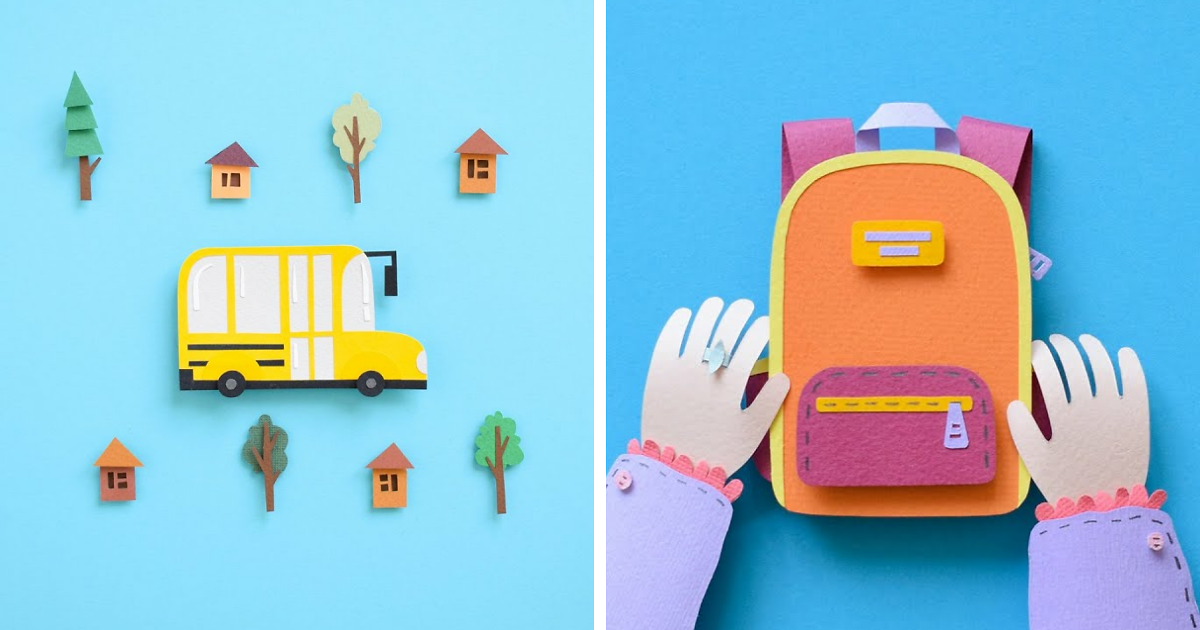
The first day of a new school year has a peculiar kind of energy. Backpacks are suspiciously clean, pencils still have erasers, and everyone is pretending they definitely remember how to wake up before sunrise. Beneath the fresh notebooks and carefully chosen outfits, however, students may be carrying excitement, uncertainty, curiosity, and enough nervous energy to power the classroom projector.
That emotional mixture is beautifully captured in a collection of handcrafted paper stop-motion animations created by paper artist and animator Margaret Scrinkl. Her seven school-themed piecesThe First Day of School, New Beginnings, New Adventures, Student Life, I Love Studying, Welcome Back to School, Be Creative, and Artist Lifeturn familiar school supplies and miniature paper scenes into cheerful reminders of what learning can be.
Stop-motion animation is especially appropriate for a back-to-school message. The technique creates movement by photographing physical objects, adjusting them slightly, and repeating the process frame by frame. A finished scene may last only a few seconds, but it depends on planning, patience, experimentation, and dozens of tiny improvementsthe same ingredients needed for a successful school year.
Why Back-to-School Animation Can Be So Motivating
A long lecture about responsibility can make students stare at the nearest window and reconsider a career in professional cloud watching. A playful animation delivers the same idea differently. Color, movement, humor, and recognizable objects make an abstract message feel immediate.
A paper pencil that marches into a notebook can represent taking the first step. A miniature desk can become a symbol of focus. A pile of colorful supplies can suggest that learning is not limited to memorizing facts; it is also about making, questioning, trying, revising, and occasionally discovering that glue sticks have rolled under every piece of furniture in the room.
Creative experiences can support self-expression, persistence, emotional awareness, and a sense of belonging. Arts-integrated activities also give students opportunities to solve problems and take a more active role in learning.
1. The First Day of School: Begin Before You Feel Completely Ready
The first animation captures the moment every school year must begin: arrival. It may look simple, but the first day can feel enormous. Students are entering unfamiliar rooms, meeting new teachers, learning new schedules, and attempting to remember at least twelve names before lunch.
The most useful lesson from The First Day of School is that confidence does not have to arrive before action. Sometimes action creates confidence. Walking through the door, finding a seat, introducing yourself, or asking one question can reduce the mystery of the day.
Turn first-day nerves into a small mission
Instead of demanding that the entire day be perfect, choose one manageable goal:
- Introduce yourself to one classmate.
- Learn the location of the library or student services office.
- Write down every assignment before leaving class.
- Ask for clarification when an instruction is confusing.
Small missions create momentum. The first day is not a final exam on your personality. It is simply frame one.
2. New Beginnings, New Adventures: Treat the Year as an Open Door
A new school year is one of the rare moments when change is expected. There are new subjects, classmates, routines, clubs, and opportunities to surprise yourself. New Beginnings, New Adventures captures that sense of possibility without pretending that every new experience will be comfortable.
An adventure is exciting partly because its outcome is unknown. A class that initially seems difficult may introduce a lifelong interest. A student who feels nervous about joining the debate team may discover a talent for public speaking. Someone who has always claimed to “hate science” may meet a teacher who turns a lab experiment into the highlight of the week.
Choose one experiment for the semester
Approach the year with a personal experiment rather than an intimidating resolution. You might read one book outside your usual genre, attend one club meeting, use a new note-taking method, or speak during class at least once each week.
An experiment is allowed to fail. That is what makes it useful. You are collecting information about yourself, not signing a lifelong contract with the chess club.
3. Student Life: Build a System for the Messy Middle
The phrase “student life” sounds charming in a brochure. In reality, it may include early alarms, crowded hallways, group projects, sports practice, surprise quizzes, missing chargers, and the mysterious ability of one worksheet to disappear between school and home.
The Student Life animation reminds viewers that school is not one dramatic event. It is a series of ordinary days. Success therefore depends less on occasional bursts of heroic motivation and more on repeatable systems.
Create routines that reduce daily decisions
Prepare clothes, devices, books, and supplies the night before. Use one location for completed assignments. Check the next day’s schedule before going to bed. Divide large projects into visible steps rather than relying on the timeless academic strategy known as “panic at 11:47 p.m.”
Consistent routines can make transitions feel safer and more predictable, while adequate sleep supports attention, behavior, and learning. Educational and child-development guidance commonly recommends adjusting school schedules gradually rather than attempting a complete lifestyle transformation the night before classes begin.
4. I Love Studying: Make Learning Active and Personal
I Love Studying presents an enthusiastic message that may sound wildly optimistic to anyone currently facing forty vocabulary terms and a three-page worksheet. Yet loving studying does not mean enjoying every assignment. It means discovering methods that make learning feel purposeful.
Passive studying often creates the illusion of progress. A student rereads the same paragraph six times, highlights nearly every sentence, and feels productive because the page now resembles a fluorescent traffic accident. Active learning requires more effort but usually gives clearer feedback.
Study by doing something with the information
Close the textbook and explain the concept aloud. Create questions from your notes. Draw a diagram. Compare two ideas. Teach the lesson to an imaginary audience, a patient family member, or a pet whose academic standards are refreshingly low.
Connect unfamiliar material to something you already understand. History can become a sequence of competing decisions rather than a parade of dates. Mathematics can become a language for patterns. Literature can become a conversation about why people make complicated choices. Studying becomes more engaging when the learner is building meaning instead of merely storing sentences.
5. Welcome Back to School: Remember That Learning Is Social
The words “welcome back” communicate more than the reopening of a building. They suggest that students have a place in the community. That message matters for returning students, but it may matter even more for anyone entering a new school, moving to a different grade level, or wondering whether they will fit in.
A sense of belonging is not created by a banner alone. It grows through names being remembered, questions being welcomed, differences being respected, and students noticing that their presence contributes something valuable.
Practice belonging as an action
Say hello to the person sitting nearby. Invite someone into a group. Learn how to pronounce classmates’ names correctly. Thank a teacher or staff member who helps you. Listen when another student describes an experience different from your own.
Supportive relationships and school connectedness can strengthen emotional well-being and create better conditions for learning. Classroom routines that encourage personal expression, empathy, and cooperation help transform a collection of individuals into a community.
6. Be Creative: Use Curiosity as a School Supply
Be Creative may be the most important animation in the collection because creativity is often misunderstood. It is not reserved for students who can draw perfect portraits or build award-winning sculptures out of recycled cardboard. Creativity is the ability to imagine alternatives, combine ideas, ask better questions, and test possible solutions.
A creative student might write an unusual opening for an essay, develop a memorable way to review vocabulary, design a more efficient group-project schedule, or notice a connection between music and mathematics. Creativity belongs in science labs, history discussions, coding projects, language classes, and everyday problem-solving.
Make a miniature stop-motion school project
Students can apply the animation’s message by creating a simple scene with paper, index cards, classroom objects, or clay. Plan a five-second story, secure a phone or camera, move the objects in tiny increments, and photograph each change.
The finished animation could explain the water cycle, demonstrate a math process, recreate a historical event, introduce classroom rules, or visualize a scene from a novel. The project teaches planning, sequencing, patience, visual communication, and the valuable discovery that bumping the camera halfway through is emotionally educational.
7. Artist Life: Respect the Process Behind Good Work
The final animation shifts attention from the finished artwork to the life of the person creating it. Artist Life celebrates imagination, but it also quietly honors practice. Handcrafted stop motion requires cutting, arranging, lighting, photographing, reviewing, correcting, and starting over when a tiny paper object refuses to cooperate with gravity.
That process offers a realistic model for academic improvement. Strong work rarely appears in one magical attempt. Essays become clearer through revision. Presentations improve through rehearsal. Difficult equations become manageable after errors reveal where understanding is incomplete.
Replace “I am bad at this” with a useful question
When something goes wrong, ask what the mistake is showing you. Do you need a different strategy? More practice? A clearer explanation? A quieter place to work? Help from a teacher, classmate, tutor, or family member?
A growth mindset is not the belief that effort automatically solves everything. It is the recognition that abilities can develop through effective strategies, feedback, support, and continued practice. The goal is not endless struggle; it is smarter learning.
How to Use These Seven Animations During the School Year
The collection can inspire more than a few minutes of viewing. Each animation can become a prompt for a classroom conversation, journal entry, family discussion, bulletin board, or creative assignment.
For students
Choose the animation that best represents your current mood. Write down one lesson from it and one action you can complete this week. Revisit the choice after a month to see whether your priorities have changed.
For teachers
Assign each animation to a small group and ask students to interpret its message. Let groups create a school-year motto, storyboard, poster, or short stop-motion response. The activity introduces collaboration without requiring anyone to deliver a ten-minute speech on the first morning.
For families
Use the themes to begin low-pressure conversations. Ask what feels exciting, what feels uncertain, which routine would make mornings easier, and what kind of support would actually be useful. Listening is usually more productive than immediately launching a motivational monologue worthy of a sports movie.
Extended Experience Reflection: What These Lessons Look Like in a Real First Week
The practical value of these seven back-to-school animations becomes clearest when their messages are applied to an ordinary first week. Imagine a student named Jordan beginning at a larger school. Jordan has new classrooms, unfamiliar teachers, a complicated rotating schedule, and a locker that appears personally opposed to opening. On Sunday evening, the entire semester feels like one enormous problem.
The lesson from The First Day of School reduces that problem. Jordan chooses three immediate goals: arrive on time, locate every classroom, and speak to one new person. None of those actions guarantees a perfect day, but each is specific enough to complete. By lunch, the building already feels slightly less like an airport designed by a maze enthusiast.
New Beginnings, New Adventures appears when Jordan notices a robotics club announcement. Joining sounds interesting, but the first meeting conflicts with the comforting plan of going directly home. Instead of deciding whether robotics must become a permanent passion, Jordan treats one meeting as an experiment. That removes the pressure. Curiosity is now enough reason to attend.
By Wednesday, the excitement has faded and Student Life becomes more relevant. Two assignments are due, sports practice ends late, and a permission form has disappeared. Jordan creates a simple evening checklist and places school materials beside the front door. The system is not glamorous, but neither is searching for a math folder while wearing one shoe.
I Love Studying becomes useful during a difficult biology lesson. Rereading the chapter produces very little understanding, so Jordan draws the process as a sequence of pictures and explains it aloud. The explanation is awkward at first. That awkwardness reveals exactly which step needs another look. Studying changes from staring at information to working with it.
The message of Welcome Back to School appears through a small social moment. Jordan sees another student sitting alone and asks whether the seat is available. The conversation lasts only a few minutes, but both students recognize a familiar face the next day. Belonging begins quietly; it rarely arrives with dramatic music and a perfectly timed group high-five.
Later, Be Creative influences a history assignment. Instead of preparing another crowded slideshow, Jordan’s group builds a short paper animation showing how a major event unfolded. The project takes planning and several failed attempts. It also produces questions the group would never have asked while copying bullet points onto slides.
Finally, Artist Life offers the lesson that holds everything together. Jordan’s first quiz score is lower than expected. The result feels disappointing, but it is treated as information rather than a permanent label. Jordan reviews the missed questions, asks the teacher for guidance, and changes the study method before the next assessment.
By Friday, school is not suddenly easy. The locker is still temperamental, the schedule still requires attention, and Monday is approaching with unreasonable speed. Yet the week has become understandable. One small action led to another, just as individual photographs become movement in stop-motion animation.
That may be the most encouraging message in all seven pieces. A school year does not have to be mastered at once. It can be built frame by frame: one question, one routine, one revision, one conversation, and one brave experiment at a time.
Note: The seven animation titles are based on Margaret Scrinkl’s handcrafted back-to-school paper stop-motion collection. The educational interpretations, examples, and practical applications in this article are original editorial content informed by established animation, education, creativity, student-wellness, and child-development resources.