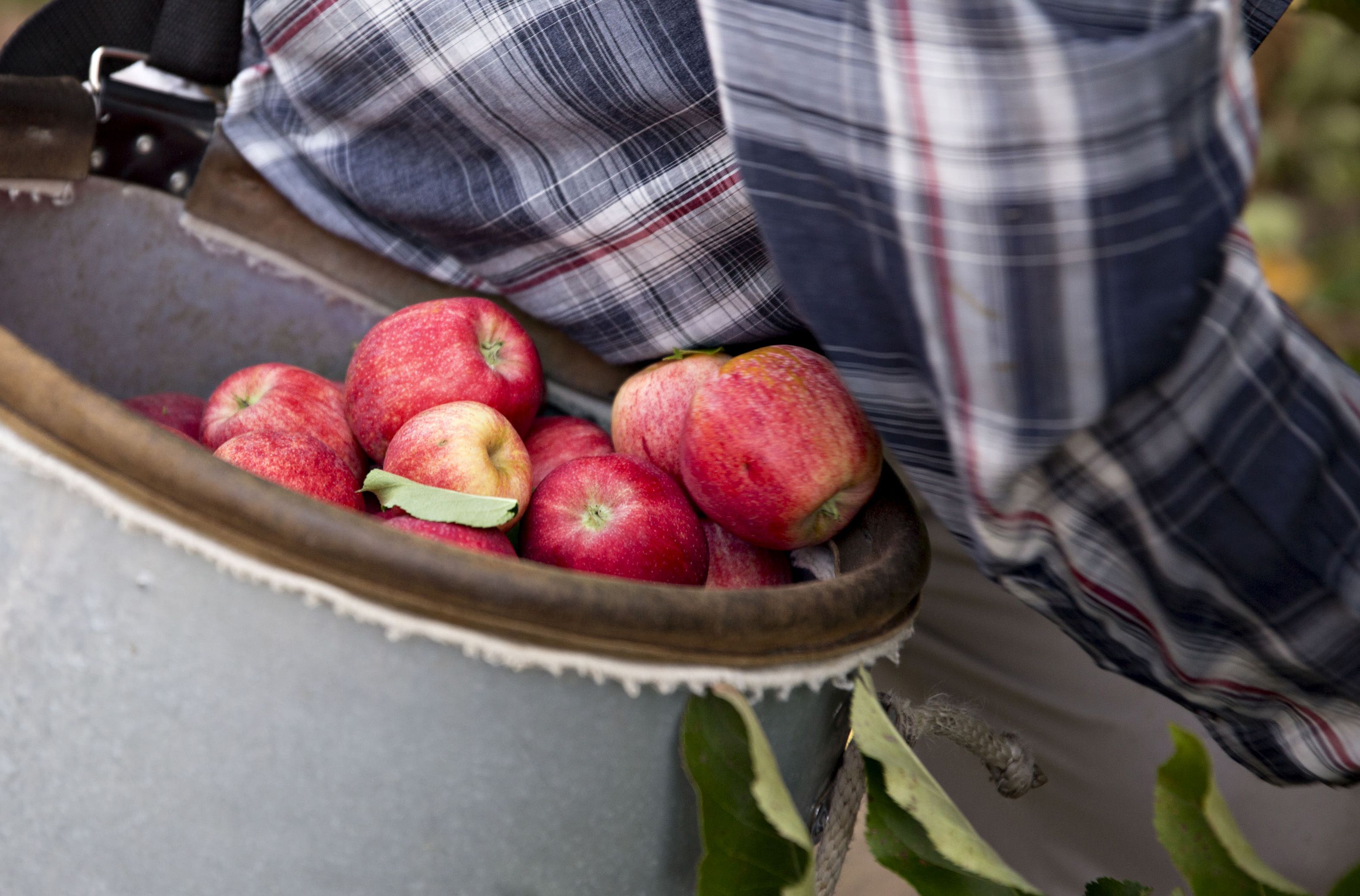
There are few fall activities more wholesome than wandering into an apple orchard with big plans, comfy shoes, and the innocent belief that you will pick “just a few.” Forty-five minutes later, you are holding a bag heavy enough to qualify as strength training and wondering whether your kitchen really needs twelve pounds of Honeycrisp. It happens to the best of us.
That is exactly why apple orchard etiquette matters. A great orchard visit is not just about going home with crisp apples and cinnamon-donut dreams. It is also about respecting the trees, the farm staff, the fruit, and the other visitors sharing the rows with you. Unlike a supermarket produce aisle, a U-pick orchard is a living, working farm. Rules are not there to kill the vibe. They protect the crop, keep people safe, and make sure the orchard can keep welcoming guests season after season.
If you want your next outing to feel charming instead of chaotic, these are the apple picking rules worth remembering. Think of them as the unspoken code of orchard citizenship, only with better snacks at the end.
1. Check In First and Read the Orchard’s Rules Like a Functional Adult
The first rule of orchard etiquette is wonderfully simple: do not freelance the experience. Before you head into the trees, check in at the farm stand, entrance tent, or picking shed and read the posted signs. Many orchards have different procedures for admission, bag sizes, timed entry, which rows are open, and how payment works. Some want you to prepay for a bag. Others weigh your fruit afterward. A few allow your own containers, while many want you to use theirs.
This is not orchard bureaucracy for orchard bureaucracy’s sake. It is how farms keep traffic moving, protect certain varieties until they are ripe, and avoid the agricultural version of a parking-lot free-for-all.
Why this matters
Apple varieties do not all ripen at the same time. One row may be ready for picking while the next one is still a week away from greatness. When guests skip the check-in process and wander wherever they please, they can end up picking unripe fruit, entering restricted areas, or trampling parts of the farm that are not open to the public.
Best practice
Before you grab a single apple, ask a staff member three quick questions: which rows are open, how pricing works, and whether sampling is allowed. Those ten seconds can save you from a long afternoon of confusion, side-eye, and accidental rule-breaking.
2. Pick Only Where You’re Told to Pick, and Only What You Plan to Buy
This one sounds obvious, but orchard excitement does strange things to people. Suddenly, the rules feel optional, every row looks inviting, and someone in your group starts pointing at fruit beyond the marked area like they have discovered buried treasure. Resist that energy.
One of the most important pieces of farm etiquette is staying in designated picking zones. If a row is roped off, taped off, or simply not marked as open, leave it alone. If the orchard provides a specific bag, box, or basket, use that container rather than trying to invent your own system with a tote bag the size of a moving box.
And then there is the golden rule of U-pick life: pick only what you intend to purchase. Do not fill a bag with apples and then decide halfway back to the stand that maybe you were being “too ambitious.” The orchard is not a tasting room for your impulse control issues.
Why this matters
Fruit that is picked too early, handled carelessly, or abandoned after being removed from the tree cannot simply be put back into service. Orchards plan carefully around ripeness, labor, and yield. Overpicking creates waste, hurts the farm’s income, and leaves fewer quality apples for the next family.
Best practice
Start smaller than you think you need. A modest bag of excellent apples is better than a heroic quantity that bruises on the ride home and turns into a guilt pile on your counter.
3. Be Gentle With the Fruit and the Trees
If there is one move that separates a seasoned orchard visitor from a chaotic first-timer, it is how they pick the apple. Proper technique is not dramatic. You do not yank. You do not tug downward. You definitely do not shake the branch like you are trying to win a carnival prize.
The usual method is simple: cradle the apple in your hand, lift and twist gently, and let the fruit come off naturally. A ripe apple should release without a wrestling match. If it refuses to budge, it is probably not ready, or it is not the right fruit to pick.
Just as important, never climb the tree, hang from branches, or pull limbs toward you. Orchard trees may look sturdy, but repeated rough handling damages bark, breaks branches, and harms the fruiting spurs that help produce next year’s crop. In other words, one sloppy afternoon can mess with apples you have not even met yet.
Why this matters
Gentle handling prevents bruising and protects the tree itself. Apples that are dropped, tossed, or packed too tightly can look fine at first and still become mealy, brown, or disappointing later. Nobody wants to pay premium orchard prices for fruit that took a beating in the bag.
Best practice
Pick with intention. Choose ripe-looking fruit, place it carefully into your container, and avoid overfilling. If the orchard provides ladders or picking tools, use only what they approve and follow directions. If they do not provide them, assume there is a reason.
4. Do Not Treat the Orchard Like an All-You-Can-Eat Buffet
Yes, the apples look amazing. Yes, you are surrounded by free-range temptation. No, that does not mean you should snack your way across half the orchard before reaching the checkout line.
Policies on sampling vary. Some orchards are relaxed about a taste or two. Others explicitly ask guests not to eat fruit in the field. The polite move is not to guess. The polite move is to ask. If sampling is limited, keep it truly limited. Orchard etiquette is not “one bite from five apples because you were comparing flavor notes.” That is just stealing in cozy autumn lighting.
The same idea applies to damaged or unripe fruit. Do not pick an apple, reject it, and toss it onto the ground. Farms often have specific ways they want unwanted fruit handled because fallen produce can attract pests and create waste.
Why this matters
U-pick farms operate on relatively thin margins and count on visitors to respect the system. Unpaid sampling, casual waste, and half-eaten fruit add up fast during busy weekends.
Best practice
Wash fruit before eating, follow the orchard’s rules on tasting, and keep your “quality control” phase short and honorable. A good rule of thumb is simple: if you touched it, bruised it, or picked it, be prepared to buy it.
5. Supervise Kids, Mind Your Belongings, and Remember That Farms Are Not Theme Parks
Apple orchards are magical for kids. They are also full of distractions, uneven ground, low branches, insects, muddy patches, tractors, wagons, and the occasional sprinting child who suddenly believes they are in a harvest-themed action movie. This is why many orchards remind parents to keep children supervised at all times.
That is not anti-fun. It is pro-everybody-going-home-without a twisted ankle.
Kids should know not to throw apples, run between rows, climb trees, or pick random fruit just because it is within reach. Adults should also keep personal bags manageable and follow the orchard’s container rules. Many farms prohibit large bags, coolers, or outside containers for practical reasons, including safety, payment control, and easier movement through the rows.
Why this matters
Orchards can be family-friendly and still be real agricultural spaces. The more crowded the day, the more important it is to stay aware of where your group is, what your kids are doing, and whether your stroller, wagon, or oversized tote is creating problems for everyone else.
Best practice
Set expectations before you enter. Tell kids the rules in plain English: stay close, use walking feet, pick only with permission, and keep apples in the bag, not in the air. Revolutionary concept, I know.
6. Respect the Farm as a Working Farm, Not Just a Pretty Backdrop
A lot of people visit apple orchards for the experience as much as the fruit. That is part of the fun. You get the photos, the cider, the fresh air, and the annual tradition of pretending you live in a fall commercial. But good orchard manners mean remembering that the setting is still a business and a workplace.
That means staying out of restricted areas, avoiding machinery, following weather instructions, and not wandering into private spaces because the lighting looks better over there. If staff say a section is closed due to ripeness, mud, bees, or thunderstorms, treat that like the end of the discussion.
Pet rules also vary more than people realize. Some orchards welcome leashed dogs. Others do not allow pets in picking areas at all. The answer is not “my dog is friendly.” The answer is whatever the orchard says the answer is.
Why this matters
Working farms contain real hazards: equipment, uneven terrain, insects, changing weather, and crop-management zones that are not designed for wandering visitors. Courtesy here is also safety.
Best practice
Wear sturdy shoes, bring water, use handwashing or sanitizer stations, and obey staff instructions quickly when conditions change. An orchard employee asking people to leave the field for lightning is not trying to ruin your day. They are trying to keep your family from becoming a very memorable safety incident.
7. Leave the Orchard Better Than You Found It
The final rule is the broadest and maybe the most important: act like a guest worth inviting back. Throw away your trash. Return wagons or tools if the orchard lends them out. Do not leave cups, napkins, wipes, or snack wrappers under a tree like some kind of festive raccoon. Be patient in lines. Be polite to staff. Say thank you. If the farm is busy, remember that everyone else also came for an idyllic day and not a live demonstration of your impatience.
This also includes leaving the orchard at the right time. If the last U-pick entry is thirty minutes before closing, do not arrive at the last possible second expecting a leisurely two-hour wander. If your bag is full, head out rather than continuing to browse the rows like you are on a fruit safari.
Why this matters
Orchards succeed when guests respect the place, the people, and the process. Good behavior helps farms stay cleaner, safer, and more enjoyable for the next wave of visitors. It also makes staff members much more likely to answer your questions about the best baking apples, which is a relationship worth preserving.
Best practice
Think of your visit as shared space. The best apple picking tips are not just about finding perfect fruit. They are about making the day pleasant for everybody in the orchard, including the people whose work made it possible.
The Core Lesson of Apple Orchard Etiquette
At its heart, apple orchard etiquette is not complicated. Check in, follow directions, pick carefully, supervise your crew, and respect the farm. That is the whole thing. The charm of a U-pick orchard comes from the fact that you get to participate in the harvest instead of just buying the result. But participation comes with responsibility.
Do it right, and you get the best version of the experience: great apples, a fun day outdoors, and the tiny but satisfying glow of knowing you were not the person ignoring the signs. That alone is worth the trip.
So the next time you head out for a day of family apple picking, remember this: be gentle, be observant, be courteous, and maybe do not bring home enough fruit to accidentally open a pie shop. Unless that is your plan. In that case, carry on with dignity.
What Good Orchard Etiquette Feels Like in Real Life
The funniest thing about orchard etiquette is that it sounds formal on paper but feels completely natural once you are actually there. I have been on orchard visits where the difference between a smooth day and a mildly chaotic one came down to tiny choices. The families who checked in first, asked where to start, and picked carefully always seemed to glide through the experience. They left with great fruit, good photos, and enough energy to enjoy cider afterward. The people who skipped the instructions looked like they were auditioning for a low-budget reality show called Harvest Decisions Gone Wrong.
One of the biggest lessons is how much better the day goes when you slow down. In an orchard, rushing almost always makes things worse. If you hurry, you grab apples that are not ready, overfill the bag, lose track of your group, and miss the signs that tell you where to go. If you take your time, you notice which fruit is actually ripe, which row is open, and which apples will be best for pie versus snacking. The visit stops feeling like a race and starts feeling like what people wanted in the first place: a fall tradition.
I have also learned that kids usually follow orchard rules surprisingly well when adults explain the reason behind them. “Do not climb the tree” can sound arbitrary. “Do not climb the tree because it hurts the branches and the apples for next year” makes more sense. The same goes for not throwing fruit, not running off, and not tasting everything in sight. Once children understand that the orchard is a farm, not just a playground with produce, they often rise to the occasion. Also, giving them the important role of “official apple spotter” works wonders.
Another real-world truth: the best orchard visitors are the ones who accept that each farm is a little different. One orchard might welcome leashed dogs, another might not. One might let you sample a little, another might want every apple washed and paid for first. One might allow wagons; another may ban them because the terrain is uneven. Good etiquette means adapting instead of assuming. The phrase “but the other orchard let us” is not nearly as persuasive as people think it is.
And then there is the quiet magic of leaving well. You pay, thank the staff, carry out your apples, and head home with that specific kind of tired that only comes from fresh air and carrying produce around for fun. You wash the apples, line them up on the counter, and suddenly the whole trip feels bigger than a simple purchase. It feels like you participated in something seasonal, local, and real.
That is why these apple orchard etiquette rules matter. They are not fussy little restrictions. They are what protect the charm of the experience. When visitors treat the orchard with care, the day stays peaceful, the fruit stays beautiful, and the farm can keep doing what it does best. Which means next year, when you inevitably say, “We should only get a small bag this time,” the orchard will still be there, ready to watch you underestimate your apple-buying ambitions all over again.