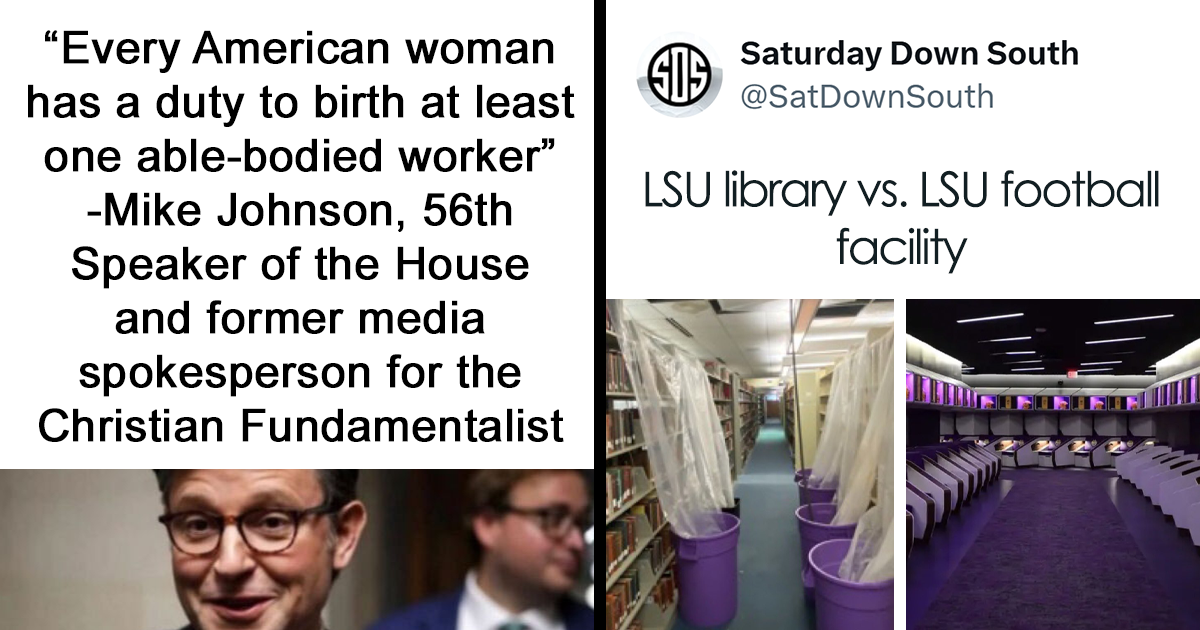
There was a time when “dystopia” meant giant robots, neon rain, and somebody dramatically whispering, “The system controls everything.” Now it means your car wants a software update before your heated seats work, your grocery bill feels like a personal insult, and a text message pretending to be your toll agency is somehow more persistent than your actual friends. That is exactly why a roundup like 51 Posts That Show The Everyday Signs Of The Modern Dystopia We’re Starting To Live In hits such a nerve. These posts are funny, bleak, weirdly relatable, and just grounded enough in real life to make you stare into the middle distance for a second.
The power of these “modern dystopia” posts is that they rarely show one giant catastrophe. They show the smaller receipts. A locked-up deodorant shelf. A QR code menu that still asks for a tip before a human being has appeared. An app that promises convenience and delivers three service fees, two mystery charges, and a mild identity crisis. One post on its own looks like a joke. Fifty-one of them together start to look like a mood board for late-stage everyday life.
That is what makes this topic so sticky online. People are not responding only to doom. They are responding to recognition. The posts feel true because modern dystopia is less about dramatic collapse and more about the slow creep of systems that are expensive, extractive, impersonal, and somehow always asking you to click “accept.”
Why These Modern Dystopia Posts Land So Hard
The best dystopian posts are not science fiction. They are customer service hold music with a darker lighting scheme. They show ordinary moments where life feels increasingly automated, monitored, optimized, and monetized. You are not chased by a robot dog; you are chased by a parking app, a subscription renewal, a scam text, and a productivity dashboard that politely suggests you become a more efficient version of yourself by Tuesday.
What gives these posts their punch is the contrast between the promise and the reality. Technology was sold as liberation. Convenience was supposed to save time. Flexibility was supposed to make work more humane. Choice was supposed to empower consumers. Instead, many people feel like they are living inside a maze built by pricing models, algorithms, notifications, and interfaces designed by someone who has never once tried to reset a password while standing in a pharmacy line.
That contrast is where the humor lives. It is also where the unease lives. The funniest modern dystopia posts work because they capture the absurdity of systems that are polished on the surface and strangely hostile underneath. Everything looks streamlined until you actually need help. Then suddenly you are wrestling a chatbot, verifying your humanity for the fifth time, and wondering whether the machine knows something you do not.
The Everyday Signs Of Modern Dystopia Hiding In Plain Sight
1. Surveillance has become décor
One major theme in these posts is how normal surveillance now feels. Doorbell cameras, license plate readers, workplace badge tracking, school monitoring software, phone location sharing, and “smart” everything have made observation feel ordinary. The creepy part is not that the tools exist. It is that they are increasingly packaged as convenience, safety, or personalization. A post about a screen watching a parking lot is not just a joke about cameras. It is a joke about how being watched has become background scenery.
That is why modern dystopia rarely arrives wearing a villain cape. It arrives in a tidy interface that says your experience matters. The line between useful and invasive gets blurrier every year, and internet posts capture that blur perfectly. When people share photos of public spaces saturated with scanners, sensors, and warning signs, they are not only being dramatic. They are documenting a cultural shift in real time.
2. Convenience now comes with a surcharge and emotional damage
If there is one unofficial mascot of the modern dystopia, it may be the fee breakdown screen. A lot of these posts center on the consumer experience getting more annoying while somehow also getting more expensive. Hidden charges, dynamic pricing, tip prompts in strange places, endless subscriptions, cancellation obstacle courses, and digitally polished junk fees have turned routine purchases into mini detective stories.
That frustration is bigger than personal irritation. It reflects the way everyday life is increasingly designed to extract a little more money, a little more data, and a little more patience from people. A coffee order is not just a coffee order anymore. It is an app login, a loyalty system, a digital wallet, a push notification, and an invitation to join a rewards ecosystem that sounds less like a café and more like a tiny corporate religion.
So when a post shows a vending machine asking for a gratuity or a hotel checkout screen blooming with surprise fees, people laugh because the joke has already happened to them. Twice. This week.
3. Work became flexible, then weirdly inescapable
Another recurring sign of modern dystopia is the transformation of work into something that follows people everywhere. Messages arrive after hours. Performance is tracked in dashboards. Meetings generate summaries before anyone has mentally recovered from the meeting itself. “Flexible” can sometimes mean “always available,” while “autonomy” can look suspiciously like being left alone with six platforms and fourteen tabs open.
Posts about work-from-home setups, return-to-office badge scans, algorithmic scheduling, or gig apps quietly bossing people around resonate because they expose a strange contradiction. Work is marketed as more modern and efficient, yet many workers feel more detached, more measured, and less secure. A modern dystopia post about a wellness webinar scheduled during lunch or an app punishing a worker for pausing too long is funny in the way stepping on a rake is funny when it happens to society as a whole.
The old nightmare was the faceless corporation. The new nightmare is the cheerful productivity tool with rounded corners.
4. Public space keeps turning into monetized space
Many of the strongest posts in this genre show how hard it has become to simply exist somewhere without being sold to, scanned, upsold, or redirected through a branded process. Gas pumps play ads. Screens shout in elevators. QR codes replace printed information. Public benches seem designed for suspicion rather than comfort. Retail shelves are locked. Entire city blocks can feel like one long funnel into a payment system.
This is one reason the phrase “everyday signs” matters so much. Modern dystopia is not only about giant institutions. It is about the atmosphere of ordinary places. It is the feeling that even tiny moments of public life are being optimized for liability, branding, or revenue. When a post shows a basic human task becoming oddly complicated by a screen, a scanner, or a policy notice, it is pointing to that atmosphere.
What gets lost in all this is spontaneity. Frictionless living was supposed to make life easier, but often it has just replaced human friction with digital friction. You are still stuck. There is just a nicer font involved.
5. Loneliness in a hyperconnected world feels especially bleak
Some of the most quietly devastating posts are not about pricing or surveillance at all. They are about isolation. A crowded subway where nobody looks up. A group of people together but each on separate screens. A teenager asking a bot for comfort. An elderly person navigating systems clearly not designed for anyone who wants a human voice. These moments feel dystopian because they reveal a society that is technically connected and emotionally scattered.
This theme hits especially hard because it is not exaggerated. Many people genuinely feel that daily life has become more fragmented, more transactional, and less rooted in community. That is why posts about empty office culture, ghosted group chats, silent apartment living, or algorithm-shaped social habits travel so far. They are not simply sad observations. They are evidence of a deeper cultural tension: we built endless channels for communication and still struggle to feel known.
In other words, the modern dystopia is not just that machines talk more. It is that people often talk less.
6. AI keeps showing up before society has fully decided what it wants
No discussion of modern dystopia is complete without artificial intelligence drifting into every product like glitter at a craft store: impossible to avoid and somehow now on your sleeve. Posts about AI-written summaries, chatbots replacing service agents, weird image generation, synthetic customer support, and auto-generated workplace everything are everywhere because people sense a genuine cultural transition happening in real time.
The mood is not pure panic. It is closer to exhausted suspicion. Many people can see the usefulness of AI tools. They can also see how quickly companies move from “helpful assistant” to “please accept this lower-cost substitute for an actual person.” That is what gives these posts their edge. The unease is not about one machine becoming evil overnight. It is about entire systems being rebuilt faster than social norms, labor protections, or basic common sense can keep up.
A modern dystopia post showing an obviously AI-generated sign in a real business is funny because it captures a bizarre middle stage of history: not the future, not the past, just a very odd beta test of civilization.
7. The cost of being a person keeps climbing
Another reason these 51 posts feel so sharp is that they tap into financial weariness. Rent, groceries, transportation, childcare, healthcare, insurance, utilities, subscriptions, and plain old existence all feel heavier than they used to. Modern dystopia, in this sense, is not just a visual aesthetic. It is the psychological effect of constantly doing math in your head. Can I afford this? Why is this fee here? Why is the cheaper option worse in eight different ways?
The best posts in this category are often simple photos: a tiny apartment with a jaw-dropping rent tag, basic toiletries locked behind security cases, or a meal priced like a minor luxury. Their power comes from understatement. They do not need long captions. Everyone already understands the plot.
That financial strain also intensifies everything else. Surveillance feels worse when it is tied to work. Automation feels colder when it replaces support. Digital life feels more draining when every click is attached to a bill. The modern dystopia is not one problem. It is a stack of problems that keep introducing each other.
Why Humor Is the Perfect Delivery System for This Topic
If these posts were simply bleak, they would not spread the same way. What makes them memorable is the tone. They use humor as a pressure valve. Sarcasm, understatement, and absurd juxtaposition let people talk about serious cultural stress without sounding like they are giving a lecture in a bunker. A photo of a locked toothpaste shelf with a caption about “the future of freedom” works because the joke is tiny and the truth behind it is not.
That humor matters. It creates a shared language for frustration. It lets people say, “This is ridiculous, right?” and hear a thousand voices answer, “Yes, deeply ridiculous.” In a strange way, that collective recognition is one of the least dystopian things available. It is community through complaint, which may not be glamorous, but it is still community.
And honestly, sometimes comedy is the only reasonable response. If your washing machine needs Wi-Fi, your landlord has an app, your doctor’s portal sends cryptic billing messages at 2 a.m., and your sandwich order now requires two-factor authentication, a dramatic monologue is understandable. A meme is faster.
What These 51 Posts Really Reveal About Everyday Life
Taken together, posts like these do more than catalog annoyances. They reveal what people fear they are losing: privacy, affordability, human contact, control over their time, and the ability to participate in basic life without passing through five monetized checkpoints. The phrase “modern dystopia” sticks because it captures that low-level feeling of living inside systems too large to argue with and too intimate to ignore.
At the same time, these posts are not proof that society is doomed beyond repair. They are proof that people still notice when something is off. That matters. Awareness is not a cure, but it is a refusal to normalize everything. Every sarcastic caption under a bizarre everyday photo is a tiny act of cultural record-keeping. It says: this is happening, this is strange, and no, we are not pretending it is normal just because it arrived in a sleek app update.
That may be the most useful takeaway from a collection like this. The real issue is not that the posts are dramatic. It is that many of them barely need exaggeration.
Everyday Experiences That Make the Theme Feel Uncomfortably Real
Think about a perfectly ordinary weekday. You wake up and check your phone before your brain has fully joined the meeting. There are overnight emails, app notifications, fraud alerts, promotional texts, and one message from a company you are fairly sure you have never heard of but apparently “miss greatly.” Before breakfast, you have already been targeted, nudged, and gently manipulated by six different systems. Very efficient. Very normal. Very not alarming at all.
Then the day starts doing what modern days do best: turning routine tasks into multi-step obstacle courses. You try to pay a bill, but the billing portal redirects you twice, offers autopay like it is a sacred path to enlightenment, and quietly adds a convenience fee for the privilege of not mailing a check like it is 1998. You order lunch, but the app wants your location, your loyalty, your review, your tip, and possibly your firstborn child. You go to a store and discover half the essentials are locked behind plastic because society has apparently become one giant trust exercise gone wrong.
Work is not exactly a sanctuary either. Maybe you are in an office where every badge scan feels like it is being logged for a documentary called Compliance: The Musical. Maybe you work remotely and your calendar has become a form of abstract art made entirely of colored rectangles and soft panic. Maybe your boss wants innovation, but only if it fits in a spreadsheet. Maybe an AI tool is now summarizing your thoughts before you have finished having them. None of this is dramatic enough for a movie trailer, which is exactly why it feels so eerily modern.
And then there is the social side of life, which somehow manages to be both crowded and thin. You can be surrounded by people and still feel like everyone is buffering. Friends are busy, families are stretched, neighborhoods are less communal, and many interactions now pass through a screen before they reach a heart. It is not that people do not care. It is that life increasingly comes preloaded with noise, exhaustion, and administrative nonsense. By the time evening rolls around, a lot of people do not have energy left for much beyond scrolling through evidence that other people also feel weird about all this.
That is why these posts travel. They are not only jokes. They are field notes. They capture the tiny surreal moments that make people think, “Wait, are we all just pretending this is fine?” The ad-covered gas pump. The medical bill written like a riddle. The chatbot that thanks you for your patience while actively manufacturing the need for patience. The apartment listing priced like a penthouse and staged like a broom closet. The child using school software that feels more corporate than educational. The restaurant replacing menus with a QR code on a sticky table while somehow increasing the expectation of gratitude.
None of these experiences alone proves we are living in a full dystopia. But stack enough of them together and the pattern becomes hard to ignore. Daily life starts to feel less like participation and more like navigation. You are not simply living; you are troubleshooting, verifying, authorizing, disputing, updating, and trying not to get scammed in the process. That is the emotional core of this topic. The modern dystopia is not one giant nightmare descending from the sky. It is the slow realization that ordinary life has become strangely optimized against comfort, clarity, and human ease.
Conclusion
51 Posts That Show The Everyday Signs Of The Modern Dystopia We’re Starting To Live In works as a title because it promises what readers already suspect: the weirdest parts of modern life are not hidden in distant futures. They are sitting right here in grocery aisles, work apps, fee screens, locked cabinets, scam texts, and public spaces full of instructions but short on warmth. These posts are funny because they are observant, and they are popular because they capture a shared feeling that life is getting more technologically advanced without always becoming more human.
If there is a silver lining, it is this: people are still noticing. They are still mocking the nonsense, sharing the receipts, and refusing to treat every absurd development as inevitable progress. That does not solve the problem, but it does keep the lights on intellectually. Sometimes the first step in resisting a modern dystopia is simply pointing at it and saying, “Well, that seems cursed.”