Antarctica has a branding problem. For most people, it exists as a giant white blur at the bottom of the mapa place of endless snow, cartoon penguins, and the kind of cold that makes your eyebrows file a formal complaint. It is remote, dramatic, and so easy to misunderstand that it has become one of the most myth-covered places on Earth.
That is a shame, because the real Antarctica is far more interesting than the simplified version floating around in pop culture. It is not just a frozen blank space. It is a continent with mountains, deserts, research stations, complex ecosystems, and a massive influence on the planet’s oceans and climate. It is both brutally harsh and scientifically priceless. In other words, Antarctica is not boring. It is just badly marketed by people who think every icy place comes with a polar bear.
Let’s clear the frost off the facts. Here are five of the most common misconceptions about Antarctica, debunked.
Why Antarctica Is So Easy to Get Wrong
Part of the confusion comes from distance. Very few people will ever visit Antarctica, so most of what we “know” about it comes from movies, school maps, wildlife documentaries, and the occasional social media post featuring a penguin looking vaguely offended. Another problem is that people constantly mix up the Arctic and Antarctica, as if the top and bottom of the planet are basically roommates with different zip codes.
They are not. The Arctic is an ocean surrounded by land. Antarctica is a continent surrounded by ocean. That difference alone changes the wildlife, the climate, the ice behavior, and the human story. Once you start there, a lot of familiar myths begin to melt.
Misconception #1: Antarctica Is Just a Giant Ice Cube, Not a Real Continent
This is probably the biggest misunderstanding of all. Because Antarctica is covered almost entirely by ice, many people imagine it as a floating mass of frozen water rather than a full-fledged continent. But Antarctica is absolutely a continentone of Earth’s largest, in factwith land, rock, mountains, valleys, lakes, and buried landscapes beneath its ice sheet.
The ice is enormous, yes. In many places it is miles thick, and it hides much of the terrain below. But “covered by ice” is not the same thing as “made of ice.” Underneath that frozen blanket are mountain ranges, subglacial lakes, volcanic features, and exposed rock in places where the ice gives way.
One of the best examples is the McMurdo Dry Valleys, a region often described as one of the most Mars-like places on Earth. These valleys are among the largest ice-free areas in Antarctica, and they are so cold and dry that snowfall is rare and moisture disappears quickly. So if your mental image of Antarctica is a flat white sheet with nothing else going on, the Dry Valleys would like a word.
The truth is more dramatic than the myth. Antarctica is a continent with a hidden geography. The ice may dominate the view, but it does not erase the land beneath it. If anything, it makes the place even more fascinating: a whole world, partly concealed, still revealing its secrets through research and exploration.
What This Means
Thinking of Antarctica as “just ice” flattens the story. It ignores geology, landscape diversity, and the scientific value of what lies below and beyond the ice sheet. Antarctica is not a frozen prop. It is a continent with structure, history, and terrain.
Misconception #2: Antarctica Is Always the Same Kind of Cold Everywhere
Antarctica is the coldest continent on Earth. That part is true. But the myth kicks in when people assume that every inch of it is equally cold, equally snowy, and equally miserable every single day of the year. Antarctica is extreme, but it is not uniform.
Conditions vary dramatically between the interior and the coast. The high interior plateau, including the South Pole, is bitterly cold and dry. Coastal regions can be comparatively milder, especially in summer, when temperatures may hover near freezing or even climb above it in some places. That does not mean beach weather, unless your beach plan involves parkas and existential respect for windchill, but it does mean Antarctica has more climate variation than many people realize.
It is also misleading to imagine Antarctica as a place where snow falls nonstop. In reality, much of the continent is incredibly dry. Antarctica is often described as a polar desert because precipitation is low. In some regions, especially the Dry Valleys, there is very little snowfall at all. The continent’s cold traps moisture, and without much water vapor in the air, there is not always much snow to fall.
Then there is the matter of sunlight. Antarctica does not have ordinary day-night cycles across much of the continent. Depending on the season and the location, it can experience months of darkness or months of continuous daylight. So even the way Antarctica feels is seasonally strange. It is not just cold; it is cold with mood lighting set to “planetary drama.”
The Better Way to Think About It
Antarctica is not one climate experience. It is a continent of extremes within extremes: icy coasts, frigid interior plateau, dry deserts, violent winds, bright summers, and dark winters. Saying it is “freezing all the time” is like saying the ocean is “wet.” Technically correct, but not especially helpful.
Misconception #3: Polar Bears and Penguins Live Together
Ah yes, the classic imaginary dinner party: polar bear on one side, penguin on the other, both waiting for a documentary narrator to explain their friendship. It is a wonderful image. It is also completely wrong.
Polar bears live in the Arctic, not Antarctica. Penguins live in the Southern Hemisphere, and several species are associated with Antarctica and nearby subantarctic regions. These animals do not share a neighborhood, a continent, or a casual brunch spot. They are separated by the entire planet.
This mix-up happens because both animals are strongly linked with “cold places” in popular culture. Toss in snow, ice, and a map that most people have not stared at since middle school, and the confusion becomes almost inevitable. But the distinction matters. The Arctic and Antarctica support very different ecosystems. Antarctica has penguins, seals, seabirds, whales, krill, and marine life adapted to the Southern Ocean. It does not have native land mammals like polar bears.
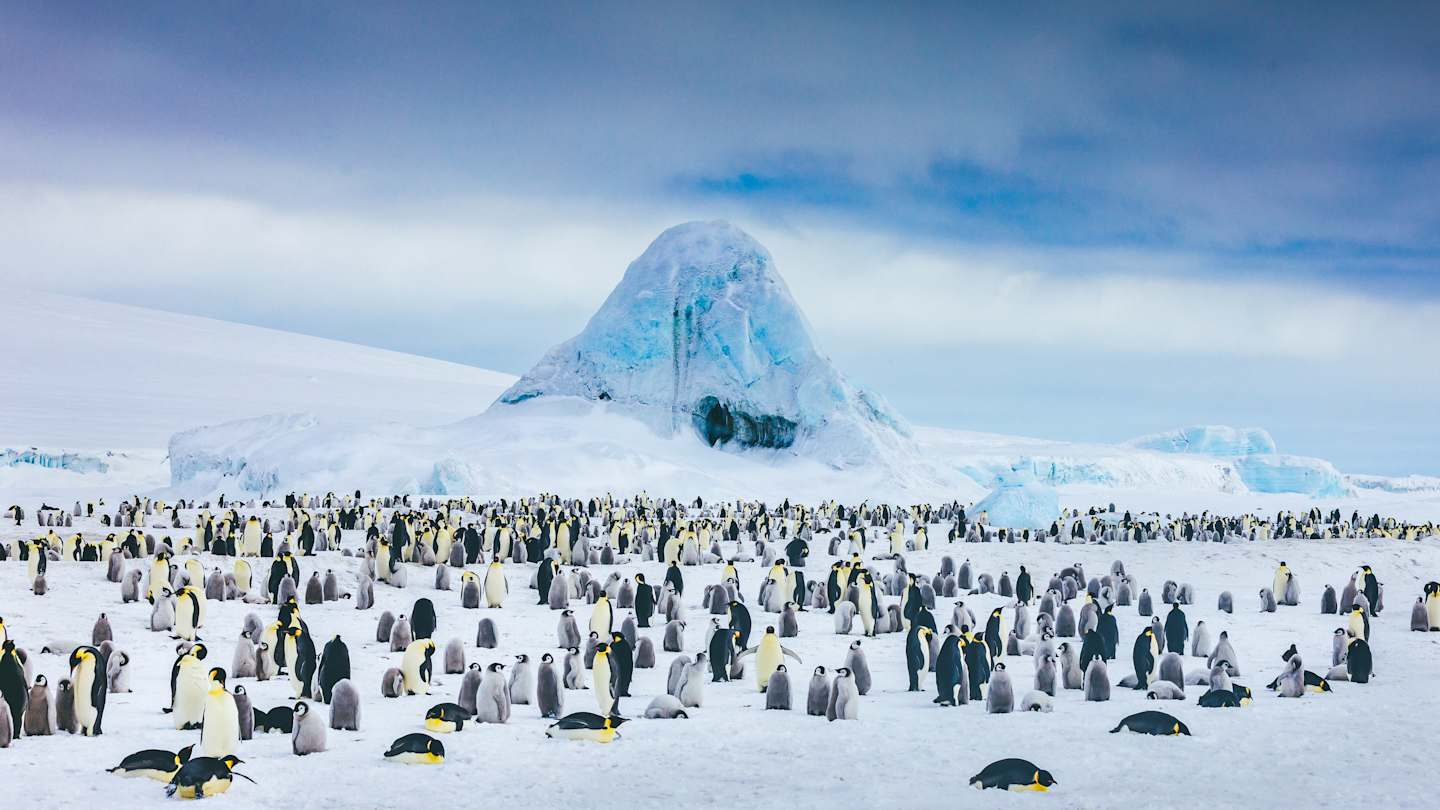
There is another fun wrinkle: even though penguins are iconic Antarctic animals, they do not live at the South Pole itself. Many species stay near coasts and access open water for feeding. Antarctica is huge, and wildlife distribution is not random. A penguin is not going to waddle across the continent because a postcard designer thought it looked tidy.
Why This Myth Matters
It sounds harmless, but this misconception blurs the differences between polar regions. If we misunderstand where species live and what they depend on, we also misunderstand the environmental pressures they face. The Arctic and Antarctica are both crucial, but they are not interchangeable ice-themed sets.
Misconception #4: Nobody Lives or Works in Antarctica
This one is half true in the way a trick question is half true. Antarctica has no permanent native population and no permanently settled civilian society the way other continents do. No cities. No suburbs. No line at the coffee shop. So in that sense, yes, it is not “inhabited” like the rest of the world.
But that does not mean nobody is there.
Antarctica has research stations operated by different countries, and people live and work there throughout the year. Scientists, engineers, pilots, mechanics, cooks, medics, communications staff, and support crews rotate in and out depending on the season and the station. During the austral summer, activity increases significantly as research ramps up and logistics become easier. In winter, the population drops, but it does not disappear.
Life at an Antarctic station is not glamorous in the luxury-resort sense, but it is very much real life. People work shifts, eat meals together, maintain equipment, conduct experiments, follow strict safety procedures, and deal with the social reality of living in one of the most isolated environments on Earth. Antarctica is unowned by any one nation under the treaty system, but it is not unused. It is an active zone of international scientific cooperation.
And yes, tourists go there toocarefully managed and heavily regulated, but still very much real. So if you picture Antarctica as a place no human ever touches, that image is badly outdated.
The More Accurate Version
Antarctica has no permanent population, but it absolutely has a human presence. The continent is a working laboratory, a logistics challenge, and a lesson in what international science can look like when the stakes are bigger than national branding.
Misconception #5: Antarctica Is an Empty Wasteland That Barely Matters to the Rest of Us
This myth might be the most dangerous one, because it encourages people to think of Antarctica as distant, lifeless, and disconnected from everyday life. In reality, Antarctica matters enormouslyeven if you never plan to go anywhere colder than your freezer aisle.
First, Antarctica is not lifeless. Its marine ecosystems are incredibly important. Antarctic krill, tiny shrimp-like crustaceans, help support one of the planet’s most remarkable food webs. Penguins, seals, fish, seabirds, and whales all depend on that system directly or indirectly. Beneath sea ice and along the Southern Ocean, life is abundant, adapted, and tightly linked.
Even on land and under ice, Antarctica is far from biologically blank. Microbes survive in brutal conditions. Unique organisms live in icy waters, under shelves of floating ice, and in environments that once seemed too extreme for life to persist. The continent is a treasure chest for scientists studying climate history, adaptation, evolution, geology, and even questions related to life beyond Earth.
Second, Antarctica matters globally because of ice. The Antarctic Ice Sheet holds an immense amount of Earth’s freshwater ice. Changes in Antarctica affect sea level, ocean circulation, and climate systems far beyond the Southern Hemisphere. What happens there does not stay there. If Antarctic ice changes, coastlines around the world care very much.
Third, recent observations have kept Antarctica in the climate conversation for a reason. Antarctic sea ice has shown unusually low extent in recent years, a reminder that the southern polar system is dynamic, important, and worth close attention. Antarctica is not some frozen museum display. It is an active part of the Earth system.
The Real Takeaway
Antarctica may feel remote, but it is not irrelevant. It influences global processes, stores climate history, and supports ecosystems that are both fragile and extraordinary. Calling it an empty wasteland is like calling a library “just a room with paper.” That is not only wrong; it misses the entire point.
What Antarctica Feels Like When the Myths Fall Away
Once people let go of the usual misconceptions, Antarctica becomes less like a cartoon and more like a place that can genuinely rearrange the way you see the planet. Accounts from researchers, station workers, and expedition travelers often describe that shift in surprisingly similar ways. The first shock is scale. Antarctica does not feel like an ordinary destination. It feels like standing at the edge of a system much bigger than you, where cliffs of ice, wind-carved snow, black volcanic rock, and wide silence make even familiar Earth seem a little alien.
Many visitors talk about the light. In summer, the sun can hang in the sky for hours without behaving the way people expect it to. Time starts feeling slippery. Dinner might happen in bright daylight. Midnight may look like late afternoon. The place messes gently but thoroughly with the human habit of measuring life by sunrise and sunset.
Then there is the soundscapeor the lack of one. Antarctica is not always silent; glaciers crack, ice shifts, birds call, and wind can roar like a freight train. But when conditions go calm, people often describe a kind of quiet that feels almost physical. It is the sort of stillness that makes you suddenly aware of your boots, your breath, and the fact that the landscape does not care whether you find it poetic.
Wildlife encounters also tend to dismantle the myths fast. Penguin colonies are not cute in a polished greeting-card way. They are busy, noisy, smelly, social, and gloriously alive. Seals can look absurdly relaxed until they move with startling power. Whales surfacing in polar waters make Antarctica feel less empty with every breath they take. The lesson is immediate: this is not a lifeless frozen lot. It is a functioning ecosystem.
Station life changes perceptions too. People expecting a purely heroic adventure often find a more grounded reality. Antarctica runs on teamwork. Science may be the headline, but daily life depends on logistics, maintenance, food service, medical support, aviation, communications, fuel management, and constant respect for weather. The romance of the ice is real, but so is the importance of generators, cargo schedules, and very practical jackets.
What many people seem to carry home, though, is perspective. Antarctica makes climate, geography, and interdependence feel less abstract. You start to understand that sea ice is not just scenery, that a krill-rich ocean is not just trivia, and that a distant ice sheet can matter to cities an ocean away. The experience strips away lazy assumptions. It replaces “cold place with penguins” with a deeper understanding of how alive, connected, and consequential this continent really is.
And maybe that is the best debunking of all. Antarctica does not need exaggeration to be astonishing. The facts are more than enough.
Conclusion
Antarctica is not a fantasy land made of snow clichés. It is a real continent, a polar desert, a scientific powerhouse, a wildlife stronghold, and a major player in Earth’s climate story. It does not come with polar bears. It is not uniformly snowy. It is not empty. And it is definitely not irrelevant.
The next time someone describes Antarctica as a blank white nothing at the bottom of the world, feel free to politely intervene. Or dramatically intervene. The facts can handle it.