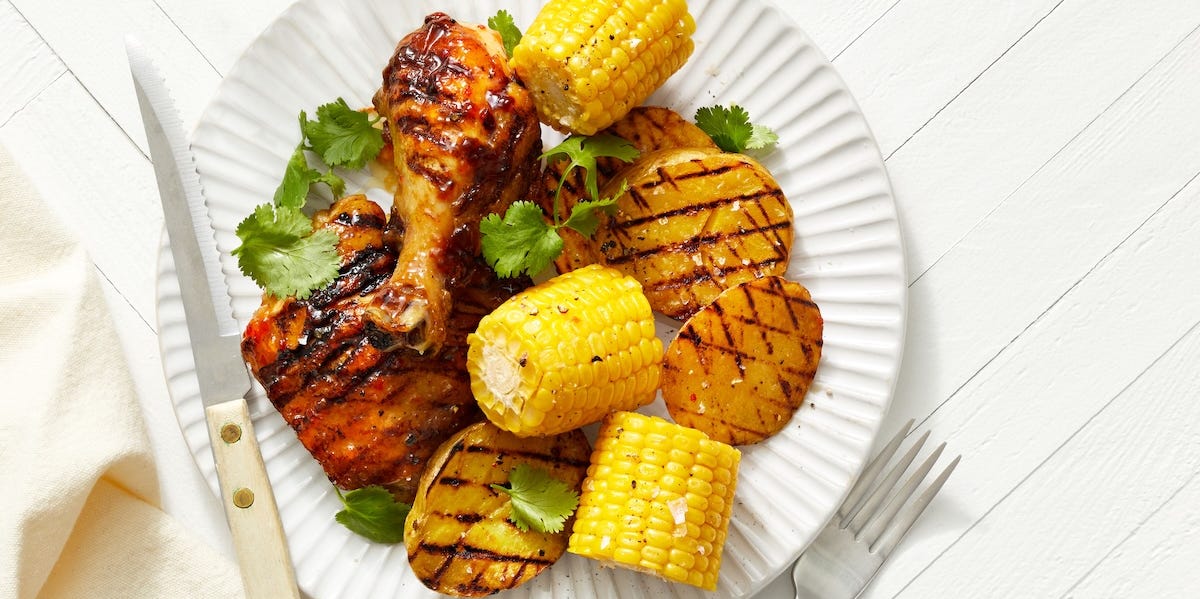
Some dinners whisper, “I am practical.” This one strolls into the backyard wearing sunglasses, smelling like caramelized barbecue sauce, and announcing that yes, dinner can be easy, sticky, smoky, and wildly satisfying without requiring a shopping cart full of ingredients. This 5-Ingredient Sticky Grilled Chicken with Corn and Potatoes Recipe is the kind of summer dinner that makes everyone suddenly very interested in “helping” near the grill.
The idea is simple: juicy chicken gets brushed with a glossy sweet-savory glaze, baby potatoes turn tender with crispy edges, and corn becomes smoky, sweet, and buttery-tasting even before you add anything fancy. The entire meal cooks on the grill, which means fewer dishes, more flavor, and no oven heating up the kitchen like it is auditioning for a volcano documentary.
Best of all, this recipe keeps the ingredient list short. The five main ingredients are chicken, baby potatoes, corn, barbecue sauce, and honey. Salt, pepper, and oil are treated as pantry basics, because nobody should have to count pepper like it is a luxury handbag.
Why This Sticky Grilled Chicken Dinner Works
This grilled chicken dinner works because every ingredient has a job. The chicken provides savory richness, the potatoes bring comfort, the corn adds natural sweetness, the barbecue sauce gives tang and smokiness, and the honey creates that shiny, sticky finish that makes people lick their fingers and then pretend they were “just checking the seasoning.”
Cooking everything on the grill also builds layers of flavor. Direct heat gives the chicken and corn charred edges, while indirect heat gives the potatoes time to soften without burning. The glaze is added near the end of cooking so the honey can caramelize without turning into blackened sugar confetti.
Recipe Overview
- Prep time: 15 minutes
- Cook time: 30 to 40 minutes
- Total time: About 55 minutes
- Servings: 4
- Skill level: Easy
- Best for: Summer dinners, backyard grilling, casual cookouts, meal prep, and weeknight meals with personality
The 5 Ingredients
1. Chicken
Bone-in chicken thighs or drumsticks are ideal for this recipe because they stay juicy on the grill and handle sticky glaze beautifully. Boneless thighs also work if you want a faster cook time. Chicken breasts can be used, but they are less forgiving, so keep a close eye on the temperature and avoid overcooking.
2. Baby Potatoes
Baby potatoes are perfect because they cook quickly, hold their shape, and get wonderfully crisp when grilled. Red, yellow, or mixed baby potatoes all work. Cut larger ones in half so they cook evenly.
3. Corn
Fresh corn on the cob brings sweetness and smoky flavor. You can grill it directly on the grates for char or wrap it in foil for a softer, steamed texture. For maximum backyard flavor, place it directly on the grill and rotate often.
4. Barbecue Sauce
Use your favorite barbecue sauce. A smoky, tangy sauce balances the honey best. If your sauce is already very sweet, reduce the honey slightly. If it is spicy, congratulationsyou have just added drama in the best possible way.
5. Honey
Honey is the secret to the sticky finish. It helps the glaze cling to the chicken, caramelize over the heat, and create that glossy, restaurant-style look. Add it near the end of grilling to prevent burning.
Ingredients
- 2 1/2 pounds bone-in chicken thighs or drumsticks
- 1 1/2 pounds baby potatoes, halved if large
- 4 ears fresh corn, husked
- 1/2 cup barbecue sauce
- 2 tablespoons honey
Pantry Basics
- 1 to 2 tablespoons oil
- Kosher salt, to taste
- Black pepper, to taste
How to Make 5-Ingredient Sticky Grilled Chicken with Corn and Potatoes
Step 1: Prep the Grill
Preheat the grill to medium heat, about 375°F to 425°F. Set it up for two-zone cooking: one side with direct heat and one side with indirect heat. On a gas grill, turn one burner lower or off. On a charcoal grill, pile coals on one side. This gives you a hot zone for searing and a gentler zone for cooking without scorching.
Step 2: Par-Cook the Potatoes
Place the potatoes in a pot of salted water and simmer for 8 to 10 minutes, just until they begin to soften. They should not fall apart. Drain well, then toss with a little oil, salt, and pepper. Par-cooking helps the potatoes finish on the grill at the same time as the chicken, instead of making everyone wait while the potatoes reconsider their life choices.
Step 3: Season the Chicken
Pat the chicken dry with paper towels. This helps the skin or surface brown instead of steam. Rub lightly with oil, then season with salt and pepper. Keep it simplethe sticky barbecue-honey glaze will do most of the flavor heavy lifting.
Step 4: Mix the Sticky Glaze
In a small bowl, stir together the barbecue sauce and honey. Divide the glaze into two portions: one for brushing onto the chicken during grilling and one clean portion for serving. Separating the sauce keeps everything food-safe and avoids cross-contamination from raw chicken.
Step 5: Start the Chicken
Place the chicken on the indirect-heat side of the grill. Close the lid and cook for 20 to 25 minutes, turning occasionally. This slower start allows the chicken to cook through without the outside burning too quickly.
Step 6: Grill the Potatoes and Corn
Add the potatoes to the grill, cut side down when possible. Grill for 15 to 20 minutes, turning occasionally, until golden and tender. Add the corn during the last 10 to 12 minutes of cooking, rotating every few minutes until lightly charred in spots.
Step 7: Glaze and Finish
Move the chicken closer to direct heat during the final 5 to 8 minutes. Brush with the barbecue-honey glaze, turn, and brush again. Let the sauce caramelize in layers. Do not walk away at this stage. Honey can go from glossy to “oops” faster than a toddler near a birthday cake.
Step 8: Check for Doneness
Chicken is ready when the thickest part reaches 165°F on an instant-read thermometer. Let it rest for 5 minutes before serving. The rest helps juices settle back into the meat, giving you chicken that tastes juicy instead of tired.
Pro Tips for the Best Sticky Grilled Chicken
Use Indirect Heat First
Sticky glazes contain sugar, and sugar burns easily. Starting chicken over indirect heat lets the meat cook before the sauce goes on. Think of the glaze as the grand finale, not the opening act.
Do Not Glaze Too Early
Brush the sauce on during the last few minutes. This allows the honey and barbecue sauce to caramelize without creating a bitter char. A little char is flavor. A lot of char is regret wearing grill marks.
Give Everything Space
Do not overcrowd the grill. Chicken, corn, and potatoes need room for heat to circulate. Crowding traps steam, and steam is not invited to a sticky grilled chicken party.
Use a Thermometer
A thermometer is the easiest way to avoid dry chicken or undercooked poultry. Color is not always reliable, especially with smoky sauces and grill marks. Temperature tells the truth.
Flavor Variations While Keeping It Simple
This recipe is built around five main ingredients, but you can adjust the flavor by changing the style of barbecue sauce. Use a smoky Kansas City-style sauce for a classic sweet finish, a Carolina-style sauce for more tang, or a spicy chipotle sauce for heat. If you want a brighter flavor, serve with lemon wedges, though that technically becomes a sixth ingredient. The food police are not expected, but your conscience may raise an eyebrow.
You can also swap honey for maple syrup if you prefer a deeper, woodsy sweetness. The texture will still be glossy, and the flavor pairs especially well with grilled corn and potatoes.
What to Serve with Sticky Grilled Chicken, Corn, and Potatoes
The beauty of this recipe is that the main dish and sides cook together. Still, if you want to round out the meal, add a crisp green salad, coleslaw, sliced tomatoes, grilled zucchini, or a simple cucumber salad. Something fresh and crunchy balances the sticky glaze nicely.
For a cookout, serve the chicken on a large platter with the corn and potatoes arranged around it. Brush the reserved clean glaze over the chicken right before serving. It looks generous, colorful, and far more impressive than the effort required, which is exactly the kind of kitchen math we support.
Storage and Reheating
Store leftover chicken, corn, and potatoes in airtight containers in the refrigerator for up to 3 to 4 days. Reheat the chicken gently in a 325°F oven until warmed through, or use an air fryer for a slightly crispier finish. Potatoes reheat well in a skillet with a tiny splash of oil. Corn can be sliced off the cob and tossed into salads, rice bowls, tacos, or scrambled eggs.
For food safety, reheat leftovers until hot throughout. If the chicken seems dry, brush with a little extra barbecue sauce before warming. That is not cheating. That is problem-solving with sauce.
Make-Ahead Tips
You can par-cook the potatoes up to one day ahead. Cool them completely, refrigerate, and toss with oil, salt, and pepper before grilling. You can also mix the barbecue-honey glaze ahead and store it in a covered container in the refrigerator.
The chicken can be seasoned several hours ahead, which gives the salt time to penetrate the meat. Keep it covered and refrigerated until about 20 minutes before grilling. Do not leave raw chicken sitting at room temperature for long periods.
Common Mistakes to Avoid
Putting Sauce on Raw Chicken Too Soon
It may feel efficient to coat everything in glaze at the beginning, but the sugars can burn before the chicken is fully cooked. Cook first, glaze late, and enjoy the shiny reward.
Skipping the Potato Par-Cook
Raw potatoes take longer than chicken on the grill. Par-cooking gives them a head start and helps them become creamy inside and crisp outside.
Using Heat That Is Too High
High heat can make the glaze burn and the chicken dry out. Medium heat with a two-zone setup gives you control, and control is what separates dinner from a smoke alarm performance.
Frequently Asked Questions
Can I use boneless chicken thighs?
Yes. Boneless thighs cook faster, usually in 12 to 18 minutes depending on thickness. Start them over medium heat and glaze during the last few minutes.
Can I make this recipe with chicken breasts?
Yes, but pound them to an even thickness first. Chicken breasts dry out more easily than thighs or drumsticks, so use a thermometer and pull them from the grill when they reach 165°F.
Can I cook this without an outdoor grill?
Yes. Use a grill pan for the chicken and corn, and roast the potatoes in the oven at 425°F until tender and crisp. Brush the chicken with glaze near the end just as you would on the grill.
Is this recipe good for meal prep?
Absolutely. The chicken stays flavorful, the potatoes reheat well, and leftover corn can be cut off the cob for bowls, salads, or wraps.
Experience Notes: What This Recipe Teaches You at the Grill
The real charm of this sticky grilled chicken with corn and potatoes is that it teaches you how to manage a full meal on the grill without turning dinner into a juggling act. Many home cooks start grilling with one item at a time: burgers, hot dogs, maybe a lonely piece of chicken. But this recipe shows how timing and heat zones can turn a grill into a complete outdoor kitchen.
The first lesson is patience. Sticky chicken needs time. If you rush it over high heat, the outside gets dark before the inside is ready. When you use indirect heat, the chicken cooks more gently, staying juicy while still picking up smoky flavor. Then, when the glaze goes on near the end, it has just enough time to bubble, thicken, and cling to the chicken. That final lacquered look feels like a small culinary victory, especially when it happens on a weeknight.
The second lesson is that sides deserve strategy. Potatoes are delicious, but they are not famous for speed. Par-cooking them before grilling makes the whole meal flow smoothly. Once they hit the grates, they only need to crisp and pick up char. Corn, on the other hand, cooks quickly and loves direct heat. Add it near the end, rotate it often, and it becomes sweet, smoky, and slightly blistered. Suddenly, the sides are not afterthoughts; they are co-stars.
The third lesson is that simple ingredients can feel special when they are handled well. Barbecue sauce and honey are not complicated, but together they create balance: tangy, sweet, smoky, and sticky. When the glaze catches the heat, it becomes more than sauce. It becomes that shiny coating everyone notices first. The chicken looks like it took much more effort than it did, which is one of the best feelings in cooking.
This recipe is also practical for real life. It works when friends come over, but it is not too fancy for family dinner. It is casual enough for paper plates and good enough for a big platter in the middle of the table. Kids usually like the sweet glaze, adults appreciate the smoky char, and the cook gets to enjoy a meal that does not leave the kitchen looking like a sauce tornado passed through.
One of the best experiences with this recipe is the moment everything comes off the grill together. The chicken is glossy, the potatoes are golden, and the corn has those beautiful charred spots that say, “Yes, I have been places.” Add a few napkins, maybe a salad, and dinner is done. No complicated technique, no obscure ingredients, no panic. Just a simple grilled meal that tastes like summer decided to be useful.
Conclusion
This 5-Ingredient Sticky Grilled Chicken with Corn and Potatoes Recipe proves that a short ingredient list can still deliver big flavor. With juicy chicken, smoky corn, tender-crisp potatoes, and a glossy barbecue-honey glaze, it is a complete grilled dinner that feels festive without being fussy. The key is simple: use indirect heat, glaze near the end, check the chicken temperature, and let the grill do what it does best.
Whether you are feeding family on a busy weeknight or hosting a relaxed backyard dinner, this recipe brings together comfort, convenience, and just the right amount of sticky-fingered joy. Keep the napkins close. This is not a dry chicken situation, and honestly, that is the whole point.
Note: This article is written as original, publish-ready HTML content based on established cooking techniques and food-safety guidance. No source links or unnecessary citation elements are included inside the article body.