Note: This article is an original review-style feature inspired by publicly available information about Fruit Gone Bad. It does not reproduce comic panels, captions, or copyrighted artwork.
When the Fruit Bowl Gets a Personality Problem
Most people look at a banana and see breakfast. John King, the New York cartoonist behind Fruit Gone Bad, looks at that same banana and apparently sees a tiny yellow comedian with questionable timing, emotional baggage, and a punchline waiting to happen. That is the charm of this comic series: it takes the most innocent items in the kitchenfruit, vegetables, bread, nuts, condiments, pizza, household objectsand gives them the kind of personality you would expect from people who have spent too much time gossiping near the office coffee machine.
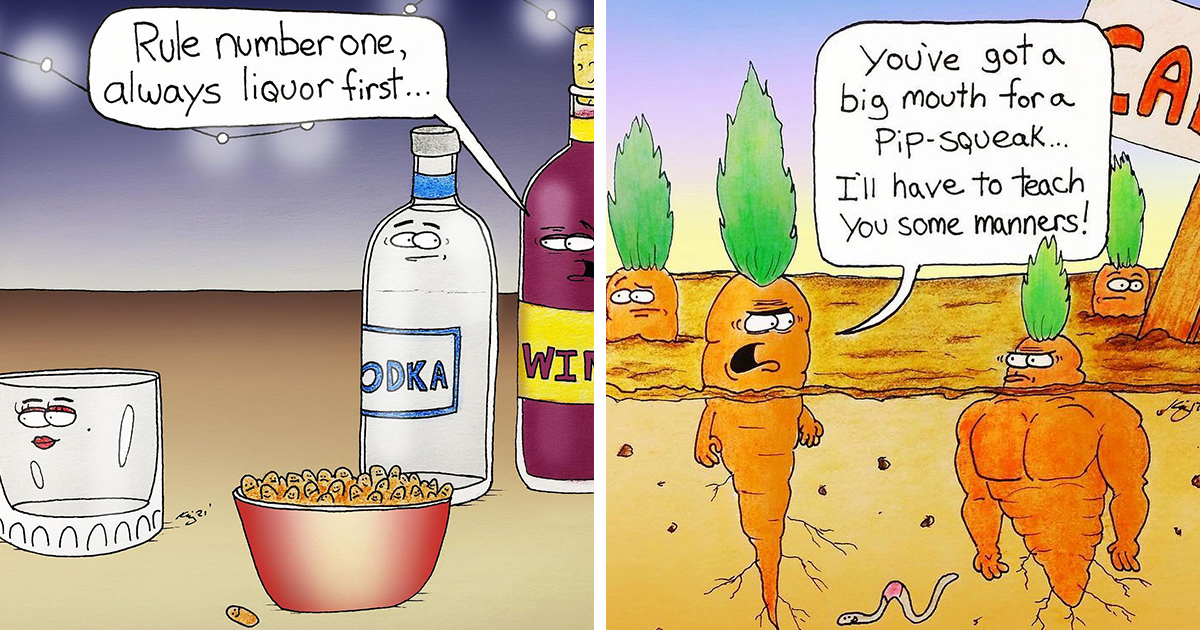
30 Slightly Inappropriate Comics By “Fruit Gone Bad” is more than a catchy title. It is a perfect description of a comic universe where apples have attitude, avocados may be dramatic, carrots can be suspiciously confident, and ordinary food suddenly behaves like it has been reading everyone’s private group chat. The humor is cheeky rather than cruel, dark without becoming heavy, and silly in a way that feels oddly sophisticated. In other words, it is the kind of comedy that makes you laugh first and then wonder why you are emotionally invested in a strawberry’s social life.
The series works because it understands a simple truth: the funnier the character looks, the more surprising it is when that character says something sharp. A pear with little eyes is cute. A pear with little eyes and a deadpan remark about relationships, insecurity, awkward social behavior, or bad decisions is comedy gold. Fruit Gone Bad takes that contrast and squeezes it like a lemon with a law degree.
Who Is Behind “Fruit Gone Bad”?
Fruit Gone Bad is created by John King, a New York-based cartoonist known online through the handle associated with the series. His comics are typically one-panel cartoons, which means each joke has very little room to breathe. There is no long setup, no three-page storyline, and no dramatic cinematic universe where a grape discovers its destiny. The entire joke has to land in one frame, usually with a clean drawing, a short line of dialogue, and a twist that feels both ridiculous and strangely human.
That one-panel structure is important. It forces the comic to be efficient. The character design has to communicate personality immediately. The caption or speech bubble has to do the heavy lifting without feeling overworked. The punchline has to arrive quickly, because online readers scroll fast. If a joke needs a 12-minute explanation and a family tree, it is probably not going to survive on Instagram. Fruit Gone Bad succeeds because it understands the speed of internet humor: quick, visual, readable, and just mischievous enough to make people share it with a friend.
King’s comic style also belongs to a long tradition of absurd cartoon humor. Everyday objects are treated like people, and the comedy comes from the gap between what we expect and what we get. A fruit bowl is supposed to be wholesome. A vegetable drawer is supposed to be boring. A piece of toast is not supposed to have a dating history. Yet in this world, everything has a secret life, and apparently the refrigerator is less of a storage appliance and more of a reality show waiting to be exposed.
Why These Comics Feel “Slightly Inappropriate”
The phrase “slightly inappropriate” is doing a lot of work here. The humor in Fruit Gone Bad is not simply random. It often leans into adult-ish situations, awkward misunderstandings, spicy double meanings, dark little twists, and puns that behave like they snuck into the room wearing sunglasses. The jokes are usually playful rather than explicit, and the best ones depend on suggestion, timing, and the reader’s imagination.
That is what makes the series so effective. It does not need to shout. A vegetable can raise an eyebrow. A fruit can say one line. An everyday object can appear in the wrong emotional context. Suddenly, the reader understands the joke and feels like they have walked in on a conversation they were not supposed to hear. The comedy lives in that tiny pause between “Wait, is this about what I think it is?” and “Oh no, it absolutely is.”
This style is also why the comics remain widely shareable. They are edgy enough to feel fun, but not so extreme that they lose their playful identity. The characters are still cute. The drawings are still approachable. The jokes still feel like cartoons, not lectures. The result is humor with a raised eyebrow rather than a megaphone.
The Secret Ingredient: Food With Human Problems
At the center of Fruit Gone Bad is a very strong comic idea: food is funny when it acts too much like us. The fruits, vegetables, and objects in these cartoons are not just props. They are miniature versions of familiar personalities. There is the overconfident one. The nervous one. The flirty one. The dramatic one. The one who has clearly made poor life choices and is somehow still giving advice.
That human quality makes the jokes relatable. Readers are not laughing only because a tomato is talking. They are laughing because the tomato sounds like someone they know. A jealous avocado, a smug chili, a stressed-out banana, or a lonely slice of bread can become a tiny mirror for real-life behavior. The produce aisle suddenly becomes a social map: friendships, awkward dates, petty arguments, misunderstandings, insecurity, confidence, and the universal desire to have the final word.
The comic’s best moments often come from giving an object exactly the wrong kind of confidence. A harmless food item becomes suspiciously bold. A kitchen object behaves like a nightclub philosopher. A vegetable says something with the emotional energy of a person who has had three cups of coffee and one unresolved breakup. That is the core joke: the characters are small, edible, and ridiculous, but their problems are extremely recognizable.
Why One-Panel Comics Are Perfect for This Kind of Humor
One-panel comics are deceptively difficult. They look simple because the reader only sees the finished joke. Behind that simplicity is a lot of compression. The artist has to choose the exact moment that tells the story. Too early, and the joke is unclear. Too late, and the punchline has already passed. The perfect one-panel comic feels like opening a door at the funniest possible second.
Fruit Gone Bad uses the format well because its world is instantly understandable. A reader does not need a backstory to understand a grumpy apple or a nervous piece of toast. The objects are familiar, so the artist can skip the explanation and go straight to the twist. That is a major advantage in digital humor, where the first second matters. The drawing catches the eye, the caption completes the joke, and the reader either laughs, groans, or bothwhich, in pun-based comedy, is basically applause.
The one-panel format also makes the jokes feel snackable. That is an oddly appropriate word for a food comic, but it fits. You can read one comic in seconds, then another, then another, and suddenly you have spent ten minutes judging the moral decisions of citrus fruit. The format is fast, addictive, and perfect for social media sharing.
The Role of Puns, Dad Jokes, and Dark Twists
Puns are the engine of many Fruit Gone Bad comics. Food names, shapes, colors, textures, and everyday phrases create endless opportunities for wordplay. A melon can be dramatic. A peach can be suspiciously smooth. A chili can bring heat in more ways than one. A banana can slip into almost any joke, because bananas have been carrying visual comedy on their yellow backs for generations.
But the series is not just a pile of puns. The jokes often work because the pun is paired with a dark or uncomfortable twist. That twist gives the comic a second layer. The reader sees the cute illustration first, then catches the implication. It is the comedy equivalent of biting into a sweet fruit and realizing it has a little kick. Not enough to ruin the snack, just enough to make you pay attention.
Dad jokes are another major ingredient. The comic often embraces the kind of humor that makes you laugh while also wanting to stare into the middle distance. That is a special emotional category. A good dad joke is not merely funny; it is proudly unreasonable. Fruit Gone Bad understands this and uses it well. The jokes are frequently simple, but they are delivered with such confidence that resistance becomes useless.
Why the Characters Are So Memorable
The artwork in Fruit Gone Bad gives each character just enough expression to sell the joke. A tiny eye shape, a mouth angle, or a posture can completely change the mood. Because the characters are usually simple, every visual choice matters. A banana leaning slightly, a carrot looking annoyed, or a loaf of bread sitting too calmly in a chaotic scene can create half the punchline before the words even arrive.
The simplicity also leaves room for the reader’s imagination. The characters do not need hyper-detailed faces or complicated backgrounds. Their charm comes from being instantly readable. We recognize the food first, then recognize the emotion. That two-step process is satisfying: “That is a strawberry” becomes “That strawberry is having a very human crisis.”
Recurring food types also help build the universe. Even when a comic does not depend on a continuing storyline, readers begin to understand the rules. In this world, nothing is innocent. The kitchen is full of opinions. The pantry has secrets. The fruit bowl is emotionally unstable. Once the reader accepts that premise, every new comic feels like another peek into a tiny, chaotic society.
How “Fruit Gone Bad” Fits Modern Internet Humor
Modern internet humor loves contrast. Cute art paired with dark thoughts. Wholesome visuals paired with uncomfortable honesty. Simple drawings paired with surprisingly sharp social observations. Fruit Gone Bad fits neatly into that tradition, but it stands out because its visual concept is so specific. Instead of generic characters, it builds an entire comic identity around food and objects behaving badly.
This makes the series highly recognizable. A reader can identify the tone almost immediately: bold outlines, expressive food characters, short dialogue, cheeky punchline. That matters in a crowded online world. Social media rewards work that can be understood quickly and remembered easily. Fruit Gone Bad has both qualities. It is visually clear and tonally consistent.
The humor also benefits from being low-pressure. These are not comics asking readers to decode a political argument or follow complicated lore. They are quick bursts of absurdity. That makes them easy to enjoy during a lunch break, a commute, or a late-night scroll when your brain has become mashed potatoes. And yes, in the Fruit Gone Bad universe, the mashed potatoes probably have trust issues.
What Makes the “30 Slightly Inappropriate Comics” Collection Appealing?
A collection of 30 comics works especially well for this series because the jokes build momentum. One cheeky food joke is funny. Thirty of them create a whole atmosphere. The reader starts to notice patterns: the puns, the social awkwardness, the unexpected character pairings, the tiny expressions, and the recurring sense that every item in the kitchen has been waiting for its chance to misbehave.
The number also gives variety. Some comics may lean more into wordplay. Others may use a visual gag. Some may feel like relationship comedy. Others may feel like a strange little scene from a noir movie performed by produce. That variety keeps the reading experience fresh. A good comic collection should not feel like the same joke wearing different shoes. Fruit Gone Bad avoids that by letting different foods and objects bring different comic energies.
For example, a fruit with a naturally innocent appearance can make a joke feel more surprising. A vegetable with a strong shape or color can become a visual punchline. An everyday object, like a utensil or kitchen item, can shift the scene away from food and into broader absurd comedy. The more ordinary the object, the funnier it becomes when it acts like it has a scandalous inner life.
Why Readers Keep Coming Back
The biggest reason readers return to Fruit Gone Bad is that the series is reliable without being boring. You know the general flavor: mischievous, punny, slightly dark, and mildly inappropriate. But you do not know exactly where the next joke will go. That balance is powerful. Readers want familiarity, but they also want surprise. The series offers both.
There is also comfort in absurdity. A comic about a fruit making a questionable comment is not trying to solve the world’s problems. It is simply offering a tiny laugh. Sometimes that is exactly what people want. The internet can be exhausting, dramatic, and louder than a blender full of ice cubes. A quick comic about a badly behaved vegetable can be a small, ridiculous escape.
Another part of the appeal is that the jokes are easy to share. You can send one to a friend without needing to explain a backstory. The humor is visual, immediate, and conversational. Many of the comics feel like tiny social moments, which makes them perfect for the “this reminded me of you” style of sharing. Hopefully, being compared to a sarcastic fruit is a compliment. Usually.
Experiences Related to “30 Slightly Inappropriate Comics By ‘Fruit Gone Bad’”
Reading the Comics Feels Like Opening a Mischievous Snack Drawer
One of the most enjoyable experiences of reading a Fruit Gone Bad collection is the feeling of discovery. You do not know what kind of joke is coming next. One moment you may be looking at a harmless piece of produce, and the next moment it has delivered a line with the confidence of a stand-up comic who has nothing left to lose. That unpredictability is a big part of the fun.
The experience is especially entertaining because the comics make familiar objects feel unfamiliar. After reading enough of them, you may look at your own kitchen differently. A banana on the counter suddenly seems too quiet. A tomato in the fridge looks like it knows gossip. A lonely onion starts to feel less like an ingredient and more like a character waiting for a dramatic monologue. The comics turn everyday food into a cast of tiny troublemakers, and that playful shift in perspective is surprisingly memorable.
The Humor Works Best When Shared
Another experience connected to these comics is the social one. Fruit Gone Bad is the kind of content people love to send to friends, not because it requires deep analysis, but because it creates an instant reaction. You send it, wait a few seconds, and then receive a reply like “Why is this so accurate?” or “I hate that I laughed.” That is the sweet spot for internet comics.
The jokes also work across different moods. If someone likes puns, they will find plenty to enjoy. If someone enjoys dark humor, the slightly twisted punchlines offer that extra edge. If someone simply likes cute drawings of food acting weird, the series delivers that too. It is a flexible kind of comedy. Not every joke will hit every reader the same way, but the overall tone is easy to understand and fun to revisit.
A Reminder That Simple Ideas Can Be Extremely Strong
For writers, artists, bloggers, and content creators, Fruit Gone Bad offers a useful lesson: a simple concept can go very far when it has a strong voice. “Food with personality” sounds basic at first. But when that idea is filtered through consistent artwork, clever wordplay, dark humor, and a recognizable tone, it becomes a full creative identity.
That is encouraging for anyone trying to make original content. The goal is not always to invent the most complicated idea in the world. Sometimes the stronger move is to take a familiar object and ask a better question. What if fruit had awkward social lives? What if vegetables had secrets? What if a snack could be petty? These questions are silly, but they open the door to endless comic situations.
Why the Series Sticks in Your Mind
The reason Fruit Gone Bad sticks with readers is that it changes the way ordinary things feel. Good comedy often does that. It takes something normal and adds a new association. After seeing enough of these comics, produce is no longer just produce. It becomes suspicious. Funny. Dramatic. Maybe even emotionally complicated. That is a remarkable achievement for a comic series built around food, puns, and one-panel jokes.
The experience is light, quick, and entertaining, but it also shows real craft. The timing matters. The expressions matter. The wording matters. The restraint matters. A joke can become less funny if it explains too much, and Fruit Gone Bad usually understands when to stop. It gives readers just enough to complete the joke in their own minds, which is why the punchlines often feel sharper than they look at first glance.
In the end, reading 30 Slightly Inappropriate Comics By “Fruit Gone Bad” feels like visiting a produce aisle where every item has been waiting years to say the wrong thing at the perfect time. It is weird, cheeky, clever, and oddly charming. It may not make you eat more vegetables, but it will definitely make you wonder what the broccoli has been saying behind your back.
Conclusion
Fruit Gone Bad proves that comedy does not need a massive stage to make an impact. Sometimes all it needs is a fruit, a face, and a punchline that arrives with suspicious confidence. John King’s one-panel comics turn everyday foods and objects into mischievous little characters with human flaws, awkward thoughts, and excellent timing. The result is a series that feels instantly readable, highly shareable, and just inappropriate enough to keep readers curious.
The appeal of 30 Slightly Inappropriate Comics By “Fruit Gone Bad” comes from its balance: cute but cheeky, simple but clever, silly but surprisingly relatable. Whether the joke is built on a pun, a dark twist, or an absurd social situation, the series makes ordinary objects feel alive in the funniest possible way. It is the kind of comic collection that turns a quick scroll into a full snack break for your sense of humor.