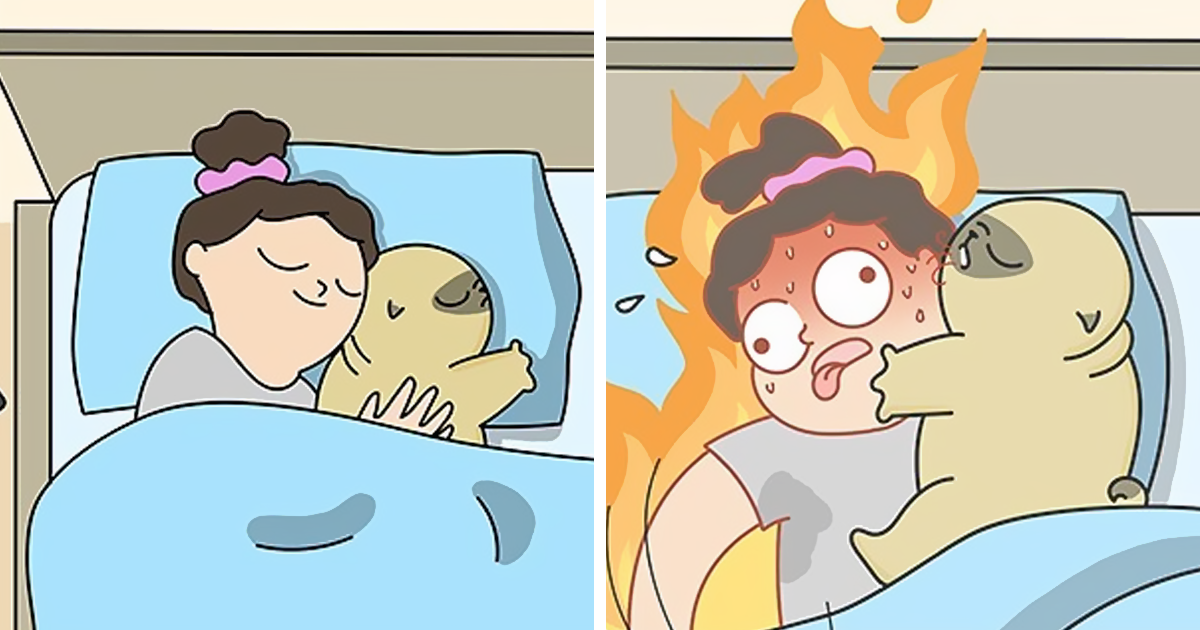
Some comics make you laugh because the joke is clever. Others make you laugh because they politely break into your home, point at your dog sleeping like a melted croissant, and whisper, “This is your life now.” Gemma Gené’s beloved comic series, 157 of gemma, falls into the second category in the best possible way.
The series follows Gemma, her husband Peli, and their chubby, opinionated pug Mochi, a small dog with a large personality and the confidence of a CEO who has never attended a meeting but still expects snacks. These new adorably funny comics about a dog and its owner capture the everyday chaos of pet parenthood: the dramatic walks, the food negotiations, the couch politics, the emotional manipulation, and the silent truth every dog owner eventually acceptsyour dog does not live in your house. You live in your dog’s kingdom.
What makes these dog comics so irresistible is not just the cuteness. It is the accuracy. Anyone who has ever shared a home with a dog will recognize the tiny rituals: the judgmental stare from across the room, the suspicious interest in every crinkling wrapper, the sudden inability to walk when being carried is an option, and the mysterious talent for taking over the most comfortable spot in the house.
Who Is the Artist Behind These Funny Dog Comics?
The artist behind the comics is Gemma Gené, a Barcelona-born artist and architect based in New York. She started 157 of gemma as a personal cartoon project and later began drawing about Mochi, her pug, during subway rides. What began as quick observations became a charming webcomic universe built around love, humor, and the very specific drama of living with a dog who believes stairs are a human responsibility.
Mochi is not just a pet in the series. He is the star, the mood, the problem, and usually the solution. According to Gemma’s own description, Mochi is sweet, happy, well-behaved, sassy, and fully committed to doing whatever he wants. That combination is basically the pug software package: affectionate heart, round body, selective hearing, and Olympic-level snack awareness.
The main cast includes Gemma, Peli, Mochi, and Mochi’s rescued chihuahua brothers, the Twinchis. Together, they create a cozy, comic-strip version of real domestic life. The humor is gentle, observational, and instantly shareable, which explains why so many readers see their own pets in Mochi’s antics.
Why These Dog And Owner Comics Feel So Relatable
The best pet comics do not need complicated plots. They only need one truthful moment: a dog asking to go outside, then immediately wanting to return indoors; a human trying to work while a pet treats the keyboard like a heated mattress; a pug refusing a walk unless the walk includes luxury transportation, also known as being carried.
Gemma Gené’s comics work because they understand that dog ownership is both ordinary and absurd. A dog can make a normal Tuesday feel like a sitcom. You may begin the day as a responsible adult with plans, deadlines, and matching socks. Then your dog looks at you with the face of a tiny Victorian orphan because dinner is still eight minutes away, and suddenly your entire schedule collapses.
1. The Humor Comes From Real Pet Behavior
Dogs communicate constantly through posture, movement, eyes, ears, tail position, and facial expression. Dog owners know this language even when they pretend they do not. A single side-eye can mean “you betrayed me,” “I heard cheese,” or “the mail carrier is committing crimes again.” These comics translate that silent dog language into punchlines that feel immediately familiar.
Mochi’s personality is especially funny because he behaves like a tiny person with very strong opinions. He wants comfort, attention, food, praise, and probably a personal assistant. He is sweet, but he is not passive. He is soft, but he is not weak. He may be small, but emotionally, he occupies the whole apartment.
2. The Owner Is Not the BossAnd That Is the Joke
One of the funniest truths in dog owner comics is the collapse of human authority. We tell ourselves we are training the dog. Meanwhile, the dog has trained us to open doors, rearrange pillows, speak in embarrassing voices, and apologize for moving slightly while they were sleeping on our legs.
In these comics, Gemma often becomes the loving, confused, overruled human who knows exactly what Mochi is doing but gives in anyway. That dynamic is comedy gold because it mirrors real life. Dogs do not need a five-step plan to control the household. They just need big eyes, a soft belly, and the ability to sigh like they pay rent.
What Makes Mochi Such a Memorable Comic Character?
Mochi is funny because he is specific. He is not simply “a dog.” He is a pug with preferences, routines, friendships, and a worldview. He likes sleeping, eating, walking, and being carried. He is sweet but sassy. He has the facial expression of someone who has seen the universe and decided it needs more treats.
That specificity makes the comics stronger. Readers do not only see a cute pug; they see their own dog’s habits reflected through Mochi’s exaggerated reactions. Maybe their dog also refuses to move when the weather is inconvenient. Maybe their dog also treats every meal like a historic event. Maybe their dog also believes the couch belongs to them and humans are decorative cushions.
The Pug Factor: Cute, Stubborn, And Built for Comedy
Pugs have long been known for expressive faces, compact bodies, affectionate temperaments, and a talent for looking both dignified and ridiculous at the same time. That makes them naturally suited for visual humor. Mochi’s round shape, big eyes, and dramatic presence turn small everyday moments into full comedy scenes.
At the same time, responsible pet lovers should remember that pugs are brachycephalic dogs, meaning their flat-faced structure can make breathing and temperature regulation more difficult. The funniest pug comics often show lounging, short walks, snacks, and being carriedbut in real life, pug owners also need to pay attention to heat, exercise limits, breathing changes, skin folds, and regular veterinary care. Cute should always come with care.
Why Dog Comics Are So Popular Online
There is a reason funny dog comics spread so quickly. Dogs are one of the internet’s most dependable happiness engines. They are expressive, unpredictable, loyal, needy, weird, and often unintentionally hilarious. A dog can stare at a wall for ten minutes, sneeze at its own foot, and still somehow be the emotional center of the household.
Pet ownership is also deeply personal. Many people see their pets as family members, not accessories. That emotional bond gives comics like 157 of gemma extra power. Readers are not just laughing at Mochi; they are laughing with recognition. They are remembering their own dog’s strange bedtime routine, their own lost sandwich, their own dramatic leash negotiations.
Funny Dog Comics Offer Comfort Without Trying Too Hard
The internet is full of loud content. Dog comics are quieter. They give readers a small, wholesome pause: one panel, one joke, one tiny emotional reset. A good comic about a dog and its owner does not demand much. It simply says, “Here is a little creature being ridiculous. You may breathe now.”
That is part of why Gemma’s work feels so warm. The humor is not cruel or cynical. Mochi may be demanding, but he is loved. Gemma may be exhausted, but she is delighted. The relationship is the center of the joke, and the joke is built on affection.
Common Themes In The 30 New Comics
While each comic has its own gag, several themes run through the series. These themes are also the reason dog owners keep returning to Mochi’s world.
Food Is Not A MealIt Is A Legal Case
Dogs treat food like a constitutional right. Mochi’s food-related scenes are funny because they capture the dramatic seriousness with which dogs approach eating. A treat is not just a treat. It is justice. A delayed dinner is not a delay. It is a scandal. A human eating alone is not a private meal. It is betrayal with utensils.
Walks Are Complicated Emotional Events
In theory, dogs love walks. In practice, walks can involve weather concerns, suspicious leaves, dramatic stopping, sudden pulling, and the classic pug decision that walking is acceptable only until being carried becomes available. The humor comes from the mismatch between human expectations and dog logic.
Personal Space Is A Myth
Dog owners understand that privacy ends the moment a dog enters the home. Bathroom doors, bed boundaries, yoga mats, laptops, and clean laundry all become shared territory. The comics exaggerate this truth just enough to make it funnier than it is at 6:30 a.m. when your dog is standing on your hair.
Dogs Are Emotional Geniuses
Dogs may not understand every word we say, but they are excellent readers of tone, habit, and emotion. Mochi often seems to know exactly when to appear cute, when to demand comfort, and when to act tragically neglected despite receiving more attention than most celebrities. This emotional intelligence is part of what makes dog-owner relationships so richand so funny.
The Art Style: Simple, Expressive, And Full Of Personality
Gemma Gené’s drawing style is clean, charming, and expressive. The comics do not need visual clutter. A tilt of Mochi’s head, a tiny paw, or a perfectly timed stare can carry the joke. This simplicity makes the panels easy to read on social media while still feeling personal and hand-crafted.
The visual storytelling also benefits from repetition. Readers know the characters. They understand Mochi’s world. That familiarity allows small changes in expression or situation to feel funny immediately. It is the comic-strip version of recognizing your dog’s “I did nothing wrong” face while standing beside shredded paper.
Why These Comics Work For Both Dog Owners And Non-Dog Owners
You do not have to own a pug to enjoy Mochi. You do not even have to own a dog. The humor reaches beyond pet ownership because it is really about relationships: love, patience, routine, compromise, and the funny ways families organize themselves around the most demanding member.
For dog owners, the comics feel like a mirror. For non-dog owners, they feel like a window into a world where a small animal can reorganize a person’s life through charm and stubbornness. Either way, the result is the same: a smile, a laugh, and possibly the sudden desire to send the comic to someone with the message, “This is your dog.”
What Content Creators Can Learn From Gemma Gené’s Dog Comics
These comics also offer a useful lesson for artists, bloggers, and social media creators. The strongest content often begins with honest observation. Gemma did not need to invent a fantasy kingdom. She looked at her real life with Mochi and noticed that the tiny moments were already funny.
That is the secret behind many successful webcomics: consistency, authenticity, and a recognizable emotional hook. A character like Mochi becomes memorable because readers know what to expect but still want to see how each new situation unfolds. Will Mochi ask for food? Probably. Will he act as if he has never been loved before? Absolutely. Will readers laugh anyway? Without question.
500-Word Experience Section: Living With A Dog Feels Exactly Like These Comics
Reading these funny comics about a dog and its owner feels a lot like sitting on the floor next to a real dog and realizing you have been outsmarted by someone who still gets confused by mirrors. The experience is warm, silly, and a little too accurate. Every panel seems to pull from the secret handbook of dog ownership, the one nobody gives you before you bring a dog home because, frankly, you might get scared.
One of the most relatable experiences is the way dogs turn ordinary routines into ceremonies. Feeding time becomes a dramatic countdown. A walk becomes a neighborhood inspection. Bedtime becomes a negotiation over mattress territory. Even sitting quietly on the couch can become complicated if your dog decides your lap is the only acceptable location in the universe. Comics like Gemma Gené’s capture this daily theater beautifully.
Another familiar experience is the emotional whiplash of dog parenting. One minute, your dog is doing something so cute you consider canceling all your plans just to admire them. The next minute, they are barking at a delivery box as if it has insulted generations of their ancestors. You laugh, you sigh, you clean something, and then you take a picture because, somehow, the chaos is adorable.
These comics also remind readers that dogs create routines that become emotional anchors. The morning greeting, the little walk, the treat after good behavior, the sleepy weight of a dog leaning against youthese moments may seem small, but they shape the rhythm of a home. A dog does not have to speak to become part of every story. They are there in the background, under the table, beside the door, on the blanket you just folded.
For pug owners, the experience may feel even more personal. Pugs have a special way of being both royal and ridiculous. They can look deeply offended by a vegetable, exhausted by a short walk, and proud of themselves for doing absolutely nothing. Mochi’s personality reflects that wonderful contradiction. He is cute enough to melt hearts and stubborn enough to rearrange the household schedule.
What makes the experience of reading these comics so enjoyable is that they do not mock pet owners from the outside. They laugh from inside the relationship. The joke is not “dogs are silly” or “owners are foolish.” The joke is that love makes everyone a little ridiculous. We buy the tiny bed, then let the dog sleep in the big bed. We say “no more treats,” then produce a treat from nowhere. We complain about the fur, then worry when the house is too quiet.
That is why these 30 new adorably funny comics about a dog and its owner are more than cute internet entertainment. They are small love letters to the strange, funny, exhausting, heart-expanding experience of sharing life with a pet. Mochi may be a comic character, but the feeling is real: dogs make life messier, louder, softer, and much more interesting.
Conclusion
Gemma Gené’s 157 of gemma comics prove that the funniest stories do not always need wild adventures. Sometimes, all they need is a pug, a loving owner, a snack-related crisis, and the eternal question: who is really in charge here?
These 30 new adorably funny comics about a dog and its owner succeed because they are cute without being shallow, simple without being boring, and personal without excluding anyone. Mochi’s world is smallhome, walks, food, familybut it feels big because every dog owner knows how much emotion can fit into those everyday moments.
Whether you are a lifelong dog lover, a pug parent, a comic fan, or someone who just needs a cheerful break from the internet’s usual circus, these comics deliver exactly what they promise: adorable humor, warm storytelling, and the comforting reminder that life is better when there is a dog nearby acting like the main character.
Note: This HTML body is written for web publication and contains no embedded source links, citation placeholders, or unnecessary reference markup.