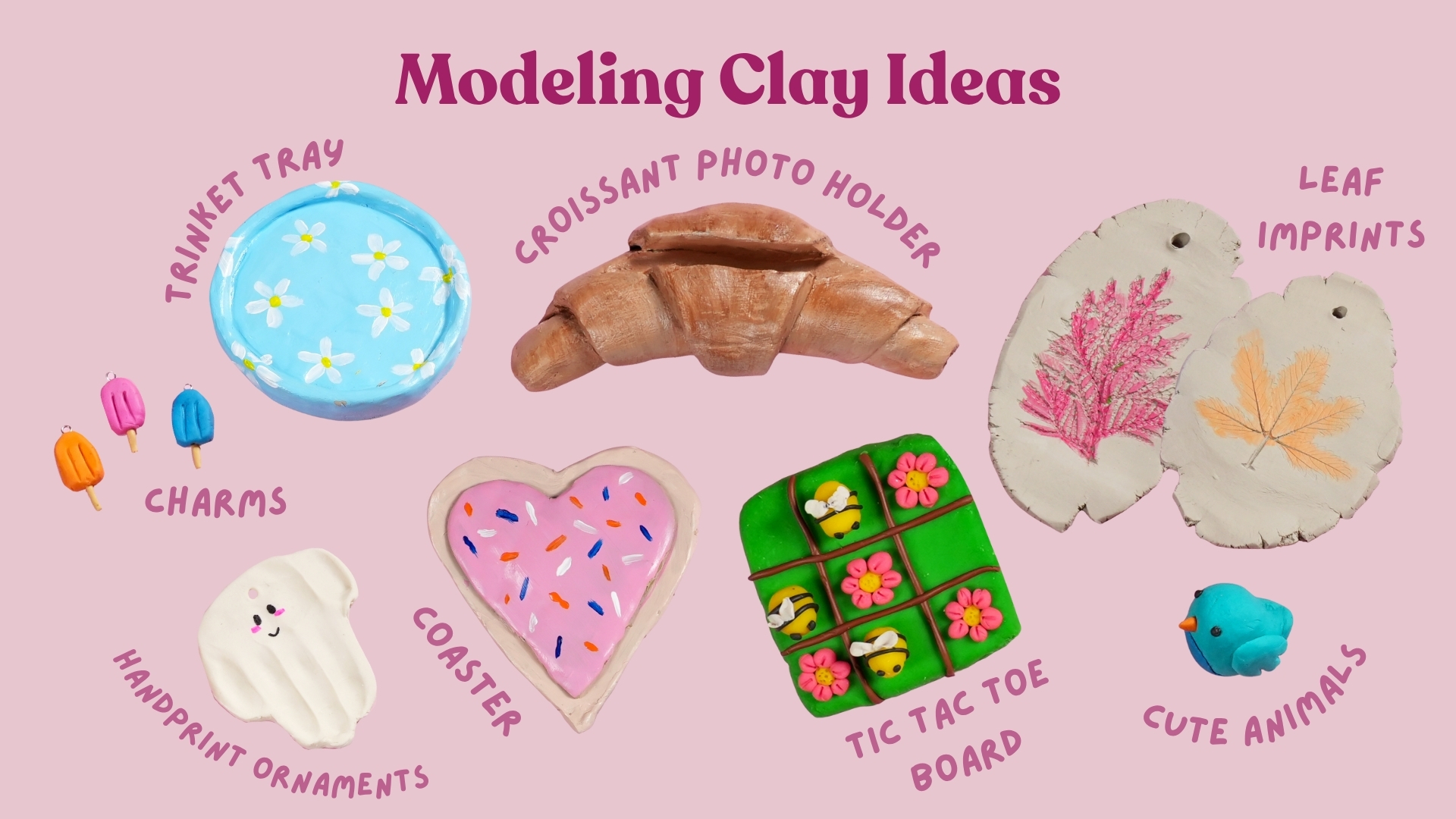
Modeling clay is the rare craft supply that can entertain a five-year-old, calm a stressed-out adult, and somehow still end up stuck under the dining table three weeks later. It is colorful, squishy, wonderfully forgiving, and perfect for turning small creative sparks into real objects you can hold, gift, paint, display, or proudly place on the fridge like it belongs in a museum.
Whether you are using air-dry clay, polymer clay, oven-bake clay, foam clay, or classic modeling clay, there are endless ways to shape something fun without needing a fancy studio. You can make tiny animals, jewelry dishes, fridge magnets, plant markers, keychains, coasters, charms, and seasonal decorations with just a few tools and a little imagination. Best of all, many easy clay crafts require only your hands, a rolling pin, toothpicks, acrylic paint, and a willingness to laugh when your first “cat” looks suspiciously like a potato.
This guide covers 20 easy and creative modeling clay ideas for kids and adults, with beginner-friendly tips, practical examples, and project suggestions that can work for classrooms, rainy afternoons, family craft nights, handmade gifts, or relaxing solo creative time.
Why Modeling Clay Is Perfect for Kids and Adults
Modeling clay is one of the most accessible craft materials because it does not demand perfection. Unlike drawing, where one wobbly line can feel dramatic, clay lets you squish, reshape, smooth, and start again. That makes it especially helpful for kids building fine motor skills and adults looking for a low-pressure creative hobby.
Air-dry clay is especially popular because it hardens without a kiln or oven, making it convenient for families and beginners. Polymer clay is another favorite because it stays soft until baked and works beautifully for jewelry, miniatures, charms, magnets, and small decorative pieces. Traditional modeling clay that does not harden is great for open-ended play, storytelling, and practice sculpting.
Basic Supplies You Need Before Starting
You do not need a professional pottery wheel or an art-room budget to begin. For most modeling clay ideas, start with clay, a smooth work surface, a rolling pin or bottle, toothpicks, plastic knives, cookie cutters, water, acrylic paints, small brushes, and a sealant if you want the finished item to last longer.
For kids, choose non-toxic clay and avoid tiny accessories for younger children. For adults making jewelry or home decor, polymer clay, air-dry clay, and lightweight clay are excellent options. If your project needs strength, keep the shape relatively thick and let it dry completely before painting or sealing.
20 Easy & Creative Modeling Clay Ideas
1. Tiny Clay Animals
Tiny animals are a perfect beginner clay project because they are cute even when imperfect. A round body, two little ears, and a dot for a nose can become a bear, bunny, cat, fox, or mouse. Kids can make a whole zoo, while adults can refine the details with texture, painted eyes, and miniature accessories.
Try this: Make a family of clay turtles using green oval shells, tiny heads, and four little flippers. Add shell patterns with a toothpick before the clay dries.
2. Rainbow Fridge Magnets
Rainbow magnets are cheerful, simple, and hard to mess up. Roll thin ropes of different clay colors, bend them into arches, stack them together, and trim the ends. Once dry or baked, attach a magnet to the back with strong glue.
This is one of the best clay crafts for kids because it teaches color order, rolling, shaping, and patience. Adults can make sleeker versions with muted colors, metallic paint, or minimalist designs.
3. Marbled Clay Coasters
Marbled coasters look surprisingly fancy for such an easy project. Twist two or three clay colors together, roll them flat, and cut circles or squares. The result resembles stone, but without the weight, cost, or need to explain why you are chiseling marble in your kitchen.
For a polished adult version, paint the edges gold or black after drying. For a kid-friendly version, use bright colors and cookie cutters in stars, hearts, or flower shapes.
4. Clay Jewelry Dishes
A small jewelry dish is both beautiful and useful. Roll out air-dry clay, cut a circle, gently press it into a shallow bowl, and let it dry in that shape. Paint it with simple designs like polka dots, moons, leaves, or initials.
This project is ideal for handmade gifts. Children can make one for Mother’s Day, Father’s Day, teachers, or grandparents. Adults can create elegant versions for rings, earrings, paper clips, or keys.
5. Personalized Keychains
Clay keychains are small, practical, and easy to customize. Cut out shapes with cookie cutters, poke a hole near the top, and add a keyring after the piece hardens. Hearts, initials, stars, flowers, paw prints, and mini food shapes all work well.
Polymer clay is especially good for keychains because it can be durable after baking. Add a glossy sealant for extra protection and shine.
6. Mini Food Charms
Few things are more delightful than tiny clay food. Make miniature pizzas, donuts, cupcakes, strawberries, sushi rolls, pancakes, or tacos. This is where adults often start “just making one” and then somehow create a full miniature bakery by midnight.
Use toothpicks for texture, small clay dots for sprinkles, and acrylic paint for details. These charms can become earrings, magnets, dollhouse accessories, or backpack decorations.
7. Clay Pencil Toppers
Pencil toppers are a great classroom-friendly clay idea. Shape small animals, stars, monsters, fruits, or smiley faces around the top of a pencil. If using oven-bake clay, remove the pencil before baking unless the product instructions say it is safe.
Kids love this project because it turns ordinary school supplies into tiny characters. Adults can use the same idea to decorate pens, crochet hooks, or craft tools.
8. Plant Markers for Herb Gardens
Clay plant markers are useful for gardeners and charming for windowsill herb pots. Roll clay into small rectangles or stakes, stamp or write herb names into the surface, and paint them after drying.
Try labels for basil, mint, rosemary, parsley, thyme, and cilantro. Add leaf impressions by pressing real leaves gently into the clay for a natural texture.
9. Clay Bead Bracelets
Making clay beads is simple, relaxing, and excellent for hand-eye coordination. Roll small balls, cubes, tubes, or flattened discs, then poke a hole through each bead before drying or baking. String them onto elastic cord when finished.
Kids can make colorful friendship bracelets, while adults can experiment with terrazzo effects, marbling, neutral palettes, or abstract patterns.
10. Cute Clay Monsters
Clay monsters are perfect because there is no wrong way to make them. One eye? Great. Four horns? Excellent. Teeth that look like tiny marshmallows? Even better. This project encourages imagination without pressure.
Use bright clay colors, add funny expressions, and create a monster family. This is a wonderful activity for parties, classrooms, and kids who like storytelling.
11. Decorative Clay Leaves
Clay leaves are easy, elegant, and inspired by nature. Press a real leaf into rolled-out clay, cut around the shape, and let the texture transfer onto the surface. After drying, paint it green, gold, white, or terracotta.
These leaves can become ornaments, gift tags, wall decorations, or small trinket dishes. Adults can create a sophisticated botanical set, while kids can collect leaves from the yard and compare shapes.
12. Clay Photo Holders
A clay photo holder makes a sweet desk accessory. Shape a small base, such as a cloud, mountain, heart, animal, or abstract blob. Insert a wire loop or clip into the top before the clay hardens. Once dry, use it to hold photos, notes, place cards, or small reminders.
This project is especially fun for birthdays, weddings, classrooms, and handmade holiday gifts.
13. Mini Clay Houses
Mini clay houses are charming and surprisingly easy. Start with a blocky rectangle for the house, add a triangle roof, press in windows and doors, and paint the details later. Make one house or create an entire tiny village.
Adults can use neutral colors for Scandinavian-style decor. Kids can go wild with rainbow roofs, crooked windows, and tiny chimneys that look like they survived a cartoon windstorm.
14. Clay Ornaments
Clay ornaments are not just for Christmas. You can make ornaments for Halloween, Easter, birthdays, baby showers, classroom celebrations, and seasonal home decor. Use cookie cutters, stamps, lace, leaves, or textured fabric to create patterns.
Remember to poke a hole at the top before drying. Add ribbon, twine, or metallic string once the ornament is finished.
15. Clay Ring Holders
A cone-shaped ring holder is simple and useful. Roll clay into a cone, smooth the surface, and let it dry upright. Paint it with stripes, stars, dots, or a marble effect. You can also make cactus-shaped ring holders with little arms to hold rings.
This is a great modeling clay idea for adults who want a quick decor project that does not scream “summer camp craft,” although honestly, summer camp had some great ideas.
16. Clay Wall Hanging
Clay wall hangings can look modern and artistic with very little effort. Cut circles, arches, moons, or geometric shapes from rolled clay. After drying, connect them with string, beads, or small metal rings.
Use neutral colors for a minimalist look or bold colors for a playful kids’ room. Add texture with stamps, lace, shells, or carved lines.
17. Clay Buttons
Handmade clay buttons are small but full of personality. Roll clay flat, cut circles or fun shapes, and poke two or four holes in each one. After baking or drying, paint and seal them.
They can be used on handmade bags, cardigans, doll clothes, scrapbooks, or decorative crafts. For younger kids, oversized buttons are easier to handle.
18. Clay Fairy Garden Accessories
Fairy gardens and clay are a perfect match. Make tiny mushrooms, stepping stones, doors, benches, ladybugs, flowers, and miniature signs. These pieces can decorate plant pots, terrariums, or outdoor fairy gardens if properly sealed.
This project encourages storytelling and works beautifully as a family craft. Everyone can create one piece and combine them into a shared magical scene.
19. Clay Bookmarks
Clay bookmarks are creative and useful for readers. Make a thin decorative charm, such as a flower, moon, animal face, or initial, then attach it to a paperclip, ribbon, or elastic band after drying.
For kids, make character-themed bookmarks. For adults, try botanical textures, simple initials, or elegant marbled charms.
20. Clay Memory Tiles
Memory tiles are small clay squares or circles decorated with handprints, fingerprints, names, dates, or meaningful symbols. They are lovely keepsakes for families, classrooms, weddings, and holidays.
Children can press their fingers into the clay to make flowers, bugs, balloons, or animals. Adults can make minimalist stamped tiles with dates, coordinates, or favorite words.
Tips for Better Modeling Clay Projects
Keep Shapes Simple at First
Beginners often try to sculpt a realistic dragon on day one. Ambitious? Yes. Necessary? Absolutely not. Start with basic shapes: balls, coils, slabs, cones, and cylinders. Most clay projects are just combinations of these forms.
Use Water Carefully
For air-dry clay, a tiny bit of water can help smooth cracks and join pieces. Too much water, however, can make the clay sticky or weak. Think “damp fingertip,” not “clay soup.”
Let Clay Dry Completely
Air-dry clay may feel dry on the outside before the inside is fully hardened. Give thicker projects extra time. Painting too early can trap moisture and cause cracking or softness.
Seal Finished Pieces
If your clay craft will be handled often, seal it with a clear varnish or craft sealant. This helps protect paint and gives the finished project a cleaner look. Outdoor pieces need a weather-resistant sealant, though even sealed air-dry clay may not last forever outside.
Choose the Right Clay for the Job
Use air-dry clay for no-bake projects, ornaments, dishes, and kid-friendly crafts. Use polymer clay for jewelry, charms, miniatures, and durable small items. Use non-hardening modeling clay for practice, play, stop-motion scenes, and temporary sculptures.
Best Modeling Clay Ideas by Age Group
For Preschoolers
Choose soft, non-toxic clay and focus on simple sensory play. Great ideas include clay snakes, balls, pretend cookies, smiley faces, chunky animals, and handprint tiles. Avoid small beads, sharp tools, or projects that require precision.
For Elementary-Age Kids
Kids in this age group can enjoy magnets, pencil toppers, ornaments, tiny animals, plant markers, and clay monsters. They usually love projects with bright colors, funny faces, and a finished item they can use or gift.
For Teens
Teens may enjoy more stylish projects such as clay jewelry, wall hangings, mini food charms, phone charms, keychains, and room decor. Polymer clay is a strong choice for detailed pieces and wearable designs.
For Adults
Adults can explore jewelry dishes, marbled coasters, ring holders, botanical ornaments, minimalist wall hangings, handmade buttons, and elegant home decor. Clay is also a great stress-relief hobby because it combines creativity with repetitive, calming hand movement.
Common Mistakes to Avoid
One common mistake is making pieces too thin. Thin clay can crack, curl, or break easily. Another mistake is rushing the drying process. Heat may speed drying, but it can also cause cracks in air-dry clay. A third mistake is attaching pieces without blending or scoring. If you stick a clay arm onto a clay animal without smoothing the joint, that arm may make a dramatic escape later.
Also, always read the clay package instructions. Polymer clay must be baked according to the manufacturer’s directions, while air-dry clay should be left to harden naturally. Different brands behave differently, so the package is your tiny clay instruction manual.
Creative Ways to Use Finished Clay Crafts
Finished clay projects can become gifts, party favors, classroom keepsakes, home decor, garden labels, jewelry, ornaments, desk accessories, and holiday decorations. A handmade clay charm can personalize a backpack. A clay dish can hold rings by the sink. A tiny clay house can brighten a bookshelf. A set of clay coasters can make your coffee table look more intentional and less like a place where mugs go to leave mysterious circles.
Clay crafts are also wonderful for themed activities. Host a clay animal day, a mini food challenge, a holiday ornament night, or a family gift-making afternoon. You can even create a “clay gallery” at home where everyone displays their finished pieces.
Extra Experience Section: What Making Modeling Clay Projects Really Feels Like
Working with modeling clay is one of those hobbies that looks simple from the outside and then quietly takes over your afternoon in the best possible way. You begin with one small idea, maybe a mushroom charm or a tiny cat, and before long you are negotiating with a lump of clay like it is a stubborn coworker. “Please become a fox,” you whisper. The clay replies by becoming a lumpy triangle with ears. Somehow, this is still enjoyable.
The first real lesson is that clay rewards patience more than perfection. When I have made beginner clay projects with kids, the most successful moments usually happened when nobody worried too much about the final result. A child making a turtle might press the eyes on unevenly, add six legs instead of four, and proudly announce that it is a “super turtle.” That kind of creative confidence is exactly why modeling clay is so valuable. It lets kids invent without constantly asking whether they are doing it correctly.
For adults, the experience can be surprisingly calming. Rolling clay into beads or smoothing the edge of a dish gives your hands something steady to do. It is creative, but not overwhelming. You can listen to music, chat with family, or enjoy a quiet evening while shaping something small and useful. Unlike some crafts that require expensive equipment or a perfectly organized workspace, clay is forgiving. A kitchen table, a piece of parchment paper, and a few basic tools are often enough.
Another enjoyable part is seeing how different people interpret the same idea. Give five people the task of making a clay monster, and you will get five completely different personalities. One monster will have fancy eyelashes. One will have dramatic teeth. One will look like it manages a tiny accounting department. This makes modeling clay projects excellent for group activities because everyone starts with the same material but ends with something personal.
There are also small frustrations, of course. Air-dry clay can crack if it dries too quickly. Polymer clay can collect dust like it has a personal mission. Tiny details may fall off if they are not attached well. Paint sometimes reveals fingerprints you did not know existed. But these little problems are part of the learning process. Each project teaches something useful: make thicker bases, smooth seams better, wait longer before painting, and keep wipes nearby unless you want blue clay fingerprints on your elbow.
The best advice from experience is to keep the first few projects small. Make charms, magnets, beads, ornaments, or plant markers before attempting large sculptures. Small projects dry faster, break less often, and give you quick wins. Quick wins matter because they build confidence. Once you know you can make a cute magnet or jewelry dish, larger ideas feel less intimidating.
Modeling clay is also wonderful because it turns ordinary moments into keepsakes. A fingerprint ornament from a child, a handmade keychain from a friend, or a slightly crooked ring dish made during a relaxed weekend can carry more personality than something store-bought. The imperfections become part of the charm. In fact, the wobbly lines and handmade textures often make the piece feel warmer and more meaningful.
If you are crafting with kids, prepare for mess and embrace it within reason. Cover the table, set out tools, keep water nearby, and give each child a small amount of clay at a time. If you are crafting as an adult, give yourself permission to experiment. Make the weird mushroom. Try the marbled coaster. Paint the tiny house pink. Clay is not here to judge you. It is here to become whatever your imagination can talk it into becoming.
Conclusion
Modeling clay is one of the easiest and most creative craft materials for both kids and adults. It is affordable, flexible, beginner-friendly, and full of possibilities. From tiny clay animals and rainbow magnets to jewelry dishes, keychains, plant markers, ornaments, and wall hangings, there is a project for every age, skill level, and attention span.
The best part is that modeling clay does not require perfection. It invites play, experimentation, and personal style. Whether you are planning a family craft night, looking for handmade gift ideas, decorating your home, or simply needing a relaxing hobby, these 20 easy modeling clay ideas can help you turn a simple lump of clay into something memorable, useful, and maybe even adorable enough to earn a permanent spot on the shelf.