If your home has been quietly taken over by teddy bears, squishy unicorns, floppy dogs, mystery carnival prizes, and one very dramatic dinosaur, you are not alone. Stuffed animals multiply like laundry, except they have cute faces and make you feel guilty for hiding them in a closet. The good news is that the right stuffed animal storage solutions can turn plush chaos into a room that looks organized, feels calmer, and still keeps your child’s favorite cuddly friends close by.
The best approach is not simply buying the biggest bin and hoping for the best. Smart stuffed animal storage should save floor space, make cleanup easier, help kids find what they love, and fit the style of the room. Some families need a quick basket near the bed. Others need vertical storage, under-bed drawers, wall shelves, or a full stuffed animal “zoo” for a collection that has clearly formed its own government.
Below are 19 practical, space-saving, parent-friendly, and kid-approved stuffed animal storage ideas for bedrooms, nurseries, playrooms, closets, and small apartments. Use one solution, combine several, or rotate them seasonally. Your floors are about to remember what sunlight feels like.
Why Stuffed Animal Storage Matters
Stuffed animals are soft, sentimental, and surprisingly bulky. A dozen plush toys can fill a bed, block a closet, or turn a reading corner into a fuzzy avalanche zone. Good plush toy organization does more than make a room look tidy. It helps children develop cleanup habits, reduces visual clutter, protects special toys from dust and damage, and makes daily routines faster.
Before choosing a storage method, consider three things: how often the toys are used, how much space you have, and whether your child can access the storage safely. Favorites should stay within reach. Keepsakes can go higher, under the bed, or into labeled bins. Any heavy shelves should be properly anchored, and toy chests with lids should be chosen carefully. Open baskets, shelves, and lid-free bins are often easier and safer for everyday use.
19 Stuffed Animal Storage Solutions To Save Space And Time
1. Use a Large Woven Basket for Everyday Favorites
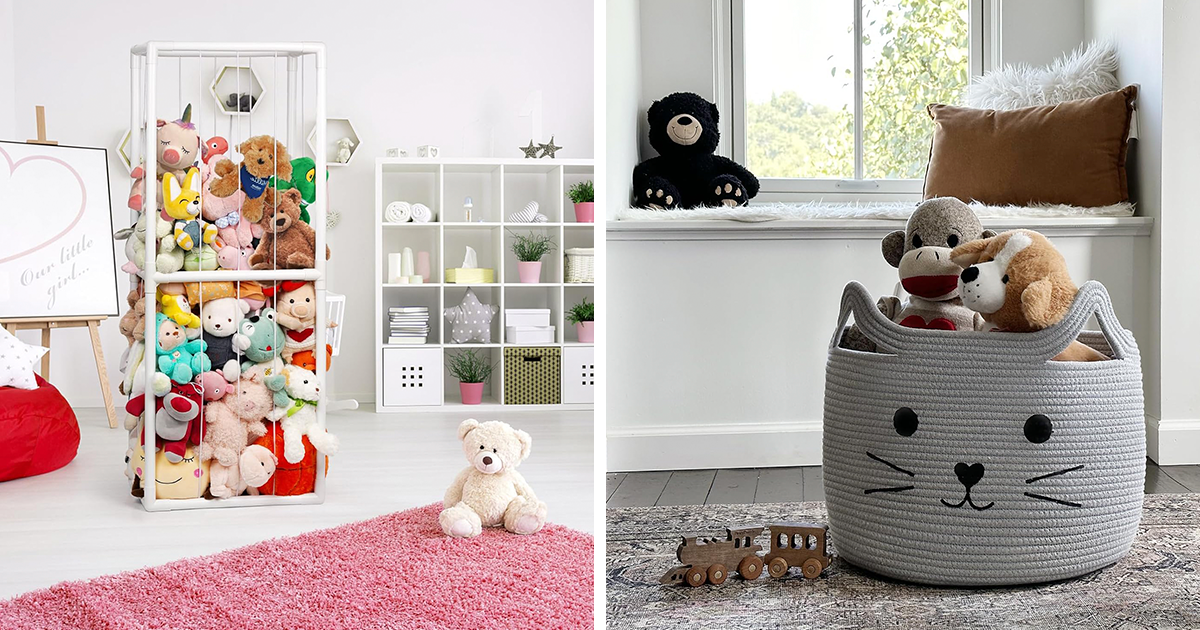
A large woven basket is one of the easiest stuffed animal storage solutions because it works in almost any room. Place it beside the bed, near a reading nook, or in the corner of a playroom. Kids can toss animals in quickly, which means cleanup does not require an engineering degree.
Choose a basket with sturdy handles so it can be moved from room to room. Wicker, water hyacinth, rope, and canvas baskets all work well. For toddlers, pick a soft-sided basket to avoid sharp corners. This option is best for frequently used plush toys, not fragile keepsakes.
2. Install a Stuffed Animal Hammock in an Empty Corner
A stuffed animal hammock is a classic for a reason: it uses corner space that usually sits empty. Mount it between two walls and let it hold lightweight plush toys above the floor. Hammocks are especially useful in small bedrooms where every square foot matters.
For the best result, keep the hammock low enough that older children can reach it safely, but high enough that the floor stays open. Avoid overloading it with heavy toys, and always follow the installation instructions. A hammock turns stuffed animals into cheerful decor instead of bedroom tumbleweeds.
3. Try Wall-Mounted Shelves for Display-Worthy Plush Toys
Some stuffed animals deserve the spotlight. Floating shelves are ideal for collectible plushies, themed characters, or sentimental toys that your child loves but does not play with every day. Shelves make the room look intentional, almost like a mini gallery of cuddles.
Keep heavier toys on lower shelves and lighter toys higher up. Use shelves with a small front lip if possible, so animals do not leap dramatically onto the floor at 2 a.m. For a clean look, group plush toys by size, color, character, or theme.
4. Repurpose a Shoe Organizer Behind the Door
An over-the-door shoe organizer is secretly a stuffed animal organizer in disguise. The pockets are perfect for small plush toys, Beanie-style animals, dolls, and mini collectibles. Best of all, it uses the back of a door, which is prime real estate in a small room.
Clear pockets help kids see what is inside. Fabric pockets create a softer, cleaner look. This storage idea is especially helpful for children who love tiny plush collections and insist that every single one has a name, birthday, and complicated emotional history.
5. Build or Buy a Stuffed Animal Zoo
A stuffed animal zoo is a vertical frame with elastic cords or bungee-style bars that hold plush toys in place while still letting kids pull them out. It is playful, efficient, and perfect for larger collections. The “zoo” look also makes cleanup feel like feeding the animals back into their habitat.
This solution works well in playrooms, shared bedrooms, and basement toy areas. If you build one yourself, sand the wood smoothly, secure the cords properly, and make sure there are no pinch points. If you buy one, check the dimensions carefully; stuffed animals are fluffier than they look online.
6. Slide Storage Bags Under the Bed
Under-bed storage is excellent for seasonal plush toys, extra stuffed animals, or bedtime buddies that are not in the nightly rotation. Use zippered fabric bags, rolling bins, or shallow plastic containers with lids. Clear tops or labels make it easier to find specific toys without pulling everything out.
This is one of the best space-saving stuffed animal storage ideas for small bedrooms because it uses hidden space. Just avoid packing the bags too tightly. Plush toys can flatten, and nobody wants a pancake-shaped teddy unless that is part of the character design.
7. Use Cube Storage With Fabric Bins
Cube storage units are popular because they are flexible, affordable, and easy for kids to use. Assign one cube to stuffed animals, another to books, another to blocks, and another to random items that somehow entered the house without permission.
Fabric bins hide visual clutter, while open cubes let children see their favorites. For younger kids, place stuffed animals in the lower cubes so cleanup is simple. Add picture labels for early readers, such as a bear icon or a photo of the toys inside.
8. Add a Storage Bench at the Foot of the Bed
A storage bench gives you two benefits: seating and hidden toy storage. Place one at the foot of the bed, under a window, or in a playroom. It can hold stuffed animals while also creating a cozy spot for reading, dressing, or negotiating which plush gets VIP pillow access tonight.
For children’s rooms, look for benches with soft-close hinges, lightweight lids, or open cubbies. Safety matters. Avoid heavy lids that can slam shut, and choose rounded edges whenever possible.
9. Choose a Lid-Free Toy Chest or Open Bin
A large open bin or lid-free toy chest is ideal for high-volume stuffed animal storage. It offers the capacity of a chest without the hassle of lifting a lid. Kids can clean up quickly by tossing plush toys inside, and parents can see when the collection needs a gentle edit.
If you use a toy chest with a lid, choose one with safe hinges that hold the lid open and ventilation holes. Many safety experts recommend open shelves, baskets, or lid-free boxes when possible because they are easier for children to use safely.
10. Hang Soft Baskets on Wall Hooks
Wall hooks paired with soft hanging baskets create vertical storage without requiring bulky furniture. This works beautifully in nurseries, small bedrooms, and shared spaces. Use one basket for stuffed animals, one for blankets, and one for dress-up accessories.
Install hooks into studs or use the correct wall anchors. Keep baskets at a child-friendly height if the toys are meant for daily play. For a polished look, choose matching baskets or mix textures such as canvas, rope, and woven fibers.
11. Turn a Bookshelf Into a Plush Display Zone
A bookshelf can store much more than books. Dedicate the top shelf to special stuffed animals, use middle shelves for baskets, and keep books or puzzles below. This creates an organized display that feels warm and personal.
The key is not to overstuff the shelves. Leave breathing room between plush toys so the shelf looks styled instead of attacked by a cotton-filled parade. Anchor tall bookcases to the wall, especially in children’s rooms.
12. Use Clear Storage Bins for Rotating Collections
Clear bins are perfect for stuffed animals that are not used every day. They protect toys from dust while making it easy to see what is inside. Use them in closets, under beds, on closet shelves, or in a basement storage area.
For children with large collections, try toy rotation. Keep a small group accessible and store the rest in clear bins. Every few weeks, swap them out. Suddenly, the old giraffe feels exciting again, and you did not have to buy anything new.
13. Create a Bedside “Buddy Basket”
Some stuffed animals are not just toys; they are sleep supervisors. A bedside buddy basket keeps the nightly favorites close without letting them take over the entire bed. Place a small basket beside the mattress, nightstand, or reading lamp.
This solution is great for children who sleep with several plush toys but wake up buried under a mountain of fur. Let your child choose a few bedtime friends each night, then return the rest to the basket. It creates a gentle boundary without starting a bedtime courtroom drama.
14. Add Closet Bins for Less-Used Plush Toys
Closet bins are useful for overflow stuffed animal storage. Place large fabric bins on lower shelves, stack clear boxes on upper shelves, or use labeled baskets by category. For example: “farm animals,” “holiday plush,” “baby keepsakes,” or “giant animals that refuse to fit anywhere.”
Closet storage works best when it is not too deep. If kids cannot reach the toys, they will ask you to get them. If you cannot reach the toys, everyone will pretend those plushies moved to college.
15. Use a Rolling Cart for Flexible Toy Storage
A rolling cart is a smart option for families who move toys between rooms. Use the top tier for current favorites, the middle tier for small plush toys, and the bottom tier for books or blankets. Roll it beside the bed at night and back to the play area in the morning.
This is especially useful in apartments or multipurpose rooms where the living room becomes a playroom by day and an adult space by evening. Choose a cart with raised sides so stuffed animals do not tumble off during transport.
16. Install a Plush Toy Chain
A hanging toy chain uses clips to hold small stuffed animals vertically. It takes up very little space and can be placed in a corner, beside a dresser, or near a closet. This is a fun display solution for smaller plush toys and collectibles.
Make sure the chain is installed securely and used only with lightweight toys. Avoid placing it near a crib or anywhere a baby or toddler could pull on it. For older kids, it can be a playful way to show off a favorite collection.
17. Try a Macrame or Decorative Net
If you want storage that looks stylish, a macrame hammock or decorative wall net can blend into boho, coastal, or modern nursery decor. It keeps stuffed animals visible while adding texture to the room.
This option is best for lightweight plush toys and display pieces. Choose a design that matches the room’s color palette, and do not overload it. The goal is charming storage, not a plush landslide with tassels.
18. Use Labeled Laundry Hampers
Laundry hampers are roomy, lightweight, and easy to find. A tall hamper can hold a surprising number of stuffed animals while taking up less floor space than a wide basket. Choose a breathable fabric hamper or one with handles for easy moving.
Labels make this solution even better. Try “Stuffed Friends,” “Big Plush,” or “Cuddle Crew.” For kids who cannot read yet, add a photo label. The easier it is to identify the correct container, the more likely cleanup will actually happen.
19. Declutter, Donate, and Keep the True Favorites
The most powerful stuffed animal storage solution is sometimes having fewer stuffed animals. That does not mean tossing beloved toys into the void. It means helping your child choose favorites, keepsakes, and toys they are ready to pass along.
Create three groups: keep, store, and donate. Keep the plush toys your child plays with often. Store sentimental or seasonal ones. Donate gently used stuffed animals only if they are clean and accepted by the organization you choose. This step saves space, reduces cleanup time, and teaches children that beloved things can bring joy to someone else too.
How to Choose the Best Stuffed Animal Storage for Your Home
Not every storage idea works for every family. The best choice depends on your space, your child’s age, your decorating style, and the size of the plush collection. For small rooms, think vertically: hammocks, wall baskets, shelves, over-the-door organizers, and toy chains. For large collections, use cube storage, open bins, stuffed animal zoos, or closet systems. For sentimental toys, choose clear bins, shelves, or covered storage that protects them from dust.
Accessibility is just as important as appearance. If you want your child to clean up independently, storage must be easy to reach and simple to use. A beautiful high shelf may look magazine-worthy, but it will not help a four-year-old put away a teddy bear. Low baskets, open bins, and picture labels usually work better for younger children.
Safety should guide every decision. Anchor tall furniture, avoid overloaded wall storage, and be cautious with toy chests that have heavy lids. Open storage is often the easiest option for daily play. When in doubt, choose simple, lightweight, breathable, and reachable storage.
Simple Organization Tips That Make Cleanup Faster
Sort by Use, Not Just by Size
Put daily favorites in the easiest spot. Occasional toys can go in bins, closets, or under-bed storage. This saves time because your child does not need to dig through 40 animals to find the one bear that absolutely must attend breakfast.
Use Labels Kids Understand
Words are helpful for older kids, but pictures work better for younger children. A photo of the basket’s contents can make cleanup feel more like matching than chores. Use simple categories such as “small animals,” “big animals,” and “bedtime friends.”
Create a One-In, One-Out Habit
When a new stuffed animal arrives, ask your child whether one older toy can be stored or donated. This keeps the collection from taking over the room. It also makes new toys feel more intentional instead of becoming another fuzzy citizen in an overcrowded kingdom.
Do a Monthly Plush Reset
Once a month, gather stuffed animals from beds, couches, cars, backpacks, and mystery corners. Return them to their homes, wash what needs washing, and remove toys that are no longer loved. A short reset prevents a full-scale plush rebellion.
Experience Notes: What Actually Works in Real Homes
After testing different stuffed animal storage solutions in real family spaces, one lesson becomes clear: the best system is the one children can use without help. Adults often choose storage based on how it looks in a room. Kids choose storage based on whether they can throw a teddy into it from three feet away. The sweet spot is finding a solution that satisfies both sides.
For everyday life, open baskets are hard to beat. They are forgiving, fast, and flexible. A child can clean up in under a minute, and parents can move the basket when vacuuming or rearranging the room. The downside is that baskets can become bottomless pits if they are too large. A medium basket works better than an enormous one because it forces the collection to stay manageable.
Wall storage looks fantastic, but it requires a little honesty. If the stuffed animals are daily favorites, high shelves may frustrate kids. If the toys are decorative or collectible, shelves are perfect. In one small bedroom, a corner hammock held lightweight plush toys beautifully, while a bedside basket handled the five “must sleep with me or civilization ends” animals. That combination saved the bed, the floor, and everyone’s patience.
Under-bed storage is excellent for rotation, especially when children have too many stuffed animals to enjoy at once. The trick is to involve the child in choosing which toys go away temporarily. If parents secretly hide toys, kids develop the memory of a museum archivist and ask for the exact missing penguin three weeks later. Rotation works best when presented as a “plush vacation box,” not a disappearance.
Stuffed animal zoos are fun and surprisingly practical for large collections. They turn cleanup into a game, and children enjoy pushing animals between the elastic bars. However, they need enough floor space and should not become so packed that toys are difficult to remove. If a child has to wrestle a giraffe out of storage like a cartoon cowboy, the system is too tight.
Labels make a bigger difference than many parents expect. Picture labels are especially helpful because they remove guesswork. When a basket shows a bear photo, kids know where bears go. When a bin says “miscellaneous,” children hear, “This is where all the chaos lives.” Specific labels create better habits.
The most useful long-term habit is a gentle decluttering routine. Children often keep stuffed animals because every toy has a story, not because every toy is still used. Instead of asking, “Do you want to get rid of this?” try asking, “Which animals do you still play with?” or “Which ones should stay in your room?” This keeps the conversation positive. The goal is not to erase memories. The goal is to make room for the toys that still matter.
In the end, stuffed animal storage is not about creating a perfect showroom. It is about making the room easier to live in. A few smart systems can save time, protect special toys, and keep bedtime from turning into a plush traffic jam. When storage is simple, safe, and easy to repeat, the room stays cleaner with less naggingand that may be the rarest treasure in the entire toy kingdom.
Conclusion
Stuffed animals bring comfort, imagination, and personality to a child’s room, but without a plan, they can quickly take over beds, floors, shelves, and possibly the family sofa. The best stuffed animal storage solutions combine accessibility, safety, and style. Use baskets for daily favorites, hammocks and wall shelves for vertical space, under-bed bins for rotation, and open storage for quick cleanup. Add labels, involve your child, and edit the collection regularly so the system stays useful.
Whether you choose a simple basket or a full stuffed animal zoo, the goal is the same: save space, save time, and keep the cuddly crew under control without losing the joy they bring. Because a tidy room is wonderfulbut a tidy room where the beloved dinosaur is still easy to find is even better.