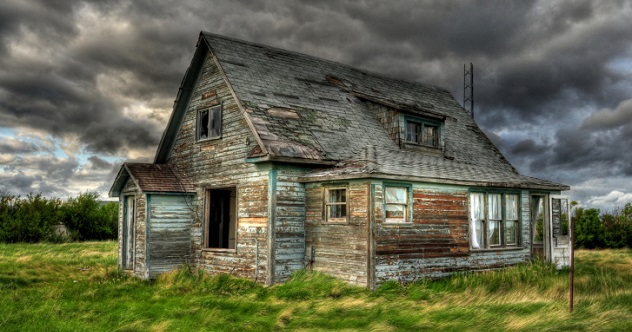
Some houses look perfectly ordinary until you learn what happened there. That is the unsettling magic of a notorious crime scene: a porch, a staircase, a neat row of windows, and suddenly your brain starts doing somersaults. America has no shortage of homes tied to infamous murder cases, but what makes these places so haunting is not just the violence attached to them. It is the collision between the everyday and the unimaginable. A family home, a rental property, a pretty hillside mansion, a quiet college houseeach one reminds us that horror does not always arrive with thunder and pipe organs. Sometimes it shows up on a perfectly normal street with trimmed hedges and a mailbox.
In this article, we are taking a respectful, fact-based look at 10 more infamous and terrifying houses of murder. The goal is not to turn tragedy into carnival popcorn. It is to explore why these homes became part of American memory, how the media transformed them into legends, and what happened to the properties afterward. Along the way, you will notice a pattern: many of these houses became symbols bigger than the crimes themselves. Some were demolished. Some were remodeled. Some were turned into tourist stops. And some still sit there, stubbornly ordinary, as if the walls themselves are trying very hard not to remember.
Why Murder Houses Fascinate People
The phrase “murder house” sounds like something invented by a tabloid intern with too much coffee and not enough conscience. But it persists because these places trigger several anxieties at once. They make us question safety, privacy, memory, and even architecture. A home is supposed to be a refuge. When a house becomes associated with a notorious killing, that comforting idea gets scrambled. Suddenly the home becomes a symbol of dread, myth, and morbid curiosity.
That is why infamous murder houses keep resurfacing in true crime, books, documentaries, and real estate stories. They are historical landmarks of a deeply unsettling kind. And yes, some of them have the resale value of a cursed casserole dish.
1. The Lizzie Borden House, Fall River, Massachusetts
If American crime history had a Mount Rushmore, the Lizzie Borden house would probably be on it, glaring at tourists. Located in Fall River, this modest home became famous after the 1892 killings of Andrew and Abby Borden. Lizzie Borden was tried and acquitted, but the case never really left public imagination. The house itself became inseparable from the mystery, helped along by the nursery rhyme that turned a grim event into pop-culture folklore.
What makes this house so enduring is the way it sits at the crossroads of mystery and performance. It is not a sprawling Gothic mansion. It is a fairly practical New England home, which somehow makes the story more unnerving. Today, the property is widely known as a tourist destination, proving that America will absolutely book an overnight stay if the historical baggage is spooky enough.
2. The Villisca Axe Murder House, Villisca, Iowa
The Villisca house is one of the most notorious unsolved murder houses in the United States. In 1912, eight people were killed there, and the case was never definitively solved. That single factunsolvedhas fueled more speculation than a season finale cliffhanger. The home has since been restored and presented as a preserved historical site, which means it exists in that strange space between memorial, museum, and full-body shiver.
Part of the terror attached to Villisca comes from its setting. It is not an urban mansion or a glamorous estate. It is a small-town house, the kind of place that should feel wholesome and safe. Instead, it became one of the best-known symbols of early twentieth-century American crime. The restored house invites visitors to confront the unsettling gap between cozy domestic architecture and the darkness that once entered it.
3. 112 Ocean Avenue, Amityville, New York
Before it became shorthand for haunted-house hysteria, the Amityville home was the site of the 1974 DeFeo family murders. The case was horrifying enough on its own, but the house later entered a second life through books, movies, and endless debates about paranormal claims. In other words, it graduated from crime scene to full-time American legend.
The most fascinating thing about 112 Ocean Avenue is how quickly real tragedy was absorbed into entertainment. The house’s distinctive look, especially its famous upper windows, helped turn it into a visual icon. Over time, the property became less about the original crime in public memory and more about the mythology layered on top of it. That transformation says a lot about how American culture processes fear: first comes grief, then fascination, then eventually a movie poster.
4. 10050 Cielo Drive, Los Angeles, California
Few addresses carry the same cultural weight as 10050 Cielo Drive, the Benedict Canyon home linked to the 1969 Tate murders. The crime shocked Hollywood and helped mark the end of a certain carefree 1960s image of Los Angeles. The property itself became infamous because it represented a terrifying breach of glamour. A beautiful hillside home associated with celebrity suddenly became a national symbol of vulnerability.
The original house no longer stands, and even the address was changed in an effort to separate the land from its past. Still, the story clings to the site like California fog. This is one reason Cielo Drive remains one of the most infamous murder-house locations in America: it was not just a crime scene, but a cultural turning point. The message was grim and unforgettablewealth, fame, and scenic views are not security systems.
5. The JonBenét Ramsey House, Boulder, Colorado
The Ramsey home became internationally known after the 1996 murder of JonBenét Ramsey, a case that remains unsolved and still provokes intense public interest. More than many crime scenes, this house became a media battlefield. It was not simply a private residence anymore; it became a backdrop for theories, accusations, television specials, and endless tabloid speculation.
One reason this house remains so haunting is that the case never settled into a clear conclusion. Unsolved cases have a way of freezing a property in public memory. The Boulder home is a reminder that some murder houses are terrifying not because people think they are haunted, but because the unanswered questions never stop echoing. In those cases, the mystery becomes the ghost.
6. The Clutter Family Farmhouse, Holcomb, Kansas
The Clutter family farmhouse is one of the most important crime locations in American literary history because the 1959 murders there inspired Truman Capote’s In Cold Blood. That book helped shape the modern true-crime genre, which means this house matters not only as a crime scene, but as a turning point in how crime was written, marketed, and consumed.
What makes the Clutter house especially chilling is its plainspoken Midwestern setting. It was a family farm home, far removed from the Gothic mood people often associate with terrifying houses. Yet that normality is exactly what gives the case its power. The crime shattered assumptions about rural safety and permanently attached the house to one of the most discussed murder narratives in American nonfiction.
7. H.H. Holmes’s “Murder Castle,” Chicago, Illinois
No list of infamous murder houses would be complete without the so-called Murder Castle of H.H. Holmes. Even the nickname sounds like it was created by a publicity department for nightmares. The reality, however, is more complicated than the legend. Historians have spent years untangling fact from sensational myth, and modern research suggests that many of the wilder claims about the building were exaggerated over time.
Still, the structure remains one of the most infamous murder-related properties in American history. Part of its staying power comes from timing: Holmes operated during the era of yellow journalism, when newspapers treated crime like a competitive sport. The building’s reputation grew into an almost mythic tale of hidden rooms, fraud, deception, and death. In other words, it was true crime before true crime had a streaming deal.
8. The Los Feliz Murder Mansion, Los Angeles, California
Sometimes a house becomes famous not only because of the crime, but because it appears to stop in time afterward. That is the eerie appeal of the so-called Los Feliz Murder Mansion, associated with the 1959 Harold Perelson case. For decades, the home sat largely untouched, accumulating the kind of mythology that only abandoned luxury can create. People are already nosy about mansions; add a dark past and the curiosity level shoots through the roof.
This house became notorious because it felt preserved in emotional amber. Reports about the property often focused on its frozen interiors, as though the house were holding its breath. That image turned it into one of Los Angeles’s strangest and most talked-about murder houses. It is less a haunted house in the supernatural sense and more a time capsule of shock and avoidance.
9. The King Road House, Moscow, Idaho
The off-campus King Road house near the University of Idaho became nationally known after the 2022 killings of four students. Because the case unfolded in the era of nonstop digital speculation, the house was analyzed, mapped, discussed, and argued over at an exhausting speed. In older cases, notoriety built gradually. Here, it happened almost in real time, amplified by social media, podcasts, and round-the-clock coverage.
The house was later demolished, a decision that reflected how difficult it can be for a community to move forward while a structure remains as a visual reminder of trauma. That choice also showed a growing awareness that infamous murder houses are not just objects of curiosity. They are emotional landmarks for survivors, families, neighbors, and students who had to keep living around them.
10. Nicole Brown Simpson’s Bundy Drive Condo, Los Angeles, California
The Bundy Drive condo connected to the 1994 killings of Nicole Brown Simpson and Ron Goldman remains one of the most recognizable murder-related homes in modern American memory. The case became a media supernova, and the property was pulled into that orbit. Even people who know few details about the crime often recognize “Bundy Drive” as a cultural reference point.
Unlike some notorious murder houses that were erased or left to decay, this property became a lesson in how real estate tries to outmaneuver stigma. Reports over the years have noted changes meant to make the condo less recognizable, but the association has never fully disappeared. That is the thing about infamous houses: paint can change, gates can change, even addresses can change, but the story usually keeps forwarding its own mail.
What These Houses Really Represent
For all the fascination surrounding terrifying houses of murder, the deeper story is not about architecture. It is about memory. These homes become symbols because they trap a contradiction we struggle to process: terrible things can happen in ordinary spaces. A staircase is still a staircase. A front lawn is still a front lawn. And yet once a notorious crime attaches itself to a place, the ordinary becomes almost impossible to see again.
These locations also reveal how America turns tragedy into narrative. Some houses become tourist attractions. Some become cautionary tales. Some become myth factories where rumor outruns fact by a mile and a half. In every case, though, the best approach is respect. Behind every famous address were real people, real families, and communities forced to carry the aftermath long after the cameras left.
Experiences People Associate With Infamous Murder Houses
There is a particular kind of unease people describe when they encounter an infamous murder house in person, even if they only see it from the sidewalk. It usually starts with disbelief. The house looks too normal. Too tidy. Too much like a place where someone should be arguing about whose turn it is to take out the trash. That contrast can be more disturbing than any dramatic architecture. You expect evil to live in a thunderstorm-colored castle with bats doing flybys. Instead, you get beige siding and a hydrangea bush.
Another common experience is a strange tug-of-war between curiosity and guilt. People want to look because the site is historically significant and culturally loaded. At the same time, many feel uneasy about staring at a place connected to enormous pain. That discomfort matters. It suggests that, deep down, most people understand these houses are not just spooky attractions. They are places where private suffering became public spectacle.
Visitors also talk about how quiet these places feel. Not necessarily supernatural quietmore like social quiet. Neighbors do not always want attention. Streets that might otherwise be anonymous become burdened by gawkers, ghost hunters, or amateur detectives who have watched three documentaries and suddenly feel qualified to narrate a front yard. In that sense, the experience of being near a famous murder house is often less about fear of ghosts and more about awareness of the people still living nearby.
Then there is the media effect. Many people arrive carrying an image shaped by film, television, or internet retellings, only to discover the real place is smaller, plainer, and sadder. That can be jarring. The myth promises theatrical terror; reality offers an ordinary building with an extraordinary burden. This is especially true for houses that have been remodeled, renumbered, or demolished. In those cases, visitors are not really looking at the original scene anymore. They are looking at an absenceand sometimes absence is creepier than presence.
For researchers, writers, and true-crime readers, the experience can be different but equally intense. These houses often become anchor points in a larger puzzle. A floor plan, a driveway, a staircase landing, a backyard gatesuddenly mundane design details take on investigative importance. The home becomes a document. Yet even then, the strongest reaction is often not thrill but sadness. The closer you get to the real-world setting, the harder it becomes to treat the story as mere entertainment.
Ultimately, the lasting experience tied to these houses is a reminder that place matters. Not because bricks and timber hold magic, but because human beings attach memory to space with incredible force. That is why these homes endure in public imagination. They are unsettling not only because of what happened there, but because they force us to imagine everyday life interrupted. The kitchen, the bedroom, the porch, the drivewaynone of it is exotic. That is exactly why it gets under the skin.
Conclusion
The most infamous and terrifying houses of murder are not memorable because they look scary. Many do not. They endure because they expose how fragile the idea of home can be once violence, mystery, and media attention collide. From Fall River to Los Angeles, from Iowa to Idaho, these properties became part of American crime history not only through tragedy but through the stories told about them afterward.
If there is one lesson in revisiting these places, it is this: the house is never the whole story. The real story is the people, the communities, and the way memory settles into physical spaces long after headlines fade. That is what keeps these notorious houses alive in the national imaginationand why they still feel unsettling, even decades later.