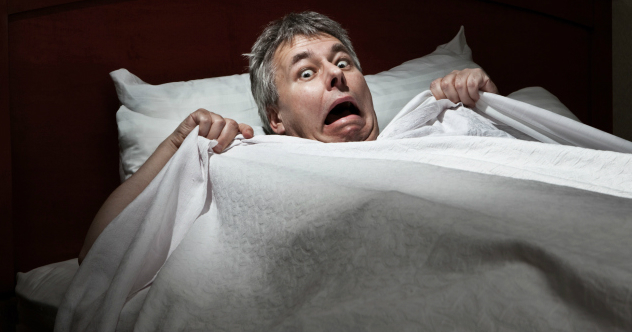
Sleep paralysis is one of those rare experiences that can make a perfectly ordinary bedroom feel like the set of a supernatural thriller. You are awake enough to know the room, the ceiling, and the terrible decision you made to sleep on your back again, but your body has not fully come online yet. During an episode, people can be unable to move or speak for a few seconds to a few minutes, often while falling asleep or waking up, and many report vivid, frightening hallucinations or a strong sense that “someone” is in the room. The medical explanation is grounded in REM sleep and the sleep-wake transition, but the emotional explanation is much simpler: it feels creepy as hell.
The good news is that sleep paralysis is usually temporary and benign. The bad news is that your brain does not always bother to inform your nervous system of that fact. Researchers and clinicians generally describe it as a mismatch between waking awareness and REM-related muscle atonia, and it can show up on its own or alongside sleep deprivation, stress, irregular sleep, or narcolepsy. The theories below are not a menu of mutually exclusive answers; they are different ways humans have tried to explain the same unnerving event.
1. The REM Intrusion Theory
This is the most boring theory, which is usually how you know it is the correct one. In REM sleep, the brain is busy dreaming while the body is temporarily paralyzed so you do not act out the dream. Sleep paralysis may happen when part of that REM state leaks into wakefulness, leaving you conscious, scared, and unable to move. The hallucinations that come with it are often dream-like fragments intruding into a waking mind. In other words, your brain wakes up before your motor system gets the memo.
2. The Threat Detection Theory
Another popular explanation says sleep paralysis hijacks the brain’s ancient threat-detection systems. If your nervous system is half in dream mode and half in alert mode, ordinary shadows can get promoted into “intruder near the bed” status. That would explain why so many people describe sensing a presence, feeling watched, or believing something is closing in. Cleveland Clinic notes that hallucinations during these episodes can feel like a presence in the room, and researchers have suggested that survival circuits in the brain may help shape the terror.
3. The Incubus or “Chest Monster” Theory
This is the classic nightmare version: something sits on your chest, pins you down, and makes breathing feel weird. Across history, this has been described as a demon, witch, spirit, or incubus. Modern research still recognizes the “incubus phenomenon” as a visuotactile sensation of a being pressing on the body during sleep paralysis. The eerie part is that the sensation of pressure can feel incredibly real even when nothing is physically there. Humans, naturally, turned that into folklore, because “my REM cycle glitched” is less satisfying than “a dark entity arrived at 3:07 a.m.”
4. The Cultural Lens Theory
Not every culture tells the same story about the same feeling, and sleep paralysis is a perfect example. In some places, the experience is explained through demons, in others through witches, spirits, or other supernatural visitors. Johns Hopkins notes that these events have been associated with demons, ghosts, or possession for centuries, and reviews in the medical literature show that cultural beliefs shape how people interpret the episode itself. The biology may be similar, but the label can change dramatically depending on what your community taught you to fear.
5. The Narcolepsy Clue Theory
For some people, sleep paralysis is not just a random spooky event; it is a clue. Narcolepsy commonly includes sleep paralysis, vivid dream-like hallucinations, and disrupted sleep-wake control. Johns Hopkins and MedlinePlus both note that sleep paralysis can be part of narcolepsy, which is why recurring episodes deserve attention if they are paired with overwhelming daytime sleepiness or sudden sleep attacks. The creepy theory here is simple: the body is not merely glitching, it is trying to tell you something important about sleep regulation.
6. The Stress-and-Sleep-Deprivation Theory
Many experts think the scariest thing about sleep paralysis is that everyday life can help trigger it. Stress, poor sleep, irregular schedules, and sleep disruption can make parasomnias more likely. That means the monster in the room may be less “demon from another dimension” and more “your calendar, caffeine habit, and midnight doomscrolling.” Cleveland Clinic points out that stress and poor sleep can contribute to these events, and broader sleep-disorder guidance from MedlinePlus and Sleep Foundation emphasizes the role of poor-quality sleep and disrupted sleep patterns.
7. The Hypnagogic / Hypnopompic Borderland Theory
Sleep paralysis often lives on the border between falling asleep and waking up, which is exactly where the brain is most likely to produce odd sensory overlaps. The hypnagogic state is the transition into sleep; the hypnopompic state is the transition out of it. In both cases, perception can get weird, and dream imagery can seep into wakeful awareness. That is why a person may hear footsteps, feel a touch, or see a shape at the edge of the bed and be absolutely certain the event happened, even though it was generated in the middle of a transition.
8. The Body Position Theory
Some research suggests body position may influence episodes, with supine sleeping often appearing in the story people tell afterward. That does not mean sleeping on your back causes sleep paralysis every time, but it may be part of the puzzle for some sufferers. The creepy angle is that the body position associated with a normal, harmless night of sleep can also become the position that most reliably produces a haunted-house vibe. A reminder that even your pillow has a dark side.
9. The Hallucination Feedback Loop Theory
Hallucinations during sleep paralysis are not always cinematic full-color ghosts; they can be auditory, tactile, or kinesthetic too. One of the creepiest theories is that the first strange sensation sparks fear, and the fear then amplifies the hallucination, creating a feedback loop. A tiny sensation becomes a presence. A shadow becomes a figure. A feeling of pressure becomes a hand on your chest. This is one reason the episode can escalate so fast: the brain detects danger, then keeps adding details to the danger it thinks it found.
10. The Lucid Dream Border Theory
Sleep paralysis also overlaps with lucid dreaming in ways that make the whole experience feel like a portal with bad lighting. Some studies and reviews describe a connection between lucid dreaming and sleep paralysis, suggesting that the boundary between waking, dreaming, and awareness is more permeable than people expect. That does not prove a paranormal explanation; it does show how easily the dreaming brain can bleed into waking consciousness. If your bedroom suddenly feels like a dream scene, that may be because your brain is already halfway there.
Why These Theories Stick Around
Sleep paralysis is fascinating because it sits right at the intersection of biology and storytelling. The biology gives us the mechanics: REM sleep, muscle atonia, waking awareness, hallucinations, and risk factors like narcolepsy, stress, and disrupted sleep. The storytelling gives us the meaning: demons, visitors, shadow people, chest pressure, and the eerie certainty that the room itself has changed. The reason the theories never fully disappear is that the experience feels personal, immediate, and deeply real. It is not just “something happened while I slept.” It is “something happened to me.”
What an Episode Actually Feels Like
The first thing many people notice is not the paralysis itself but the mismatch between expectation and reality. You think you woke up normally, then discover you cannot lift a finger, shift your head, or call out. The room often looks unchanged, which makes the experience worse, not better. The ceiling is still the ceiling. The chair is still in the corner. The alarm clock still glows in its little judgmental way. But the emotional meaning of the room changes instantly, because the brain starts scanning for explanations. That is how a hallway shadow becomes a crouching figure, and why a fan hum can sound like breathing.
Many people also describe time distortion. A brief episode can feel endless. Ten seconds can feel like a full movie runtime. A moment of pressure on the chest can seem to stretch and deepen until panic takes over. This is one reason sleep paralysis stories are so memorable: the event may be short, but the memory is stamped with maximum emotional intensity. The brain tends to preserve high-threat moments with ridiculous efficiency.
Another common experience is the strange certainty that someone is there. People may hear a voice, footsteps, whispering, or a door opening. Others feel touched, pinned, or tugged. Sometimes the “presence” is not seen directly at all; it is simply known, the way you know a car alarm is annoying before you consciously identify the sound. In sleep paralysis, that sense can be so strong that a person later remembers the episode as an encounter rather than a dreamlike event. The experience is shaped by fear, but also by the brain’s habit of building a story around incomplete sensory input.
People often ask whether the episode means something is wrong with them mentally. In most cases, the answer is no. Sleep paralysis by itself does not automatically point to a psychiatric disorder. It is a sleep-state problem first, and a fear problem second. That said, frequent episodes, severe anxiety, or symptoms like extreme daytime sleepiness are worth discussing with a clinician, especially because narcolepsy and other sleep disorders can be involved. The scary part may be folklore, but the practical part is medical.
Some people become almost superstitious about their own triggers after repeated episodes. They avoid sleeping on their back. They keep a light on. They swear the episode always happens after a stressful week, too much screen time, or broken sleep. Even if the cause is biological, those personal patterns still matter. The body does not care whether the explanation is elegant. It only cares that the sleep schedule is chaotic and the nervous system is running on fumes.
There is also the social side of the experience. Once people hear sleep paralysis stories, they start sharing their own, and the details sound eerily similar across cultures and decades: pressure on the chest, a room that feels occupied, a struggle to move, a presence at the bedside, and a sudden release back into ordinary reality. That repetitive structure is one reason researchers take the phenomenon seriously. The legends are different, but the template is stubbornly consistent.
When Sleep Paralysis Needs a Doctor
Occasional sleep paralysis can happen in otherwise healthy people, but repeated episodes are worth attention if they are frequent, extremely distressing, or linked to daytime sleepiness, sudden muscle weakness, or other signs of narcolepsy. Sleep experts often recommend improving sleep hygiene, reducing sleep deprivation, and checking for underlying sleep disorders when episodes keep returning. If the “haunting” follows a pattern, the safest spell is usually a medical evaluation.
Conclusion
The ten creepiest sleep paralysis theories all point to the same unsettling truth: the brain can make fear feel physical. Whether the explanation is REM intrusion, threat detection, hallucination feedback, cultural interpretation, or the liminal border between waking and dreaming, sleep paralysis remains one of the most dramatic reminders that consciousness is not as stable as we like to think. The monsters people describe may be supernatural in folklore, but in the real world the most convincing monster is often a stressed, sleep-deprived brain catching the body in between states. Sleep well. Or at least sleep with a little more respect for your nervous system.